
83% of the United States Drops Below Freezing Tonight as Widespread Arctic Cold Grips the Nation
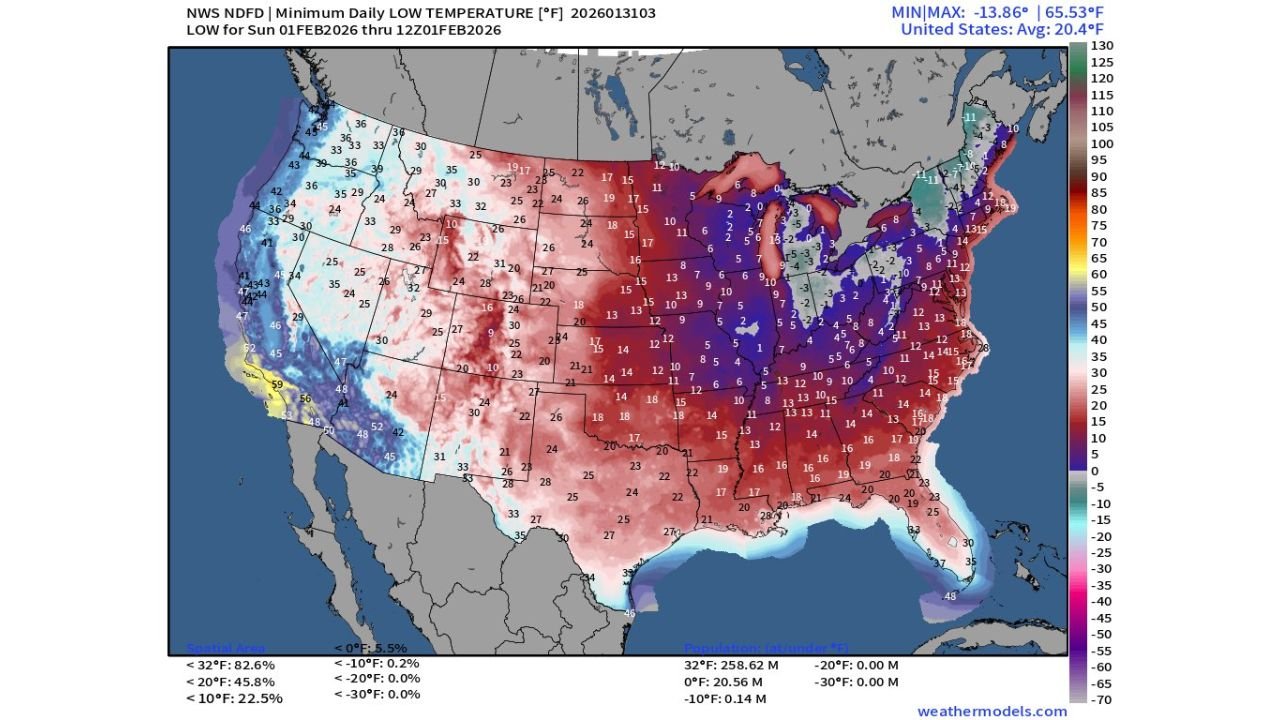
UNITED STATES — A powerful surge of Arctic air is tightening its grip on the country, with new temperature data showing that roughly 83% of the land area of the United States will fall below the freezing mark overnight and into early Sunday morning. The cold outbreak spans coast to coast, affecting nearly every major region outside of far southern Florida and parts of the immediate West Coast.
According to the latest minimum temperature projections, this is not a localized cold snap but a nationwide freeze, with tens of millions of people waking up to temperatures in the teens or single digits — and in some cases, well below zero.
How Cold Will It Get Overnight?
Forecast maps show minimum temperatures plunging into the single digits and teens across much of the Midwest, Ohio Valley, Mid-Atlantic, and Northeast, while portions of the northern Plains and Upper Midwest drop into sub-zero territory.
Key highlights from the data:
- Over 82% of the U.S. land area is forecast to fall below 32°F
- Nearly 46% of the country drops below 20°F
- Around 22% falls below 10°F
- Small but notable pockets of the northern Plains and interior Great Lakes dip below 0°F
The coldest readings are expected across parts of the Upper Midwest, Great Lakes region, and northern Appalachians, where clear skies and light winds allow temperatures to fall rapidly overnight.
Why This Cold Is So Widespread
A strong high-pressure system is centered over the central and eastern United States, allowing cold Arctic air to spill southward and remain locked in place. With limited cloud cover in many regions, radiational cooling overnight will be highly efficient, driving temperatures down even further than daytime conditions might suggest.
This setup is also responsible for dangerously low wind chill values in areas where even modest winds persist, making it feel several degrees colder than the actual air temperature.
Regional Impacts at a Glance
- Midwest & Great Lakes: Widespread single digits and sub-zero lows, especially north and west of the Great Lakes.
- Northeast & Mid-Atlantic: Teens to low 20s common, with colder interior valleys dipping into single digits.
- Plains: Some of the coldest air remains locked in place, with negative temperatures continuing overnight.
- South: While not as extreme, freezing temperatures extend deep into the South, including parts of Texas, the Deep South, and the Carolinas.
- West Coast: Coastal areas remain milder, but interior valleys still see chilly overnight lows.
Why This Matters
A freeze of this magnitude has real-world consequences, especially for:
- Unprotected plumbing and infrastructure
- Livestock and pets
- Homeless populations
- Energy demand, as heating usage spikes nationwide
Even areas accustomed to winter weather can experience issues when cold is this widespread and persistent, particularly following recent snow events or gusty winds.
What Happens Next?
While some regions will see a gradual moderation in temperatures over the coming days, cold air is expected to linger across large portions of the country. Any additional systems moving through will interact with this cold base, keeping winter hazards on the table as February begins.
Residents are urged to take basic cold-weather precautions, including protecting exposed pipes, limiting time outdoors overnight, and checking on vulnerable neighbors.
Stay with WaldronNews for continued national and regional weather updates as this widespread freeze unfolds and the next weather systems come into focus.