
Northern Plains and Upper Midwest See the Most Sub-Zero Temperatures in the U.S. Since 1950, Data Shows
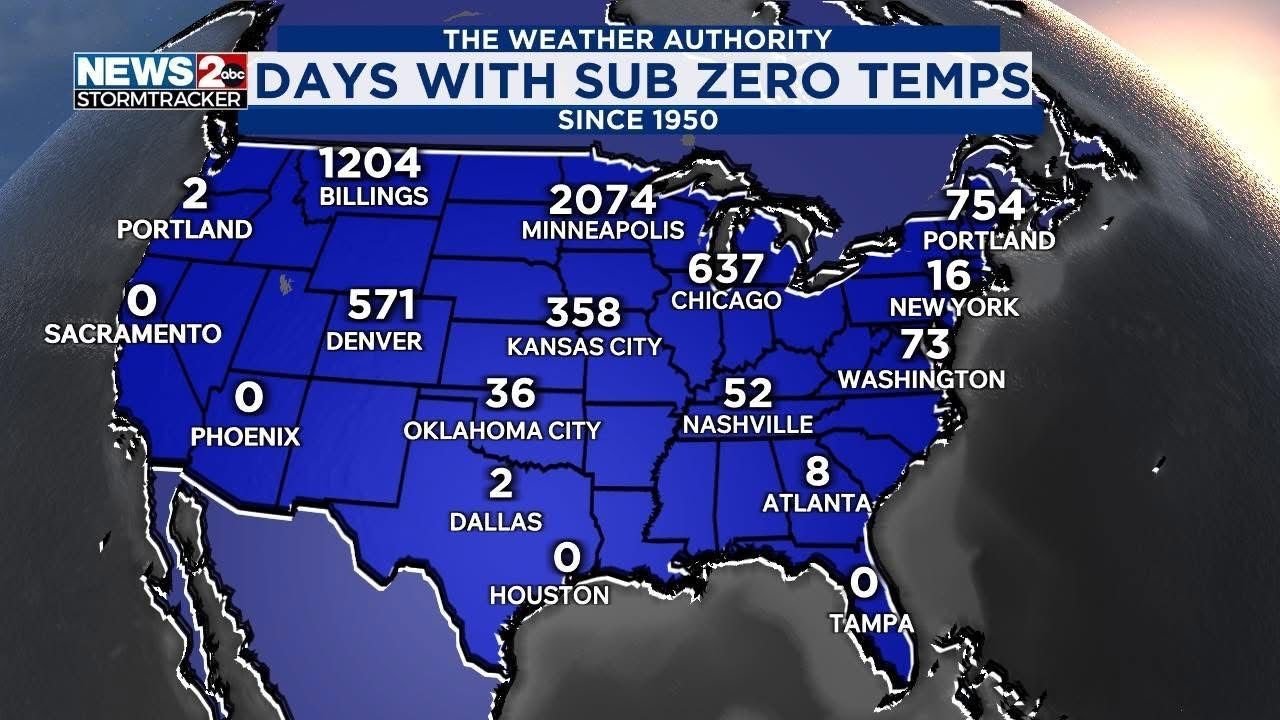
UNITED STATES — Long-term temperature data dating back to 1950 shows that the Northern Plains and Upper Midwest have experienced the highest number of sub-zero temperature days in the country, far exceeding totals seen in the South, Southwest, and much of the East Coast.
The analysis highlights a stark regional divide, with cities such as Minneapolis, Minnesota, and Billings, Montana, standing out as the most consistently impacted by extreme cold over the past several decades.
Northern Plains: The Most Impacted Region
The data clearly identifies the Northern Plains as the region with the most frequent exposure to sub-zero temperatures.
- Minneapolis, Minnesota leads all cities shown with 2,074 days below zero since 1950.
- Billings, Montana follows closely with 1,204 sub-zero days, reflecting its location in the northern Rockies and proximity to Arctic air intrusions.
These totals demonstrate how persistent and recurring extreme cold has been across the Northern Plains, where prolonged Arctic outbreaks are a regular feature of winter.
Upper Midwest Continues to See Frequent Extreme Cold
The Upper Midwest also ranks among the most impacted areas.
- Chicago, Illinois has recorded 637 sub-zero days, placing it among the coldest major metro areas in the dataset.
- Kansas City, Missouri shows a moderate but notable 358 days, indicating that extreme cold still reaches the central Midwest, though less frequently.
This region routinely experiences strong cold fronts driven southward from Canada, especially during mid-winter Arctic surges.
Central Rockies Show Significant Cold Exposure
Elevation plays a major role in cold frequency across the Central Rockies.
- Denver, Colorado has experienced 571 days with sub-zero temperatures since 1950.
While Denver’s climate includes frequent temperature swings, the data confirms that deep cold has historically been a recurring feature during winter months.
Northeast Shows Sharp Cold Contrast
The Northeast presents a strong north-to-south contrast.
- Portland, Maine has logged 754 sub-zero days, reflecting its northern latitude and exposure to continental cold air.
- New York City, New York has seen only 16 days, underscoring how coastal moderation sharply reduces extreme cold frequency.
Southern and Southwestern Cities Largely Avoid Sub-Zero Cold
The data confirms that much of the South and Southwest remains largely unaffected by sub-zero temperatures.
Cities with zero recorded sub-zero days include:
- Phoenix, Arizona
- Sacramento, California
- Houston, Texas
- Tampa, Florida
Meanwhile:
- Atlanta, Georgia has recorded just 8 days
- Dallas, Texas has seen 2 days
These figures show that extreme cold events in the southern U.S. are rare, short-lived, and historically uncommon.
What the Data Clearly Shows
Based on the data:
- Most impacted regions: Northern Plains and Upper Midwest
- Moderately impacted regions: Central Rockies and parts of the Midwest
- Least impacted regions: Southern, Gulf Coast, and Southwest states
This long-term record helps explain why northern cities are built for prolonged cold, while southern regions often face major disruptions when rare Arctic air masses move south.
Why This Matters Going Forward
Understanding historical cold exposure is critical for:
- Infrastructure planning
- Energy demand forecasting
- Emergency preparedness during Arctic outbreaks
For northern regions, sub-zero cold is a recurring reality. For southern areas, even a single such event remains highly disruptive due to its rarity.