
Midwest, Ohio Valley, and Southeast Set for Extended Warm Pattern Through New Year’s as No Arctic Air Signal Appears
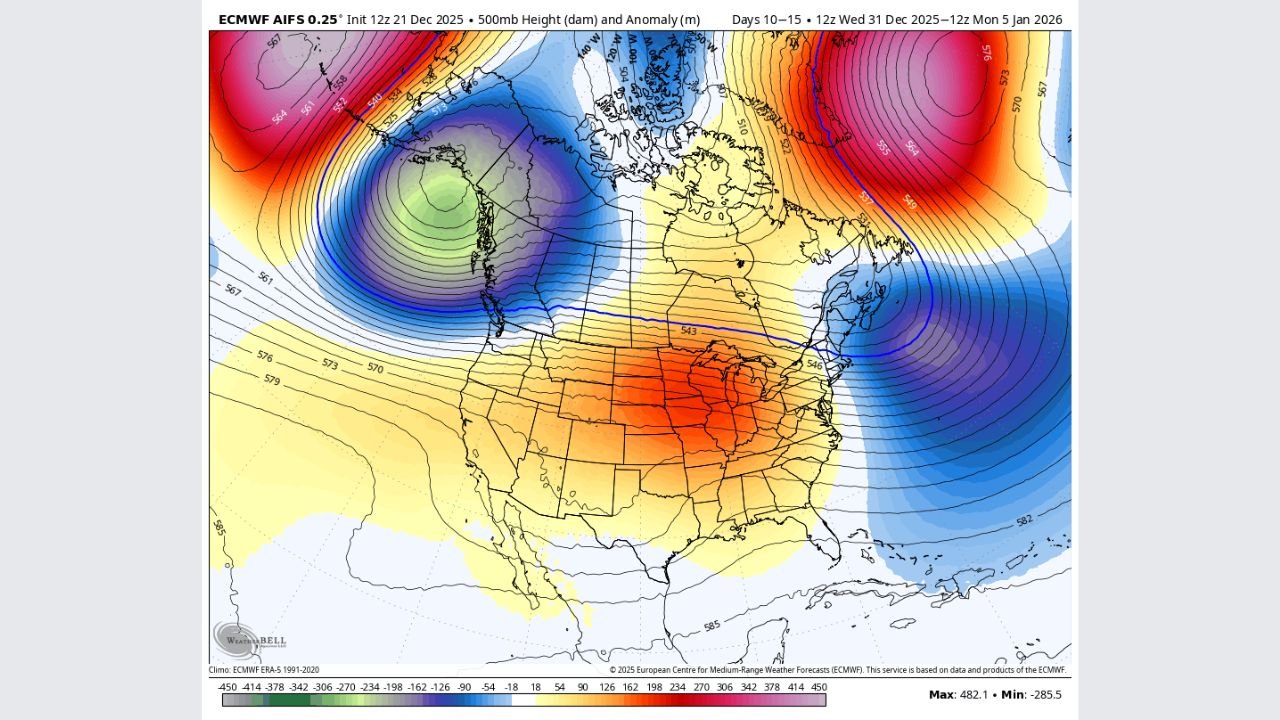
EASTERN UNITED STATES — A prolonged stretch of warmer-than-normal weather is expected to continue across the Midwest, Ohio Valley, and Southeast through the end of 2025 and into early January 2026, as long-range forecast data shows no clear signal for a major Arctic air outbreak impacting the region.
Meteorologists say the current atmospheric setup strongly favors sustained warmth east of the Rocky Mountains, with cold air remaining locked far to the north and west. As a result, large portions of the central and eastern U.S. are likely to experience a mild end to the year rather than a traditional late-December cold snap.
“There is still no clear sign of the next big U.S. Arctic air event.”
Midwest and Ohio Valley Expected to See the Strongest Warm Anomalies
Forecast anomaly maps indicate the core of the warm pattern centered over the Midwest and Ohio Valley, where upper-level ridging becomes firmly established heading into the final days of December.
States most impacted by the extended warmth include:
- Illinois
- Indiana
- Ohio
- Missouri
- Kentucky
Temperatures across these areas are expected to remain consistently above seasonal averages, with only brief and weak cold fronts passing through before warmer air quickly returns.
“This is a classic setup where winter cold struggles to gain any traction east of the Rockies.”
Southeast Likely to Remain Mild Beyond Christmas and New Year’s
The warm pattern extends southward into the Tennessee Valley and Southeast, where winter cold outbreaks typically rely on Arctic air surging out of Canada — something the current pattern does not support.
Forecast guidance suggests:
- Limited sustained cold spells
- More rain events instead of winter precipitation
- Above-normal daytime and overnight temperatures
This could result in a noticeably mild feel across much of the Southeast as the calendar flips to 2026.
Alaska and Western Canada Trough Continues to Block Arctic Air
While much of the eastern U.S. experiences warmth, persistent troughing over Alaska and western Canada remains the key driver of the pattern.
This configuration effectively traps the coldest air masses well north and west of the Lower 48, preventing them from plunging southward into the Midwest and East.
“As long as cold air stays bottled up over Alaska and western Canada, warmth dominates east of the Rockies.”
ECMWF Long-Range Forecast Supports Warm End to 2025 and Mild Start to 2026
The ECMWF extended forecast for December 31 through January 5 continues to show widespread positive height anomalies across the central and eastern United States — a strong signal for above-average temperatures.
At this time, there is no meaningful indication of a pattern breakdown that would allow Arctic air to surge southward during this window.
What the Warm Pattern Means for Winter Weather and Energy Demand
With temperatures staying elevated across much of the Midwest and East:
- Heating demand may remain lower than normal
- Snowfall opportunities will be limited outside far northern areas
- Rain will be more common than snow in marginal zones
Forecasters caution that winter is far from over, but the timing of any major cold outbreak remains uncertain.
“Winter isn’t canceled — it’s just delayed.”
Pattern Will Continue to Be Monitored for Any Shift in January
Meteorologists will continue watching for changes in the large-scale pattern later in January, particularly signs of high-latitude blocking that could eventually allow colder air to move south.
For now, confidence remains high that the Midwest, Ohio Valley, and Southeast stay warmer than normal into early 2026.
Are temperatures running warmer than usual where you live? Share your local conditions and stay informed with ongoing long-range weather coverage at WaldronNews.com.