
Drifting Snow Along M-46 Near Six Lakes, Michigan Turns Highway Into “Vehicle Graveyard” as 30+ MPH Wind Gusts Bury Lanes
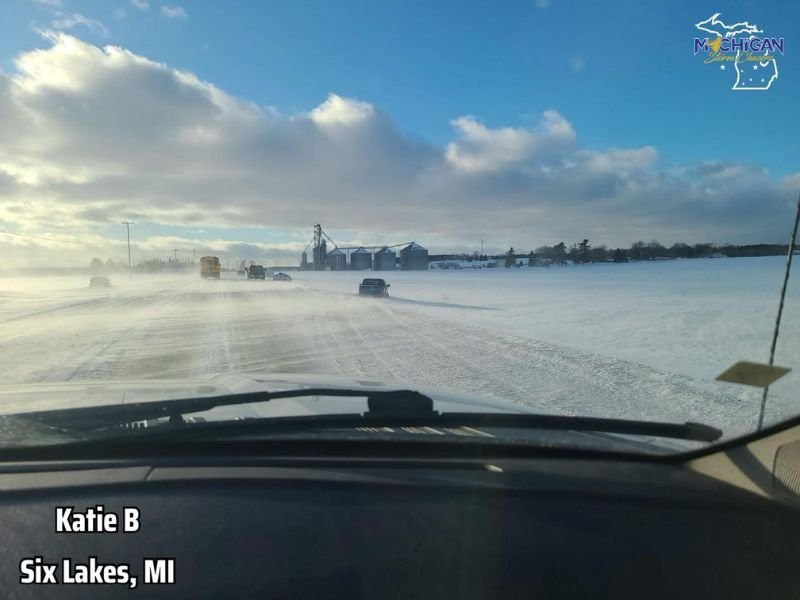
Six Lakes, Michigan — Powerful wind gusts exceeding 30 miles per hour recently created dangerous drifting snow conditions along M-46 in central Michigan, covering lanes and pushing multiple vehicles off the roadway. While the situation is not current, the scene serves as a stark reminder of how quickly winter travel can turn hazardous when strong winds combine with loose snow.
A photo shared by Katie B. of Six Lakes shows blowing snow sweeping across open farmland and completely obscuring portions of the highway. Visibility appears sharply reduced, and tire tracks are barely distinguishable beneath layers of wind-driven snow.
What Happened and Where
The incident occurred along a corridor of M-46 near Six Lakes, an area surrounded by open fields that allow wind to accelerate and carry snow across the pavement. On days with strong gusts, snow can drift rapidly, covering previously plowed lanes in a matter of minutes.
According to the description provided, wind gusts over 30 mph were enough to create significant drifting. The loose snow not only buried sections of the roadway but also contributed to vehicles losing traction and control. In similar fashion to conditions reported in Huron County the previous week, the stretch of M-46 became what observers described as a “vehicle graveyard,” with multiple vehicles stuck or forced off the road.
Drifting snow differs from active snowfall in that even after precipitation stops, high winds can continue to create hazardous conditions for hours or even days.
Why Drifting Snow Is So Dangerous
Drifting snow presents unique dangers compared to steady winter storms. When wind speeds exceed 25–30 mph in open areas, snow from fields and ditches can blow directly onto highways, forming sudden ridges or deep pockets.
Drivers may encounter:
- Rapidly changing road conditions
- Reduced visibility from blowing snow
- Hidden ice patches beneath fresh drifts
- Steering challenges as wind pushes vehicles sideways
In extreme cases, wind can subtly guide vehicles into deeper snowbanks. As described in this situation, the force of the wind combined with loose snow can “aid in steering you into the loose stuff,” increasing the risk of sliding off the roadway.
Rural highways like M-46, bordered by farmland and open terrain, are particularly vulnerable to these conditions.
A Teaching Moment for Winter Travel
Although this specific event is not ongoing, officials and weather observers emphasize that it serves as a critical reminder for drivers throughout Michigan and the Great Lakes region.
Winter travel safety recommendations include:
- Reducing speed during windy winter conditions
- Avoiding sudden steering corrections
- Keeping extra distance between vehicles
- Carrying emergency supplies during longer trips
Even when skies appear partly clear, blowing snow can create whiteout-like conditions in localized areas. The image from Six Lakes highlights how deceptively calm conditions can quickly deteriorate when wind interacts with fresh snowfall.
For drivers across Michigan, especially along open rural highways, the key takeaway is simple: always adjust driving habits to match the conditions on the ground, not just the forecast. Residents are encouraged to follow WaldronNews.com for continued winter weather updates and safety reminders as cold-season conditions persist across the region.