
If the U.S. Stayed on Standard Time, Sunrise Would Arrive Before 4:30 A.M. in Some Cities — Here’s What the Start of Summer Would Look Like Nationwide
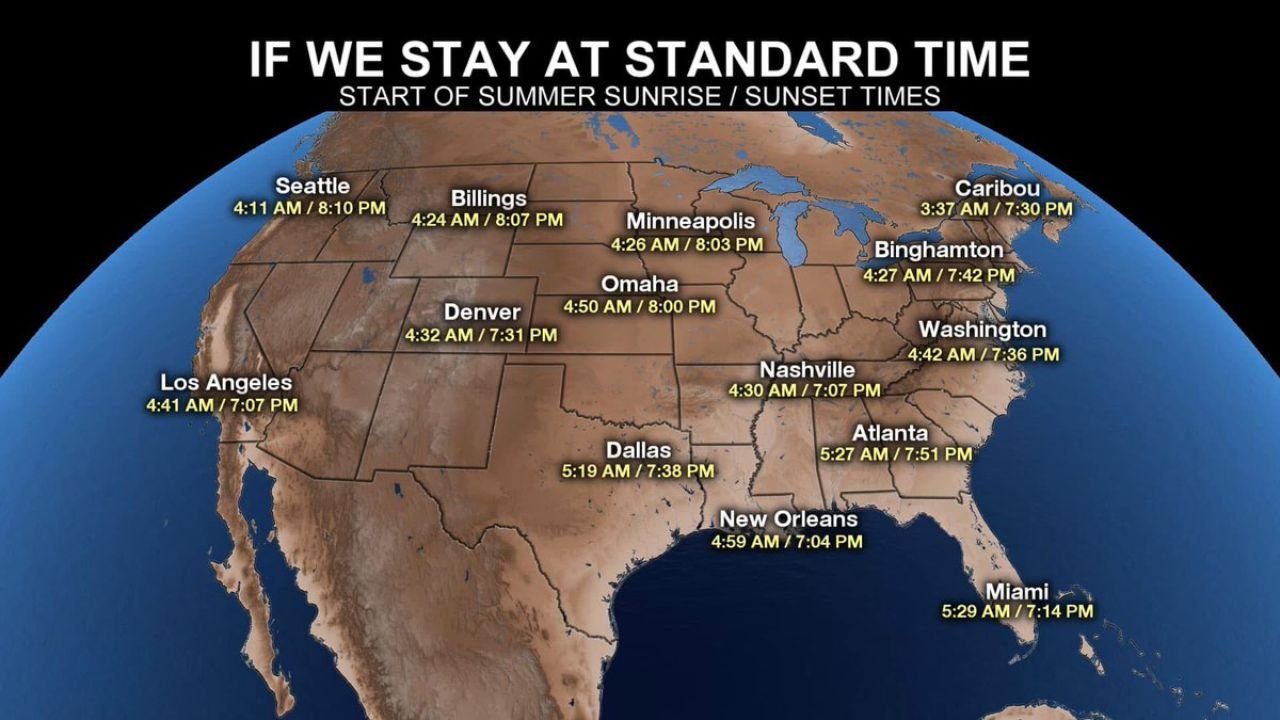
UNITED STATES — As the annual debate over daylight saving time approaches, a new visualization is sparking conversation by showing what sunrise and sunset times would look like at the start of summer if the country never turned clocks ahead in March. The data reveals dramatically earlier sunrises — some before 4:30 a.m. — and noticeably earlier sunsets across multiple states.
The graphic highlights major cities across the country and shows projected sunrise and sunset times under permanent standard time conditions.
What Sunrise and Sunset Would Look Like Without Daylight Saving Time
If clocks remained on standard time year-round, here’s how the start of summer would appear in key cities:
- Seattle, Washington – 4:11 a.m. sunrise / 8:10 p.m. sunset
- Billings, Montana – 4:24 a.m. / 8:07 p.m.
- Minneapolis, Minnesota – 4:26 a.m. / 8:03 p.m.
- Omaha, Nebraska – 4:50 a.m. / 8:00 p.m.
- Denver, Colorado – 4:32 a.m. / 7:31 p.m.
- Los Angeles, California – 4:41 a.m. / 7:07 p.m.
- Dallas, Texas – 5:19 a.m. / 7:38 p.m.
- New Orleans, Louisiana – 4:59 a.m. / 7:04 p.m.
- Nashville, Tennessee – 4:30 a.m. / 7:07 p.m.
- Atlanta, Georgia – 5:27 a.m. / 7:51 p.m.
- Washington, D.C. – 4:42 a.m. / 7:36 p.m.
- Binghamton, New York – 4:27 a.m. / 7:42 p.m.
- Caribou, Maine – 3:37 a.m. / 7:30 p.m.
- Miami, Florida – 5:29 a.m. / 7:14 p.m.
The most striking figure may be Caribou, Maine, where sunrise would occur at 3:37 a.m., meaning daylight would begin extremely early during peak summer weeks.
What This Means for Different Regions
Northern states such as Maine, Minnesota, Washington, and Montana would experience extremely early dawn light. In cities like Seattle and Minneapolis, sunrise would arrive before 4:30 a.m., shifting usable evening daylight earlier into the day.
Meanwhile, southern cities like Miami, Dallas, and Atlanta would still see early sunrises but with less extreme shifts compared to northern latitudes.
One noticeable trade-off is earlier sunsets. For example:
- Los Angeles would see sunset at 7:07 p.m. instead of after 8 p.m. under daylight saving time.
- Denver would lose late-evening daylight, with sunset at 7:31 p.m.
- Washington, D.C. would see sunset at 7:36 p.m.
For many Americans accustomed to summer evenings stretching toward 9 p.m., this would represent a significant lifestyle change.
Why the Debate Continues
Daylight saving time was originally intended to maximize evening daylight during warmer months. Supporters argue it benefits outdoor activities, retail businesses, and after-work recreation.
However, critics argue that switching clocks twice per year disrupts sleep patterns and offers limited modern energy savings.
The visualization highlights a core question: Would Americans prefer very early sunrises and earlier sunsets, or later sunsets with darker mornings?
In northern states especially, permanent standard time would push sunrise so early that much of the daylight would occur before typical work or school hours.
What Happens Next?
Currently, most U.S. states observe daylight saving time, shifting clocks forward in March and back in November. Any permanent change would require federal action.
For now, Americans will continue adjusting clocks seasonally — but graphics like this one are fueling renewed discussion about what the country’s daily rhythm would look like if that seasonal shift disappeared.
Would earlier mornings improve productivity? Or would losing those long summer evenings change how communities spend their time?
As policymakers revisit the issue in Washington, this side-by-side look at projected sunrise and sunset times offers a clear visual of what permanent standard time would actually mean for cities from Seattle and Denver to Atlanta and Miami.
For continued coverage of national weather trends and timing changes that affect your daily routine, stay connected with WaldronNews.com.