
Central U.S. Severe Weather Alert Issued for April 12 to 22 as Texas, Kansas, Oklahoma and Midwest Face Prolonged Storm Threat
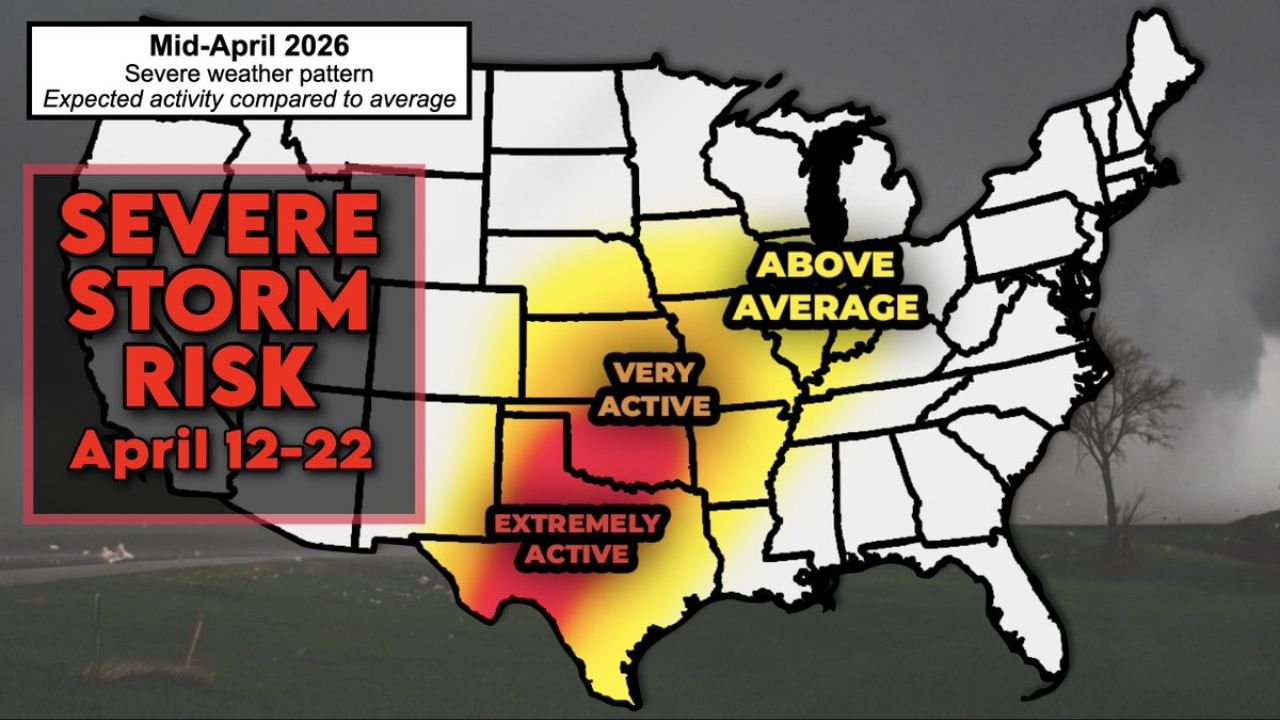
UNITED STATES — A major weather pattern shift is now taking shape that could bring one of the most active severe weather stretches in recent years across the central United States, with risks building between April 12 through April 22.
Forecast signals point toward a prolonged, multi-day severe weather setup, not just isolated events, with Texas emerging as a primary focal point and storm chances extending into Kansas, Oklahoma, and parts of the Midwest and Mid-South.
A Long-Duration Severe Weather Pattern Is Developing
This upcoming pattern is not a single storm system but rather a sustained atmospheric setup capable of producing multiple rounds of severe weather over several days.
Key highlights include:
- Above-average to potentially hyperactive storm frequency
- Multiple severe weather events expected during the period
- Increasing risk of tornadoes, damaging winds, and large hail
This aligns with the early stages of peak tornado season in the United States, when atmospheric conditions typically become more favorable for organized severe storms.
Why This Setup Is Different
The driving force behind this pattern is a persistent jet stream dip across the western United States, which plays a critical role in storm development.
Here’s how the setup comes together:
- Cooler air pushes south over the Rockies
- Warm, moisture-rich air builds across the eastern U.S.
- The central U.S. becomes the battleground where these air masses collide
This clash creates the perfect environment for thunderstorm development and severe weather outbreaks.
Storm Development Focused Over the Plains
A key feature in this setup will be frequent storm system formation east of the Rockies, commonly known as lee cyclogenesis.
This typically occurs over:
- Colorado
- Kansas
From there, storm systems move into the Plains, sharpening a critical boundary known as the dryline, especially across:
- Western Texas
- Oklahoma
This boundary separates dry desert air from humid Gulf moisture — a classic trigger zone for severe storms.
Texas Expected to Be Ground Zero
Among all regions, Texas stands out as the most likely focal point for repeated severe weather events during this period.
The setup suggests:
- Strong instability building across the state
- Repeated storm initiation along the dryline
- Potential for multiple rounds of severe storms over several days
From Texas, storms are expected to track northeast into:
- Oklahoma
- Kansas
- Missouri
- Parts of the Midwest
Tornado Risk Increasing With Each Storm Cycle
As thunderstorms strengthen, they will begin interacting with:
- Strong upper-level winds
- Changing wind directions with height
This combination increases the likelihood of rotating storms, which can produce tornadoes.
While exact day-to-day tornado threats cannot yet be pinned down, the overall pattern strongly supports:
- An elevated tornado risk across multiple days
- Potential for organized severe weather outbreaks
Forecast Confidence and Limitations
At this stage, forecasts are based on probabilistic trends rather than exact storm timing or locations.
What we know:
- Confidence is moderate to high for an active period
- Multiple severe weather days are likely
- The pattern supports repeated storm development
What is still uncertain:
- Exact timing of individual storm systems
- Specific locations of highest tornado risk on given days
More detailed forecasts are expected to become clearer as the timeframe approaches.
What This Means for the Central U.S.
Residents across the Plains and Midwest should prepare for:
- A sustained period of severe weather risk
- Changing conditions over multiple days
- The possibility of back-to-back storm events
This is not a typical short-lived setup — it is a pattern capable of producing several impactful weather days in a row.
Time to Prepare Before the Pattern Peaks
With this extended severe weather window approaching, now is the time to:
- Review your severe weather safety plan
- Ensure you have multiple ways to receive warnings
- Identify safe shelter locations
- Discuss emergency plans with family members
Preparedness will be critical, especially with the potential for multiple storm rounds over an extended period.
Stay with WaldronNews.com for continuing coverage as this high-impact mid-April severe weather pattern develops across the central United States.