
Arkansas Faces Its Most Dangerous Storm Day Wednesday as Extreme Instability and Powerful Winds Target Northwest Communities From Fayetteville to Fort Smith
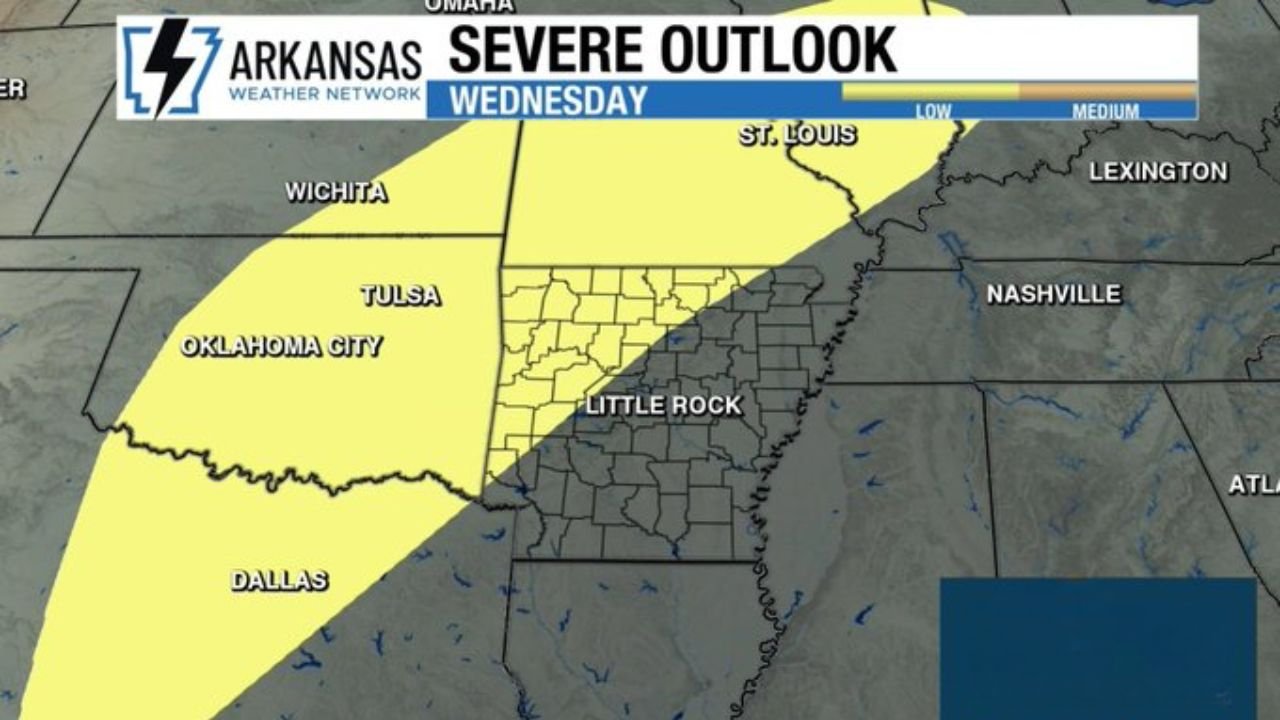
LITTLE ROCK, Arkansas — Northwest Arkansas is staring down its most dangerous weather day of the entire week on Wednesday, April 16, as a powerful severe storm system locks onto the northwest one-third of the state with extreme atmospheric energy, intense lightning, and destructive wind fields that forecasters say are more than enough to produce significant thunderstorms across communities from Fayetteville to Fort Smith.
The threat does not stop at the Arkansas border. A massive severe weather corridor stretching from Dallas, Texas through Oklahoma City and Tulsa, Oklahoma, north through Wichita, Kansas, and into Little Rock, Arkansas and St. Louis, Missouri is all under the influence of this same storm system, according to data from the European Centre for Medium-Range Weather Forecasts (ECMWF) and the Arkansas Weather Network.
Cities and States in the Risk Zone
- Arkansas: Fayetteville, Fort Smith, Springdale, Rogers, Bentonville — the entire northwest one-third of the state carries the highest local risk Wednesday
- Oklahoma: Oklahoma City and Tulsa fall inside the active severe weather corridor
- Kansas: Wichita sits within the outer reaches of the storm zone
- Missouri: St. Louis sits on the northern edge of the Wednesday risk area
- Texas: Dallas is included in the broad low-to-medium risk zone extending southward
Primary Threats
Wednesday’s setup is dangerous for more than one reason, and the combination of these factors is what makes this day stand out from a typical spring storm:
- Explosive atmospheric instability — CAPE values, which measure the energy available to fuel thunderstorms, are running between 2,000 and 2,870 J/kg across northwest Arkansas and the central storm corridor. Values this high allow storms to develop quickly, grow tall, and remain intense for extended periods
- Extreme lightning activity — The ECMWF lightning flash density model shows a tightly concentrated band of extremely high electrical activity directly over the Oklahoma-Arkansas-Missouri corridor, with model output reaching a maximum of 561 flashes per 100 square kilometers per day — an unusually dangerous level of lightning for any populated area
- Powerful upper-level winds — Jet stream winds at high altitude are roaring at 95 to over 115 knots across the region, providing the strong wind shear that organizes storms into long-lived, severe-producing systems rather than short-lived rain showers
Why This Matters for Northwest Arkansas
The Arkansas Weather Network was direct in its assessment — Wednesday is going to be the most impressive day in this entire severe weather sequence for Arkansas, and that distinction belongs almost entirely to the northwest one-third of the state. Cities like Fayetteville, Springdale, Rogers, Bentonville, and Fort Smith are sitting in the exact area where strong wind fields and just enough atmospheric instability will combine to create the most favorable environment for dangerous thunderstorm development.
This is not an ordinary spring rain system. When CAPE values exceed 2,000 J/kg and upper-level winds are this strong, the atmosphere has everything it needs to produce damaging straight-line winds, large hail, frequent lightning strikes, and heavy rainfall in a very short window. Storms in these conditions can go from developing to severe in a matter of minutes, often faster than warning systems can keep up.
Residents across northwest Arkansas — including the rapidly growing Fayetteville-Springdale-Rogers metro area — should treat Wednesday afternoon and evening as a day to stay weather-aware, have a shelter plan in place, and avoid being caught outdoors when storms arrive.
Multi-Day Pattern
The most important thing to understand about this storm system is that Wednesday is the peak, not the beginning of a prolonged event. Forecasters note that storms are expected to weaken as they move eastward during Wednesday night and into Thursday morning, meaning the dangerous window for northwest Arkansas is concentrated in the afternoon and evening hours of Wednesday itself.
By Thursday, the severe threat for most of Arkansas drops off significantly as the storm system pushes east. Areas further to the east — including parts of Tennessee and the broader Mid-South — will need to monitor conditions as the system continues its track. For Arkansas, the focus is almost entirely on getting through Wednesday safely.
What to Watch Next
- Watch for the Storm Prediction Center (SPC) to update its severe weather outlook for Wednesday as the system gets closer and forecast details sharpen
- Monitor NWS Little Rock for any tornado watches, severe thunderstorm watches, or warnings issued Wednesday afternoon and evening
- Northwest Arkansas residents in Fayetteville, Springdale, Rogers, and Bentonville should ensure weather alerts are turned on and active on their phones before Wednesday
- Any outdoor plans, sporting events, or evening activities in the northwest Arkansas region should be reconsidered or moved indoors for Wednesday
- Storms are forecast to weaken Wednesday night as they push east — but do not wait for that window to seek shelter if warnings are issued in your area
Northwest Arkansas is heading into its most significant severe weather day of the week, and the window to prepare is now. Residents across Fayetteville, Fort Smith, and the broader northwest corner of the state are urged to stay informed, have a clear shelter plan, and take warnings seriously the moment they are issued.
WaldronNews.com will continue tracking this severe weather sequence across Arkansas, Oklahoma, Kansas, Missouri, and Texas and will provide updates as Wednesday’s storm details become available.