
Alaska to American Samoa Sees Extreme Temperature Divide as Fairbanks Plunges Below −20°F While Pago Pago Stays Near 80°F
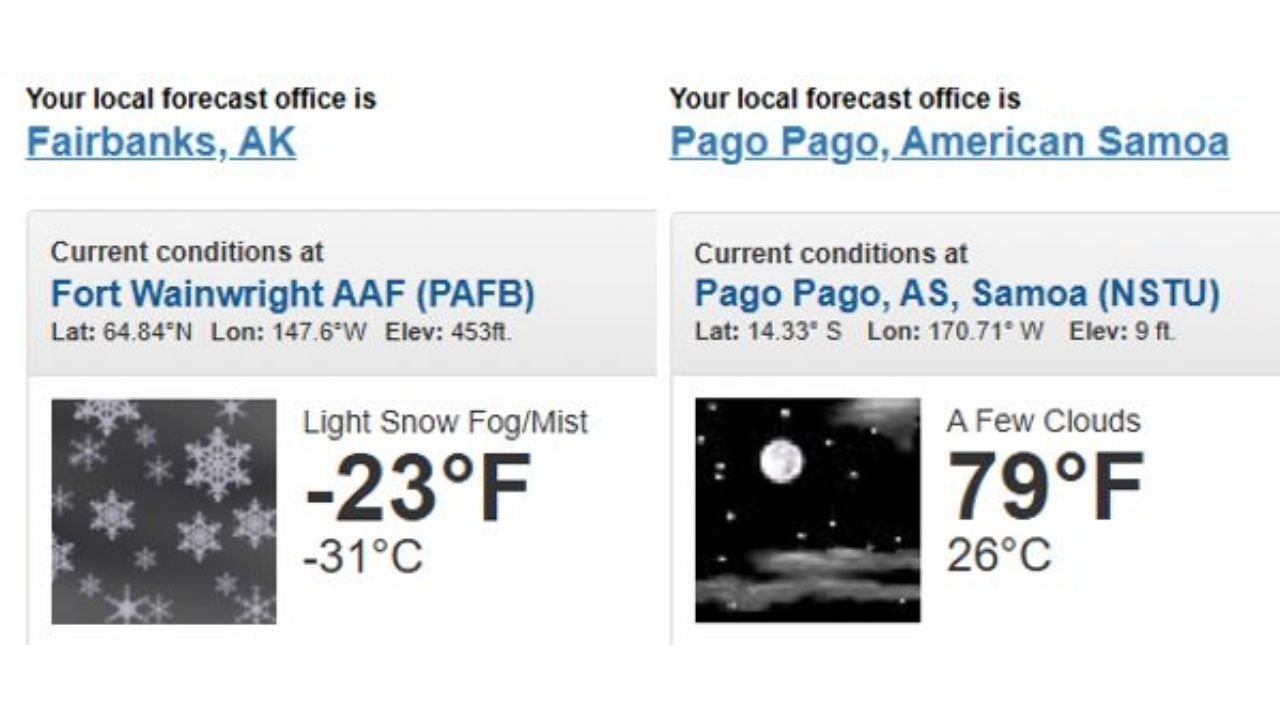
ALASKA — A striking temperature contrast unfolded this morning across U.S. territories, highlighting the sheer geographic and climatic range of the country. While Fairbanks, Alaska endured deep Arctic cold with temperatures dropping to −23°F (−31°C), Pago Pago, American Samoa remained firmly in the tropics with a warm 79°F (26°C) under mostly clear skies. The gap between the two locations exceeded 100 degrees, a difference meteorologists say is not unusual for this time of year, but still dramatic when viewed side by side.
According to data displayed by the National Weather Service, conditions in interior Alaska and the South Pacific could not be more different — and both are behaving exactly as their seasonal patterns suggest.
Bitter Arctic Cold Holds Firm in Interior Alaska
In Fairbanks, current conditions at Fort Wainwright AAF showed light snow with fog or mist as temperatures settled at −23°F early in the day. With the city located deep in Alaska’s interior, far from the moderating influence of the ocean, extreme cold is common during winter months.
Key factors driving the cold in Fairbanks include:
- Long winter nights, with very limited daylight
- Clear skies, which allow heat to escape rapidly overnight
- Snow-covered ground, enhancing surface cooling
- High-pressure systems that trap cold air near the surface
Meteorologists note that prolonged cold spells like this can persist for days or even weeks in interior Alaska, especially during periods of stable atmospheric patterns.
Tropical Stability Continues in American Samoa
On the opposite end of the spectrum, Pago Pago reported 79°F with a few clouds, reflecting typical tropical conditions. Located near the equator and surrounded by warm ocean waters, American Samoa experiences minimal seasonal temperature variation throughout the year.
Typical weather features for Pago Pago include:
- Warm overnight lows, often staying in the mid to upper 70s
- High humidity, moderated by ocean breezes
- Little seasonal fluctuation, even during winter months elsewhere
- Occasional cloud cover or showers, but no cold air intrusions
While Alaska battles subzero cold, residents in American Samoa continue to experience steady, summer-like weather — a reminder of how latitude and geography shape daily life.
Why a 100-Degree Difference Isn’t Unusual
Weather experts stress that while the contrast looks extreme, it is seasonally normal. The United States spans a massive range of latitudes, from the Arctic Circle to the tropics, making temperature differences like this possible and even expected during winter.
The National Weather Service regularly tracks the highest and lowest temperatures recorded across U.S. locations each day, illustrating how varied conditions can be at the same moment.
Key reasons for the massive temperature gap include:
- Solar angle differences between high and low latitudes
- Ocean influence in tropical regions versus continental interiors
- Snow and ice cover amplifying cold in northern areas
- Atmospheric circulation patterns locking in regional extremes
What This Means Going Forward
For Fairbanks, forecasters expect continued cold conditions, with temperatures remaining well below zero and limited relief in the short term. Cold weather precautions remain critical, especially for transportation, infrastructure, and personal safety.
In Pago Pago, conditions are expected to remain warm and stable, with little deviation from seasonal norms.
This sharp contrast serves as a clear snapshot of America’s climatic extremes — from Arctic cold to tropical warmth — all happening at the same time under the same national weather monitoring system.
As winter progresses, similar temperature spreads are likely to appear again, especially during strong cold-air outbreaks across Alaska and the northern mainland.
What do you think about this extreme temperature contrast across U.S. regions? Have you experienced similar weather swings where you live? Share your thoughts and stay updated with the latest national and regional weather coverage by visiting Waldron News regularly.