
Antarctica’s Vostok Station Shatters Global Cold Record for March With a Temperature of Negative 76.4 Degrees Celsius — the Coldest March Reading Ever Recorded on Earth
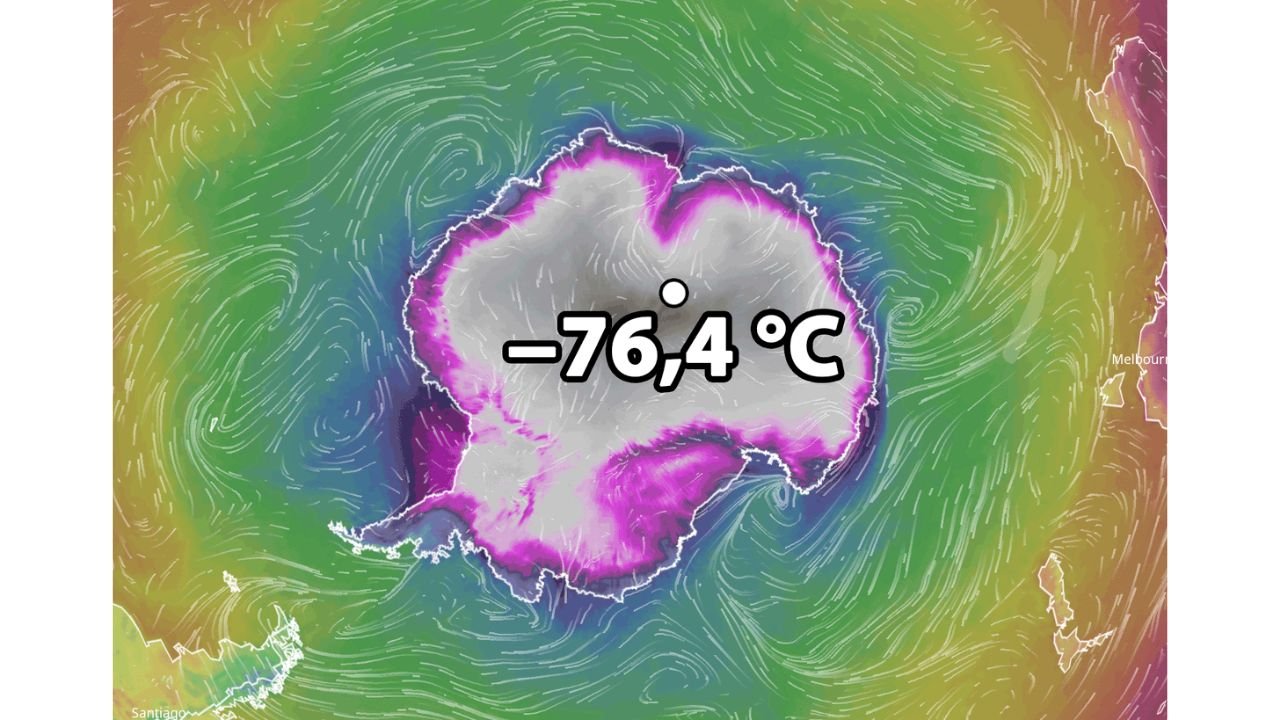
VOSTOK STATION, ANTARCTICA — The Vostok Station in Antarctica made history last Tuesday when a temperature of negative 76.4 degrees Celsius (negative 105.5 degrees Fahrenheit) was recorded at the remote Russian research outpost — the lowest temperature ever measured anywhere on Earth in the month of March and a new global record for the coldest March reading in recorded history. Temperatures across Antarctica were running significantly below average throughout last week, with the cold centered on the East Antarctic Plateau where Vostok Station sits at an elevation of over 3,400 meters above sea level.
This is not just an Antarctic record — it is a planetary record for the month of March. No weather station anywhere on Earth has ever measured a colder temperature in March than what was recorded at Vostok last Tuesday.
What Negative 76.4 Celsius Actually Feels Like
For most people, temperatures this extreme are almost impossible to relate to — and that is exactly what makes this record so remarkable. Here is some context to help understand just how cold negative 76.4°C really is:
Negative 76.4°C is colder than:
- The average surface temperature of Mars — which sits around negative 60°C
- The point at which carbon dioxide begins to freeze into dry ice — which occurs at around negative 78.5°C, meaning Vostok came within 2 degrees of the temperature at which CO2 freezes solid
- The previous coldest March temperature ever recorded anywhere on Earth — which this reading surpassed to set the all-time monthly global record
- The coldest temperatures ever recorded in Siberia, Alaska or Canada — the coldest inhabited places on Earth, which rarely approach even negative 70°C
In Fahrenheit — which may be more relatable for American readers — negative 76.4°C converts to approximately negative 105.5°F. For reference, the coldest temperature ever recorded in the continental United States was negative 70°F in Montana in 1954. Vostok last Tuesday was 35 degrees Fahrenheit colder than the all-time US record.
Why Vostok Station Regularly Produces the World’s Coldest Temperatures
Vostok Station is one of the most extreme environments on Earth — and it is not a coincidence that it holds multiple cold temperature records. Several factors combine to make Vostok uniquely capable of reaching temperatures that no other location on the planet can match:
Elevation — Vostok sits at 3,488 meters (11,444 feet) above sea level on the East Antarctic Plateau. At this altitude, the thin atmosphere retains far less heat than at sea level, allowing temperatures to plunge to depths impossible at lower elevations.
Location — Vostok is located near the southern Pole of Cold — the area of Antarctica that consistently produces the coldest temperatures on the continent and on Earth. It is far from the moderating influence of the Southern Ocean, deep in the continental interior where no maritime warmth can reach.
Clear skies and radiative cooling — during the Antarctic autumn — which March represents in the Southern Hemisphere — the sun is weakening rapidly and the long polar nights are approaching. Under clear skies, the ice surface radiates heat into space with nothing to replace it, driving temperatures into extreme territory very quickly.
The all-time Earth record — the coldest temperature ever recorded anywhere on Earth was negative 89.2°C, also at Vostok Station, on July 21, 1983. Last Tuesday’s negative 76.4°C reading does not approach that all-time record — but it is extraordinary specifically because it occurred in March, which is still technically the tail end of the Antarctic summer rather than the depth of winter.
Why This Record Matters Beyond Antarctica
A global record for the coldest March temperature ever measured is a significant scientific event regardless of where it occurs. March at Vostok is equivalent to September in the Northern Hemisphere — late summer transitioning into early autumn. The fact that temperatures crashed to negative 76.4°C during what is still a relatively warm period of the Antarctic year signals that last week’s cold outbreak across East Antarctica was extraordinarily intense.
Climate scientists and polar meteorologists will be studying the atmospheric conditions that produced this record — including what combination of high pressure, clear skies, low humidity and anomalous cold air pooling created the environment capable of driving temperatures to a level never before seen in March at any location on Earth.
What to Watch Next
- Official verification of the negative 76.4°C reading by meteorological agencies and the World Meteorological Organization
- Analysis of the atmospheric setup that produced the record cold outbreak across East Antarctica last week
- Comparison to historical Vostok records — how this March reading compares to the coldest temperatures recorded at the station in all months
- Antarctic winter outlook — whether the anomalously cold pattern that produced this March record gives any indication of what the 2026 Antarctic winter may bring when true polar darkness arrives in April through August
- Global cold record context — whether any station anywhere approaches the all-time Earth record of negative 89.2°C during the coming Antarctic winter
WaldronNews.com will continue tracking extreme global weather records and provide updates as the Vostok Station negative 76.4°C reading moves through the official verification process.