
Arctic Blast Slams New York, Pennsylvania, and New England as Wind Chills Plunge to -50°F and Feb. 14–16 Winter Storm Risk Builds
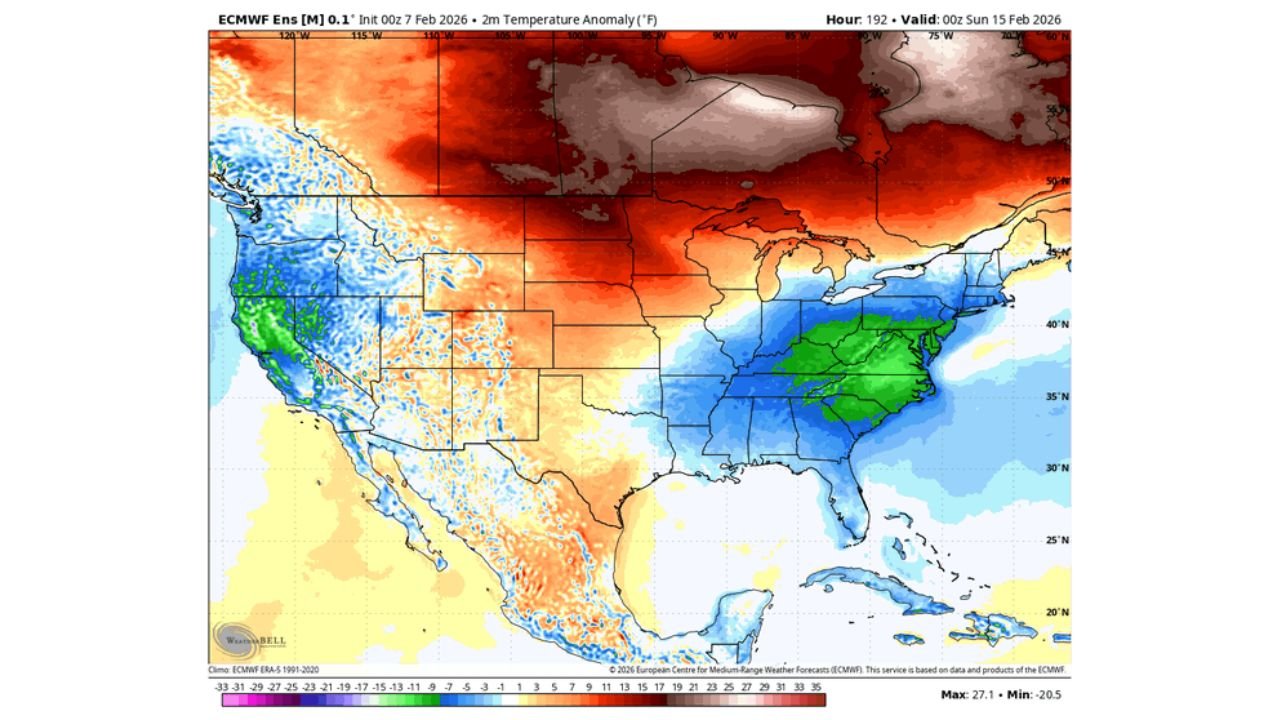
UNITED STATES — A deep Arctic air mass is tightening its grip on the Northeast this weekend, bringing some of the coldest wind chills of the winter so far, while longer-range models increasingly highlight February 14–16 as a period that could feature a developing winter storm across parts of the East Coast.
Life-Threatening Wind Chills Spread Across the Northeast
Forecast guidance shows wind chills plunging to -30°F to -40°F across large portions of New York, Pennsylvania, Vermont, New Hampshire, and interior New England from Friday night into Sunday morning.
The most extreme conditions are expected at higher elevations, where exposure will be especially dangerous.
According to the wind chill analysis, Hunter Mountain in New York stands out as the coldest location, with wind chills near -50°F possible — values that approach record territory and can cause frostbite in minutes.
Even major population centers are not spared:
- Upstate New York and northern Pennsylvania: widespread -30°F to -40°F wind chills
- Interior New England: -20°F to -35°F wind chills
- Boston and coastal New England: still bitter, generally -10°F to -20°F
Meteorologists stress that these values are not just uncomfortable, but dangerous, especially for anyone outdoors without proper protection.
Why This Cold Is So Severe
Upper-air pattern maps show a strong Arctic block locked in over eastern Canada, funneling cold air directly into the northeastern United States.
At the same time, a deep trough over the eastern U.S. is keeping the cold firmly in place, preventing moderation even during daylight hours. Overnight lows combined with persistent wind will drive the extreme wind chill readings through Sunday.
This setup signals that winter is far from over, despite the calendar slowly moving toward mid-February.
Attention Turns to Feb. 14–16 Winter Storm Potential
Beyond the immediate cold, longer-range ECMWF ensemble guidance is increasingly flagging February 14–16 as a timeframe to watch for a possible winter storm.
Model trends show:
- A more favorable cold air source in place across the Northeast
- An East Coast trough positioned to allow energy to slide underneath
- Signs of cold air damming, a classic ingredient for snow and ice events
While exact storm details remain uncertain, forecasters note that model runs have grown louder overnight, increasing confidence that the pattern could support winter weather if a storm develops.
Early Snow Signals in the Mid-Atlantic and Northeast
Preliminary snow output maps suggest:
- Interior Mid-Atlantic and southern Appalachians: potential for accumulating snow if moisture arrives
- Central and northern Appalachians into interior Northeast: better chances for snow versus rain
- Coastal areas: highly dependent on storm track and timing
At this range, nothing is locked in, but the consistency in colder solutions has kept this period on forecasters’ radar for several days.
What Residents Should Do Now
For the immediate Arctic cold:
- Limit outdoor exposure, especially overnight and early morning
- Dress in layers and protect exposed skin
- Check on vulnerable neighbors and pets
For the mid-February storm window:
- Monitor forecast updates over the coming days
- Be aware that impacts could change quickly as models refine storm placement
Bottom Line
The Northeast is entering a dangerous Arctic cold stretch through Sunday, with wind chills as low as -50°F in the mountains of New York. Beyond that, February 14–16 is shaping up as a legitimate winter storm window, backed by colder model trends and a favorable large-scale pattern.
Winter is not loosening its grip just yet.
Stay tuned to Waldronnews.com for continued updates on the Arctic cold and any developing winter storm threats across the Northeast.