
Arizona and California Face Moderate Risk of Much Above Normal Temperatures as CPC Paints Rare March “Pink” Heat Zone Across the Southwest
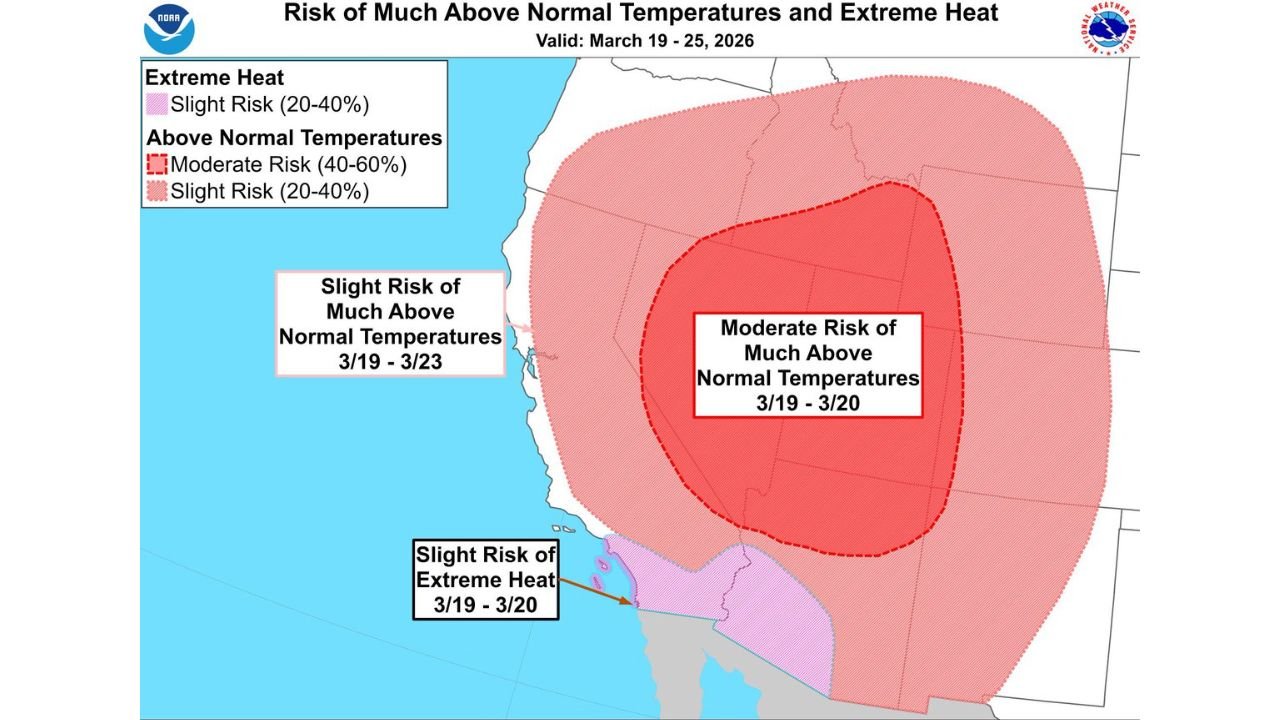
SOUTHWEST UNITED STATES — It is rare to see widespread “pink” shading on a Climate Prediction Center heat outlook in the month of March, but that is exactly what the latest forecast is showing for Arizona, California, Nevada, Utah, and parts of New Mexico.
The CPC’s Risk of Much Above Normal Temperatures and Extreme Heat outlook, valid March 19–25, 2026, highlights a broad swath of the Southwest under elevated heat risk — including a core moderate risk area centered over Arizona.
Moderate Risk Expands Across Arizona
The outlook shows a Moderate Risk (40–60%) of Much Above Normal Temperatures from March 19–20 focused over:
- Central and eastern Arizona
- Western New Mexico
- Southern Utah
- Parts of Nevada
Surrounding that core is a larger Slight Risk (20–40%) zone covering much of:
- Arizona
- California
- Nevada
- Utah
A moderate risk designation in March is notable, signaling high confidence in significantly above-average warmth for multiple days.
Extreme Heat Signal in Southern Arizona and Southern California
In addition to the broader warmth outlook, the CPC map identifies a Slight Risk of Extreme Heat (20–40%) across:
- Southern Arizona
- Portions of southeastern California
This area includes the lower desert regions, where temperatures can spike rapidly under strong high-pressure ridging.
Seeing an extreme heat probability in March underscores how anomalous this pattern could be, especially for communities that typically experience milder spring conditions.
Why This Is Unusual for March
March climatology across the Southwest typically features:
- Gradual warming
- Comfortable daytime highs
- Cool overnight lows
However, the presence of moderate risk probabilities suggests temperatures may climb well above seasonal norms, potentially pushing some desert areas toward early-season heat thresholds.
The map’s extensive red and pink shading — stretching from coastal California inland through Arizona — signals a strong and persistent upper-level ridge dominating the region.
Potential Impacts Across the Southwest
If this outlook verifies, impacts could include:
- Early-season heat stress
- Increased wildfire concerns in dry regions
- Elevated cooling demand
- Rapid snowmelt in higher elevations
With dry fuels already present in parts of Arizona and California, above-normal temperatures could exacerbate fire weather concerns later in the month.
Watching the Pattern Closely
The March 19–25 timeframe suggests this heat pattern may last several consecutive days rather than being a brief warm spell.
Moderate risk areas from the Climate Prediction Center typically reflect increasing forecast confidence in anomalous warmth — not just isolated hot afternoons.
Residents across Arizona and California should monitor local forecasts as the period approaches, particularly in desert communities prone to rapid heat escalation.
Stay with WaldronNews.com for continued updates as this unusual March heat pattern develops across the Southwest.