
Arizona California Heat Dome Collides With Minnesota Great Lakes Polar Cold as 95 in Phoenix and 20 in Minneapolis Split the Nation in Extreme Weather Clash
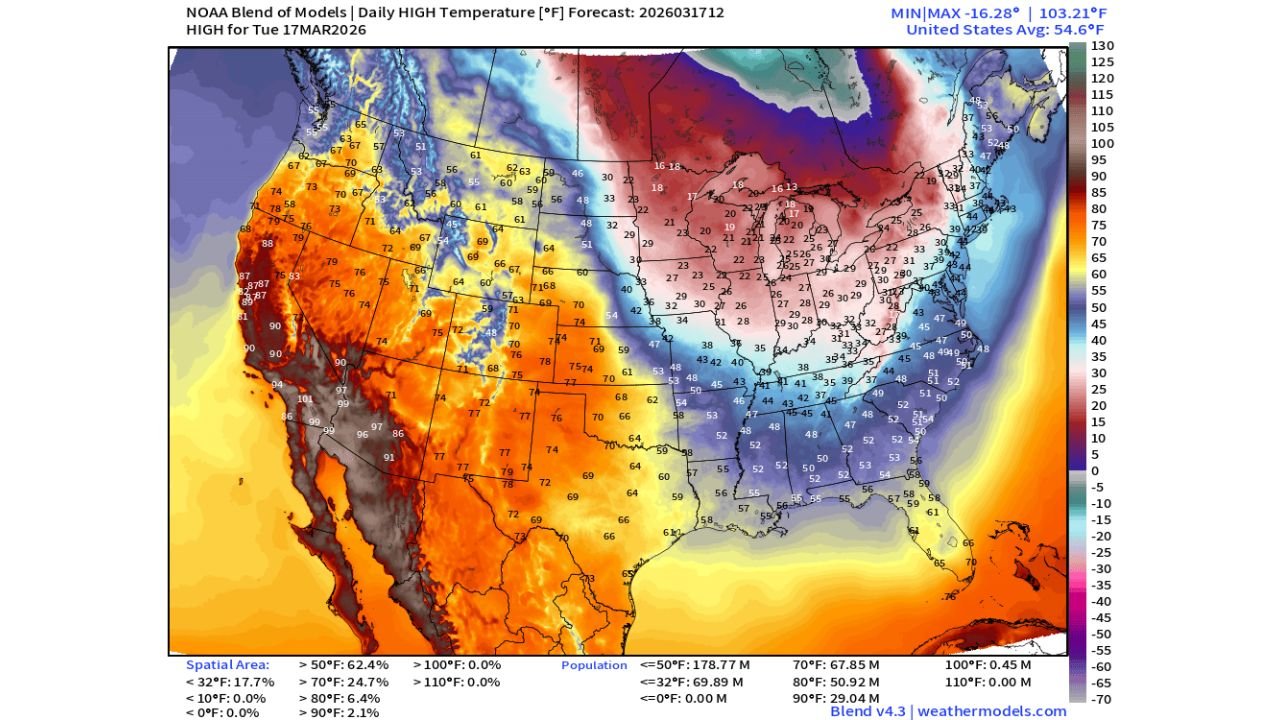
UNITED STATES — A dramatic weather divide is unfolding across the country as a powerful heat dome grips the western United States while a blast of polar cold locks the Midwest and Great Lakes into winter-like conditions. The result is a striking temperature contrast, with some regions nearing summer heat while others remain well below freezing.
West Bakes Under Expanding Heat Dome
Across Arizona, California, Nevada, and parts of the Southwest, temperatures are surging far above seasonal norms.
- Phoenix, Arizona: near 95°F
- Widespread 70s to 90s across California and the Southwest
- Above-normal warmth stretching into the Rockies
This heat is being driven by a strong high-pressure system, creating stable, sunny conditions and pushing temperatures into early summer territory.
Midwest and Great Lakes Stay Locked in Winter Chill
At the same time, a very different story is unfolding across Minnesota, Wisconsin, Michigan, and surrounding states, where cold air continues to dominate.
- Minneapolis, Minnesota: around 20°F for daytime highs
- Much of the Upper Midwest stuck in the teens and 20s
- Great Lakes region seeing persistent cold conditions
This cold air mass is tied to a lingering polar influence, keeping temperatures well below normal for mid-March.
Massive Temperature Contrast Splits the Nation
The difference between the two air masses is extreme:
- Nearly 75-degree difference between Phoenix and Minneapolis
- Sharp dividing line running through the central United States
- Rapid transition zone separating warm and cold air
This setup highlights one of the most dramatic coast-to-coast contrasts seen this season.
Millions Still Below Freezing
Despite the growing warmth in the West, a significant portion of the country remains locked in cold conditions.
- Around 70 million people are experiencing temperatures at or below freezing
- Large areas across the Midwest, Great Lakes, and Northeast remain cold
- Limited daytime warming continues in these regions
This prolonged cold is unusual given the advancing spring season.
Why This Pattern Is So Intense
The clash is being driven by two dominant weather features:
- A strong heat dome in the West trapping warm air
- A polar trough funneling cold air into the central and eastern U.S.
Together, these systems are creating a sharp and persistent temperature gradient across the country.
What Happens Next
This pattern is expected to continue in the short term, with:
- Continued warmth across the western U.S.
- Ongoing cold across the Midwest and Great Lakes
- Gradual changes possible as systems shift later in the week
Until then, the nation remains split between two very different seasons.
A Nation Divided Between Summer and Winter
From near-record warmth in the Southwest to freezing conditions in the Midwest, this setup showcases the extreme variability of March weather.
Residents across both regions should prepare for continued impacts as this unusual pattern holds.
Stay with WaldronNews.com for continued updates on this extreme weather divide across the United States.