
Arkansas, Texas, Louisiana and Much of the Southeast Braces for Widespread Above-Average Temperatures March 5–11 as NOAA Signals Strong Warm Pattern
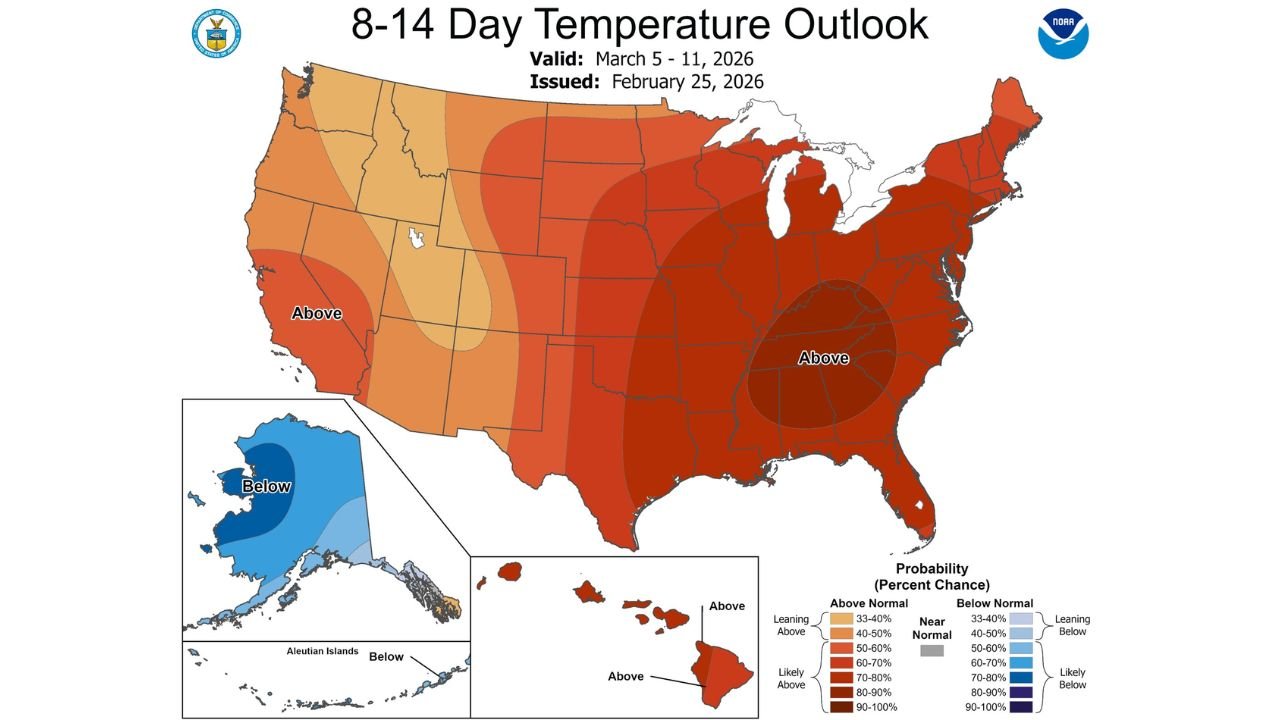
WALDRON, ARKANSAS — A large portion of the southern and eastern United States is expected to experience above-normal temperatures from March 5 through March 11, 2026, according to the latest 8–14 Day Temperature Outlook issued by NOAA’s Climate Prediction Center on February 25. The forecast places Arkansas and much of the Deep South squarely within a broad and confident warm signal heading into early March.
The updated outlook highlights a dominant ridge pattern favoring sustained warmth across multiple states.
Strongest Warm Signal Centered Over Arkansas and the Deep South
The most concentrated area of above-average temperature probabilities stretches across:
- Eastern Texas
- Arkansas
- Louisiana
- Mississippi
- Alabama
- Tennessee
- Georgia
Shading on the outlook map indicates moderate to high confidence that temperatures will average above seasonal norms during this period. Arkansas sits within one of the more pronounced warm zones, suggesting a consistent stretch of milder conditions rather than isolated warm days.
Early March averages in western Arkansas typically see highs in the upper 50s to near 60 degrees. With this pattern in place, temperatures could trend several degrees warmer than those benchmarks.
Warmth Expands Into Midwest and Northeast
The above-normal signal does not stop in the South. It extends northward into parts of:
- Illinois
- Indiana
- Ohio
- Michigan
- Pennsylvania
- New York
- New England
While probabilities are somewhat lower compared to the Deep South core, much of the eastern half of the country leans warmer than average for the 8–14 day window.
Western states including California, Nevada, Utah, Arizona and New Mexico are also favored to trend above normal, though with more modest confidence.
Alaska Turns Colder Than Normal
Alaska stands in sharp contrast to the Lower 48. The outlook shows below-normal temperatures dominating much of western and southern Alaska during the same March 5–11 timeframe, making it the primary region expecting colder-than-average conditions.
Hawaii, meanwhile, is projected to lean warmer than normal.
Early Spring Feel, But Winter Isn’t Finished
Meteorological spring begins March 1, and this outlook supports a spring-like start for Arkansas and surrounding states. However, long-range outlooks reflect overall averages, not daily extremes. Brief cold shots remain possible later in March, and late-season cold snaps are not uncommon across the region.
For now, the dominant signal is clear: Arkansas and much of the Southeast are positioned for a notably warm stretch to open March, with temperatures running above typical early-season levels through at least the March 5–11 period.
Stay tuned for further updates as new forecast data becomes available, and continue monitoring local weather information to stay prepared for any shifts in the pattern.