
Colorado, California and Arizona Shatter Heat Records as Snowpack Collapses Across the West, Raising 2026 Water Crisis Fears
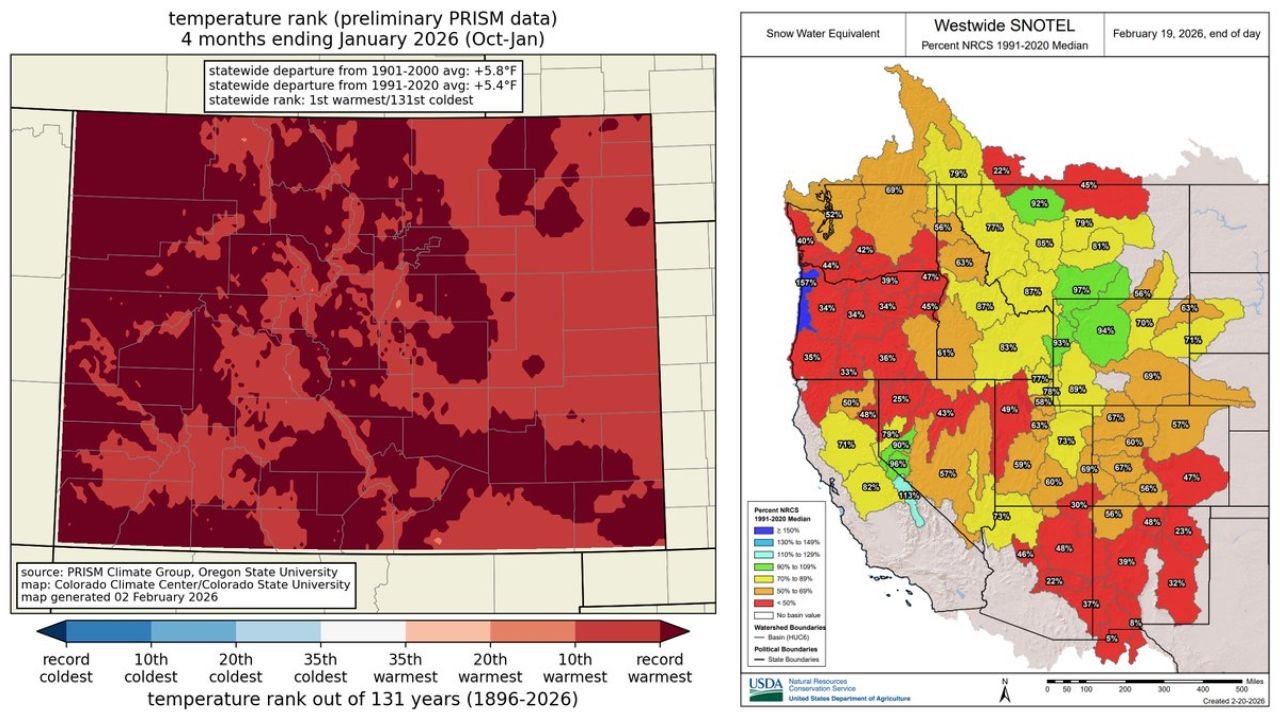
WESTERN UNITED STATES — What should have been the heart of winter has instead turned into a historic warm spell across much of the West, with record-breaking temperatures and dangerously low snowpack levels raising serious concerns for water supplies later in 2026.
New climate data covering November 2025 through January 2026 show widespread record warmth across Colorado, California, Nevada, Arizona, Utah, and New Mexico, with large areas ranking in the “record warmest” category compared to more than a century of observations.
Colorado Records One of Its Warmest Winters on Record
Preliminary PRISM climate data for Colorado show:
- Statewide temperature departure: +5.8°F from the 1901–2000 average
- Statewide rank: 1st warmest out of 131 years (1896–2026 period)
Much of the Front Range, including areas near Denver and Boulder, has experienced persistent above-average warmth, drastically reducing snowfall opportunities.
The map of mean temperature percentiles places most of the West — especially Colorado, Utah, Nevada, Arizona, and California — in deep red shades, indicating “record warmest” or “much above average” conditions.
Snowpack Crisis Spreads Across the West
The warmth has had immediate consequences for mountain snowpack, which acts as the West’s natural water reservoir.
The latest Westwide SNOTEL data (percent of 1991–2020 median snow water equivalent) show alarming deficits in several states:
- Arizona: Some basins below 30% of median
- New Mexico: Multiple areas under 40%
- Southern California: Several basins between 25% and 35%
- Nevada: Large areas below 50%
- Oregon and Washington: Mixed, but with some basins under 50%
While parts of Idaho and Wyoming are closer to average or slightly above in some basins, the broader West remains below normal.
In contrast, pockets of northern Idaho and western Montana show healthier percentages, but they are not enough to offset widespread shortfalls across the Southwest.
Why Snowpack Matters
Snowpack in states like Colorado, Utah, and California feeds major river systems, including the Colorado River, which supports water supplies for:
- Arizona
- Nevada
- Southern California
- Parts of New Mexico
With snow water equivalent running significantly below median in many basins, spring runoff could be sharply reduced.
Ripple Effects for 2026
If dry and warm conditions persist into late winter and early spring, the West could face:
- Increased drought expansion
- Heightened wildfire risk
- Strain on agricultural irrigation
- Tighter water management restrictions
Reservoir levels, already closely monitored in the Colorado River Basin, could come under renewed pressure.
A Winter That Never Fully Arrived
The data make one thing clear: much of the West has not experienced a typical winter.
Instead of consistent cold and steady mountain snowfall, the region has seen persistent ridging and warmth. That pattern has suppressed storm tracks and limited snow accumulation in key basins.
With February underway, time is running short for a meaningful recovery before the seasonal snow accumulation window begins to close.
Bottom Line
From record warmth in Colorado and Utah to critically low snowpack in Arizona, New Mexico, Nevada, and Southern California, winter 2025–2026 is shaping up as one of the most concerning in recent memory for the American West.
The consequences may extend far beyond this season — potentially shaping drought, wildfire, and water policy discussions for the rest of 2026.
Stay with Waldronnews.com for continued coverage on climate trends and water impacts across the United States.