
Colorado Now Under Growing Watch as Rapid Drought Expansion Raises Serious Wildfire Concerns Across Entire State
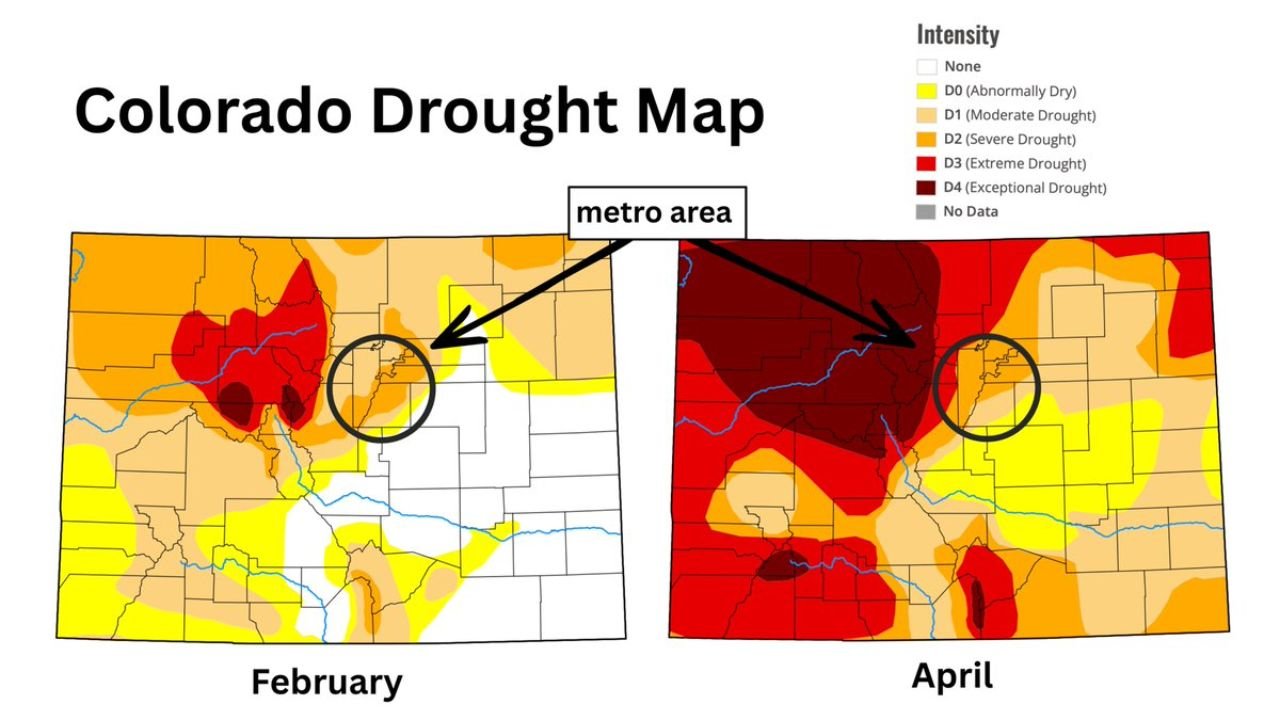
COLORADO — A new statewide alert is emerging across Colorado as updated drought data shows a rapid and alarming expansion of extreme and exceptional drought conditions, significantly increasing the risk of wildfires across nearly the entire state.
What was once a partial drought just weeks ago has now escalated into a near statewide crisis, with conditions deteriorating sharply from February into April.
Drought Conditions Have Intensified Across Nearly All of Colorado
Recent data shows a dramatic shift:
- In February, roughly half the state was dealing with moderate to severe drought
- By April, almost all of Colorado is now in drought conditions
- Large portions have escalated into:
- Extreme drought
- Exceptional drought (the highest and most dangerous category)
This level of drought is rare and highly concerning, especially heading deeper into spring.
Snowpack Collapse Making Situation Worse
One of the biggest drivers behind this worsening situation is record-low snowpack across Colorado this year.
Instead of the usual spring melt providing moisture:
- Snow totals have been significantly below normal
- Less meltwater means dry soil and vegetation
- The landscape is now dominated by:
- Dry grass
- Dry brush
- Highly flammable conditions
This dramatically increases the likelihood that any spark could ignite a fast-moving wildfire.
Wildfire Risk Now Elevated Across the State
With drought intensifying and vegetation drying out, Colorado is entering a dangerous wildfire setup:
- Fire danger is expected to remain above average through April
- Conditions are favorable for:
- Rapid fire spread
- Difficult containment
- Increased frequency of fire starts
This is especially concerning because wildfire season in Colorado is no longer limited to summer — it is now a year-round threat.
Metro Areas Also Facing Growing Concern
Even areas near major population centers are not immune.
The data highlights worsening conditions around:
- Denver metro region
- Surrounding Front Range communities
As drought deepens, even these areas could face increased fire risk and environmental stress.
Why Conditions Are Deteriorating So Quickly
Several key factors are contributing to the rapid decline:
- Lack of consistent precipitation
- Warmer-than-normal temperatures
- Reduced snowpack and early drying
- Persistent dry air patterns
Together, these are accelerating the transition into extreme drought conditions much earlier than typical.
Residents Urged to Take Immediate Precautions
With wildfire risk rising, residents across Colorado should begin taking action now:
- Clear dry vegetation and debris around homes
- Avoid outdoor burning or activities that create sparks
- Prepare defensible space around property
- Stay alert for fire weather warnings
Even small preventative steps can reduce the risk of fires starting or spreading.
A Critical Period for Colorado Ahead
From the mountains to the plains, Colorado is entering a high-risk stretch where drought and wildfire conditions could worsen further if relief does not arrive.
The message is clear: conditions are deteriorating fast, and the wildfire threat is real.
Stay with WaldronNews.com for continued coverage as drought conditions evolve and wildfire risks develop across the state.