
Colorado Shatters March Heat Records as Denver, Colorado Springs, Pueblo and Fort Collins Approach or Break All-Time Monthly Highs
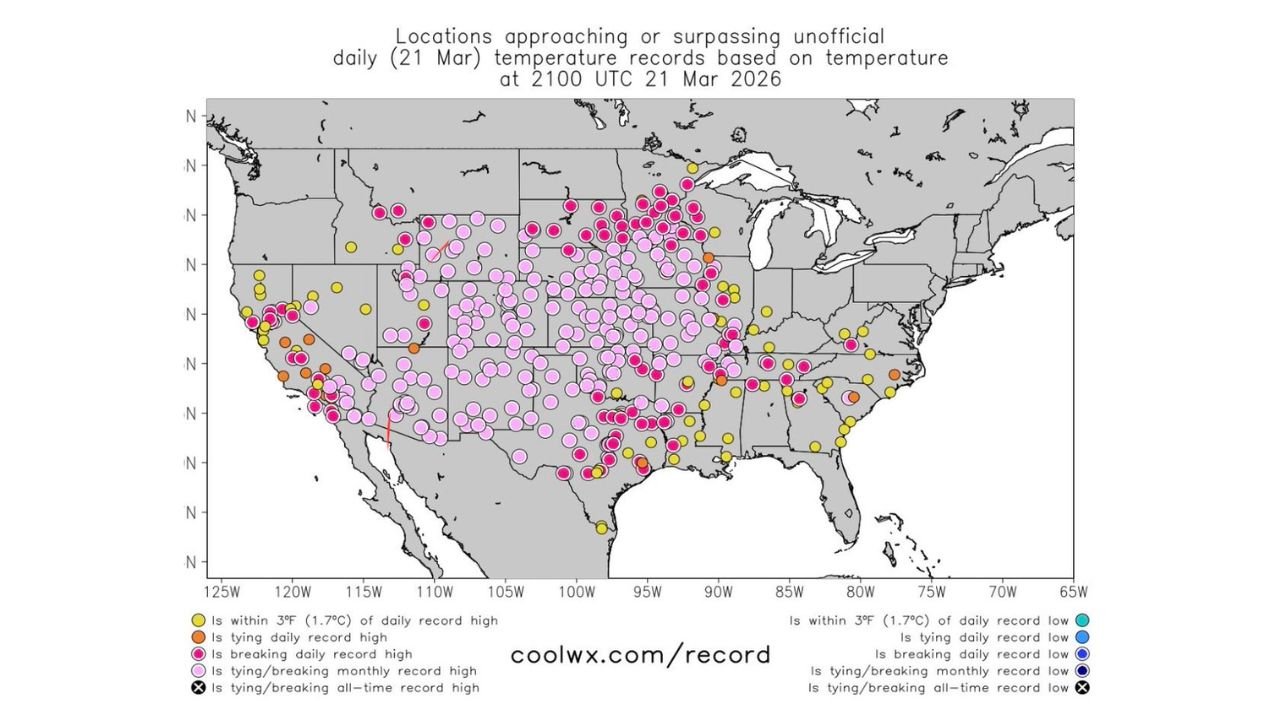
DENVER, CO — An extraordinary surge of early-season heat is rewriting the record books across Colorado, with virtually every major weather station in the state either breaking or approaching its hottest March temperature on record.
Data collected as of Saturday evening (March 21, 2026) show widespread record-breaking warmth not just across Colorado, but throughout much of the central United States. However, the concentration of broken and near-broken monthly records is especially dense across the Rockies — with Colorado standing out prominently on the national temperature map.
Colorado at the Center of the Heat Surge
The latest record analysis shows numerous stations across:
- Denver
- Colorado Springs
- Pueblo
- Fort Collins
- Grand Junction
- Boulder
- Greeley
either tying or breaking daily high records — and in many cases tying or breaking March monthly records.
The data highlight that many Colorado locations are not just setting daily records, but are approaching or surpassing unofficial monthly highs for March, a far more significant benchmark.
What Makes This So Unusual
March typically brings variable spring conditions to Colorado, with average highs that are far lower than what’s being observed this weekend.
Instead, temperatures have surged to levels more typical of late May or even early summer. The scale of record-breaking warmth is notable not only for its intensity but for its geographic coverage across the state.
Meteorological data indicate that dozens of Colorado stations are either:
- Breaking daily record highs
- Tying daily record highs
- Approaching or surpassing monthly March records
In some areas, temperatures are within just a few degrees of all-time March highs, underscoring the magnitude of the event.
Part of a Larger Central U.S. Heat Dome
While Colorado is a focal point, the broader map shows widespread record warmth extending across the Plains and Upper Midwest.
However, Colorado’s elevation typically moderates extreme heat in early spring — making the density of record markers across the state especially striking.
Impacts and What Comes Next
Such early-season heat can have several effects, including:
- Accelerated snowmelt in lower elevations
- Increased fire weather concerns in dry areas
- Strain on early-season agriculture
Forecasters will be watching closely to see whether the heat lingers or if a pattern shift brings temperatures back closer to seasonal averages.
Bottom Line
Colorado is experiencing a remarkable and potentially historic March heat event, with major cities like Denver, Colorado Springs and Pueblo either breaking or nearing their hottest March temperatures ever recorded.
The scale and consistency of the record-breaking warmth make this one of the most significant early-spring heat surges in recent state history.
Stay with WaldronNews.com for continuing coverage of record-setting temperatures and evolving weather patterns across Colorado and the western United States.