
Great Lakes Ice Remains Limited Across Michigan, Wisconsin, Ohio, New York, and Ontario as Coverage Stays Below Average
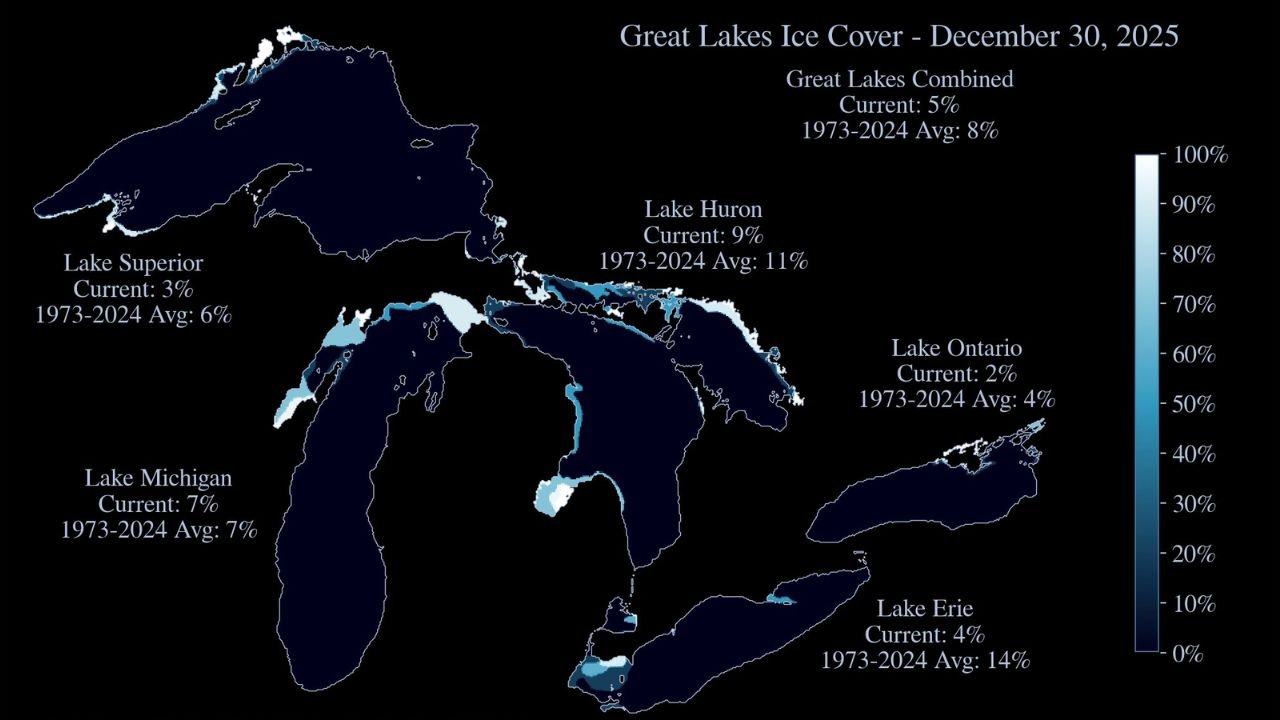
GREAT LAKES REGION — Ice coverage across the Great Lakes remains well below long-term averages as of December 30, 2025, despite recent cold spells affecting parts of the Upper Midwest and Northeast. New data shows that overall ice development is still lagging across Michigan, Wisconsin, Ohio, New York, and surrounding regions as the calendar turns toward January.
According to the latest Great Lakes ice analysis, combined ice coverage sits at just 5%, compared to a 1973–2024 average of 8% for this time of year, highlighting a slower-than-normal start to the winter ice season.
Lake-by-Lake Ice Coverage Shows Uneven Development
Ice formation varies significantly from lake to lake, with some basins closer to normal and others notably behind.
Current ice coverage by lake includes:
- Lake Superior: 3% (average: 6%)
- Lake Michigan: 7% (average: 7%)
- Lake Huron: 9% (average: 11%)
- Lake Erie: 4% (average: 14%)
- Lake Ontario: 2% (average: 4%)
While Lake Michigan is tracking near its historical average, Lake Erie and Lake Superior are running far below normal, particularly notable given Lake Erie’s tendency to freeze more quickly due to its shallower depth.
Why Ice Growth Is Lagging So Far This Season
The slower ice development reflects a combination of late-season warmth, fluctuating temperatures, and persistent wind, which can break up forming ice and delay expansion across open water.
Although Arctic air has occasionally pushed into the region, sustained cold — the key ingredient for rapid ice growth — has been limited so far this winter. Wind-driven wave action has also hindered ice formation, especially on the larger, deeper lakes.
What This Means for Winter Weather and Shipping
Lower ice coverage can influence both lake-effect snowfall patterns and commercial shipping operations.
With more open water available:
- Lake-effect snow can remain active longer into winter
- Shipping lanes face fewer early-season ice restrictions
- Rapid ice growth later in winter remains possible if colder air locks in
However, if prolonged Arctic cold arrives in January or February, ice coverage could still increase quickly, especially on Lake Erie and Lake Huron.
Looking Ahead Into January
Seasonal forecasts continue to hint at colder periods ahead, which could accelerate ice growth across the Great Lakes in the coming weeks. Historically, the most rapid increases in ice coverage often occur after mid-January, once cold patterns become more persistent.
For now, the data shows that the Great Lakes are entering January with less ice than normal, keeping winter conditions more flexible — but far from locked in.
Stay with WaldronNews.com for continued updates on Great Lakes ice conditions, winter weather trends, and how evolving cold patterns may shape the rest of the season across the Midwest and Northeast.