
Historic March 2026 Heat Wave Sets All-Time March Temperature Records in 17 States From California and Arizona at 112 Degrees to Minnesota at 88 Degrees
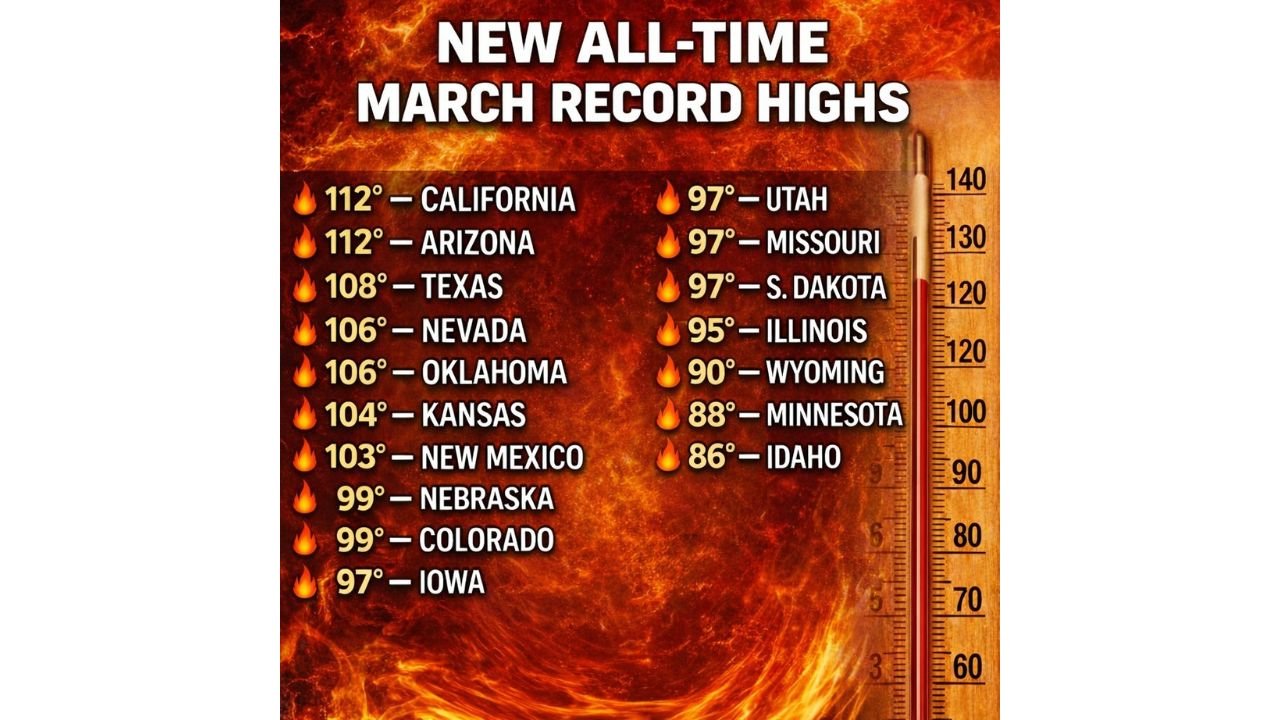
UNITED STATES — March 2026 will go down as one of the most extraordinary months in United States weather history. A massive heat wave swept across the country during March and was so intense, so widespread and so far outside the bounds of what March is supposed to feel like that 17 states set brand new all-time records for the hottest March temperature ever measured — shattering records that in many cases had stood for decades. The hottest readings of the entire event reached 112 degrees Fahrenheit in both California and Arizona — temperatures that those states typically do not see until the middle of summer. From the Desert Southwest through the Plains and all the way up to Minnesota and Idaho, March 2026 delivered summer in the middle of spring on a scale never before recorded across so much of the United States at one time.
All 17 States That Set New All-Time March Temperature Records
Every state on this list set its highest temperature ever recorded in the month of March during the 2026 heat wave:
- California — 112°F — tied for the hottest March reading in the country, a temperature more typical of Death Valley in July
- Arizona — 112°F — matched California at the top, shattering the previous March record for the state
- Texas — 108°F — well into triple digits for March, a reading that would be notable even in August
- Nevada — 106°F — extreme heat for any month, let alone March
- Oklahoma — 106°F — surpassing records that had stood for generations across the state
- Kansas — 104°F — a temperature that stunned residents who associate March with cool spring weather
- New Mexico — 103°F — triple digits in March for the Land of Enchantment
- Nebraska — 99°F — coming within one degree of 100°F in March
- Colorado — 99°F — extraordinary heat for a state that often still sees snow in March
- Iowa — 97°F — nearly 100 degrees in a state that averages highs in the 40s and 50s in March
- Utah — 97°F — matching Iowa at 97°F for a remarkable March reading
- Missouri — 97°F — residents across Kansas City and St. Louis experienced temperatures that belonged in July
- South Dakota — 97°F — nearly 100°F in a state where March blizzards are a regular occurrence
- Illinois — 95°F — Chicago-area residents experienced heat that shattered all previous March records for the state
- Wyoming — 90°F — 90 degrees in Wyoming in March is simply stunning
- Minnesota — 88°F — a state known for brutal winters hit 88°F in March, shattering its previous record
- Idaho — 86°F — rounding out the list of 17 states that rewrote their March temperature history books
What These Numbers Actually Mean
To understand why these records are so shocking, it helps to know what March temperatures are supposed to look like in these states:
California typically sees March highs of 65 to 75°F in most areas. The state hit 112°F — roughly 35 to 45 degrees above normal for the month. That is not a record broken by a few degrees. That is a record shattered by an amount that defies easy explanation.
Minnesota averages March highs around 35 to 45°F across most of the state. Reaching 88°F means Minnesota was running 40 to 50 degrees above its typical March temperature on the day of the record. A 40 to 50 degree temperature anomaly for an entire state is almost unheard of in modern weather records.
South Dakota — a state where March blizzards are a routine occurrence and where March averages are often still below freezing in the north — hit 97°F. That is closer to South Dakota’s all-time summer record than it is to a typical March reading.
Even Wyoming — a high-elevation state where March routinely brings snow, cold and wind — managed 90°F, a temperature that would be impressive in Wyoming in July, let alone March.
Seventeen States at Once — Why That Number Matters
Setting one or two state March temperature records in a single heat wave is notable. Setting seventeen simultaneously across states ranging from California to Minnesota and from Texas to Idaho is genuinely unprecedented in scope. This was not a localized heat event. It was a continent-spanning atmospheric anomaly that placed an enormous ridge of high pressure over the United States and held it there long enough for state after state to be pushed into record-breaking heat during a month when temperatures should still be cool across most of the country.
The breadth of states involved — stretching from the Desert Southwest through the Southern Plains, the Northern Plains, the Midwest and into the Northern Rockies — tells the story of just how large and dominant this heat dome was. Records in Minnesota, South Dakota, Iowa, Illinois and Missouri are particularly remarkable because these states sit far from the typical core of extreme heat events and have historically been shielded from the most intense warm episodes by their northern latitude.
March 2026 in Context
The March 2026 heat wave now stands as one of the most significant weather events in modern United States history — not because of wind, rain or tornadoes, but because of sheer heat reaching places and at times of year that no one expected. The combination of 17 state records, temperatures reaching 112°F in California and Arizona, and 88°F in Minnesota creates a statistical picture that climate scientists and meteorologists will be studying for years.
For the millions of Americans who lived through this heat wave — whether in Phoenix, Dallas, Oklahoma City, Denver, Kansas City, Chicago, Minneapolis or Boise — the memory of a March that felt like July will likely stay with them for the rest of their lives.
What to Watch Next
- Official record verification for all 17 states by NOAA and state climatology offices
- Climate analysis of the atmospheric pattern that produced such widespread and extreme heat in March
- Summer 2026 outlook — whether the pattern that drove this historic March heat has any implications for the coming summer across the Southwest, Plains and Midwest
- Drought impacts across states like California, Arizona, Texas and Oklahoma where extreme March heat accelerated soil moisture loss heading into spring
WaldronNews.com will continue tracking the legacy and impact of the March 2026 historic heat wave across all 17 record-setting states and provide updates as official record verifications are completed.