
Historic March Heatwave Engulfs Arizona, California, Nevada, Utah, Colorado, New Mexico and Texas, Phoenix 107°, Palm Springs 110°, Records Set to Fall by Massive Margins
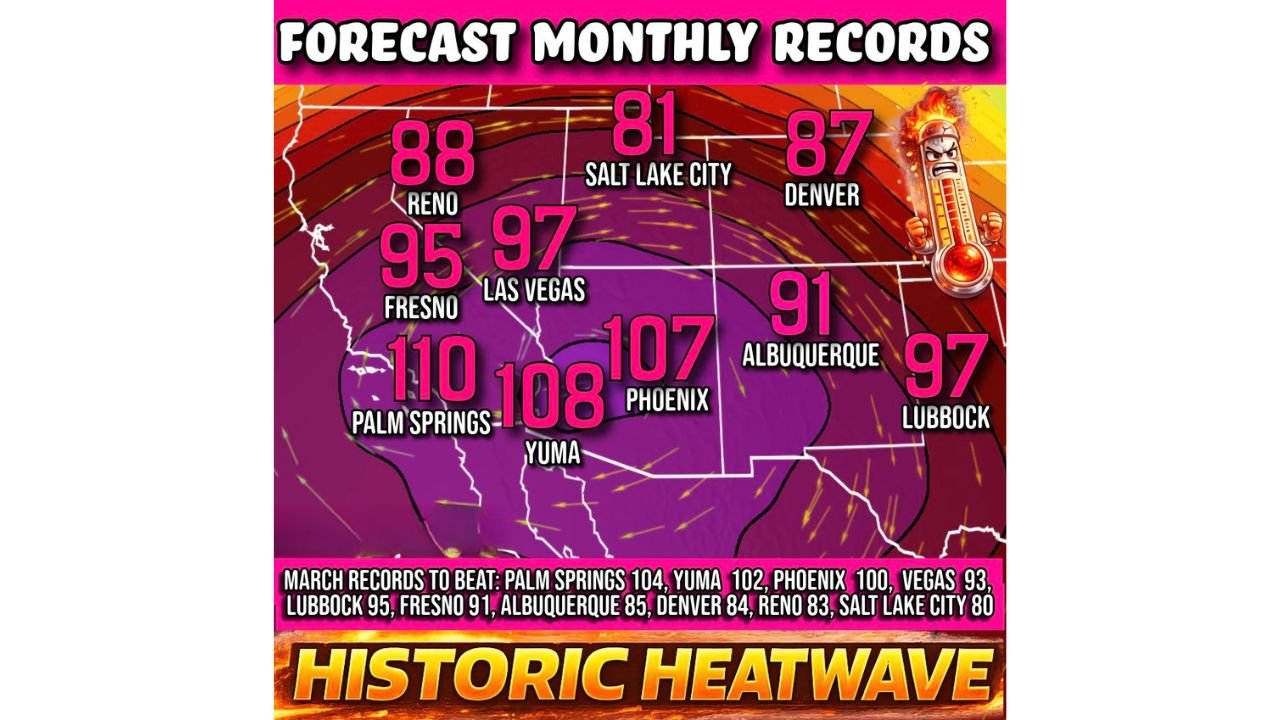
UNITED STATES — An astonishing and potentially historic March heatwave is sweeping across the western and southwestern United States this week, with forecast high temperatures shattering long-standing monthly records by remarkable margins.
From the deserts of Southern California and Arizona to the Front Range of Colorado and the High Plains of Texas, cities are bracing for temperatures more typical of June or July — not mid-March.
Forecast projections show extreme heat centered over California, Nevada, Arizona, New Mexico, Utah, Colorado, and West Texas, with several locations expected to surpass existing March records by double-digit margins.
Desert Southwest Facing Extreme, Summer-Like Heat
The most dramatic readings are forecast across the lower deserts:
- Palm Springs, CA: 110°F
- Yuma, AZ: 108°F
- Phoenix, AZ: 107°F
- Las Vegas, NV: 97°F
To put that into perspective, the current March records to beat are:
- Palm Springs: 104°F
- Yuma: 102°F
- Phoenix: 100°F
- Las Vegas: 93°F
If these forecasts verify, several cities could break their March records by 4 to 7 degrees, an extraordinary margin for established climate benchmarks.
California’s Central Valley Also Running Hot
Interior California is also expected to see significant heat:
- Fresno, CA: 95°F (record to beat: 91°F)
- Reno, NV: 88°F (record: 83°F)
Temperatures near 95°F in Fresno during March are highly unusual and more typical of late spring.
Rockies and High Plains Join the Record Threat
The heat dome extends well beyond the deserts:
- Salt Lake City, UT: 81°F (record: 80°F)
- Denver, CO: 87°F (record: 84°F)
- Albuquerque, NM: 91°F (record: 85°F)
- Lubbock, TX: 97°F (record: 95°F)
In cities like Denver and Salt Lake City, where March often brings late-season snowstorms, temperatures in the 80s represent dramatic departures from seasonal norms.
Albuquerque’s forecast of 91°F exceeds its standing March record by roughly six degrees — an especially notable anomaly given its elevation.
Why This Heat Is So Unusual
March typically serves as a transitional month between winter and spring. While warm spells are not uncommon, the scale and intensity of this event stand out.
Meteorologists attribute the pattern to an expansive and persistent upper-level ridge dominating the western U.S., compressing and warming air across the region. Clear skies, strong sunshine, and dry conditions are allowing temperatures to soar.
What makes this event exceptional is not just isolated record-breaking, but the geographic scale — spanning multiple states simultaneously — and the magnitude of potential record exceedance.
Breaking a monthly record by 1 degree is notable. Breaking it by 4–7 degrees is historic territory.
Impacts Beyond the Thermometer
This kind of early-season heat can have several consequences:
- Accelerated snowmelt in mountain regions
- Elevated wildfire risk in dry desert and foothill zones
- Increased energy demand
- Heat stress concerns, especially given limited acclimatization this early in the year
For communities accustomed to mild spring weather, triple-digit heat can catch residents off guard.
A March Heatwave for the Record Books?
If forecast temperatures verify, this could rank among the most abnormal March heat events in modern historical records across the West.
With Palm Springs potentially reaching 110°F and Phoenix pushing past 107°F, the Desert Southwest is experiencing conditions more typical of peak summer — nearly three months ahead of schedule.
Residents across Arizona, California, Nevada, Utah, Colorado, New Mexico, and West Texas are urged to take precautions as this historic heatwave unfolds.
Stay with WaldronNews.com for continuing coverage of this extraordinary March heat event and updates on how long the pattern is expected to persist.