
Late-Week Arctic Cold Targets Texas, Oklahoma and the Midwest as Snow and Ice Threat Develops From Arkansas to Virginia and North Carolina
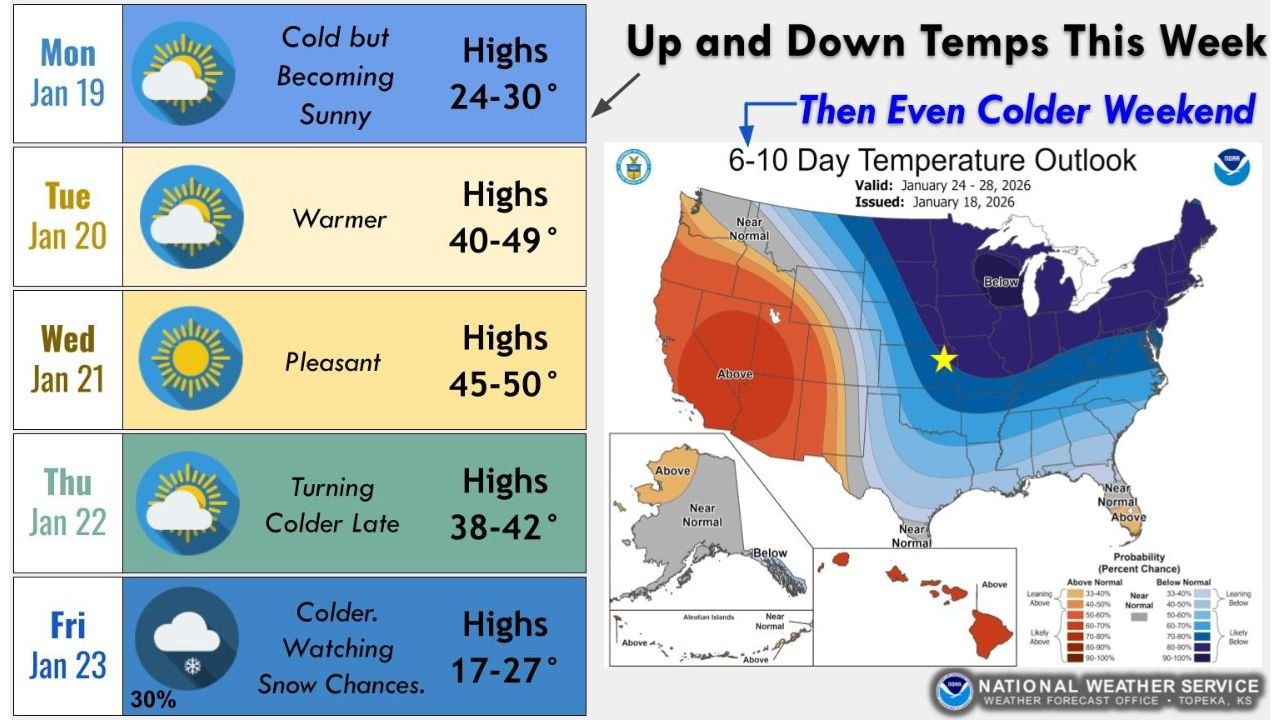
UNITED STATES — A powerful surge of Arctic air is set to spread across much of the country late this week and into the weekend, bringing dangerous cold, life-threatening wind chills, and a growing risk of a southern winter storm stretching from the Southern Plains to the Mid-Atlantic. Forecast data shows this could become one of the coldest air masses of the winter season, with impacts reaching more than 100 million people.
Dangerous Cold Expands Across the Central and Eastern U.S.
Forecast wind-chill maps show subzero and well-below-zero wind chills expanding from the Northern Plains into the Midwest, Great Lakes, and Northeast by Saturday. In the coldest areas of Montana, North Dakota, and northern Minnesota, wind chills could plunge 40 to 60 degrees below zero, creating extremely hazardous outdoor conditions.
Farther south, Arctic air will surge into Kansas, Missouri, Illinois, Indiana, Ohio, and Kentucky, pushing temperatures sharply lower after a brief midweek warmup.
Southern Winter Storm Possible From Texas to the Mid-Atlantic
At the same time the Arctic air pushes south, forecast models are tracking a potential southern storm system that may develop late Friday and continue through Sunday.
Current ensemble guidance suggests:
- Storm track: From Texas and Oklahoma, across Arkansas, Tennessee, and Kentucky, then toward Virginia and the Carolinas
- Timing: Late Friday through Sunday
- Primary threats: Snow, sleet, freezing rain, and icy travel conditions
While exact details remain uncertain, the overlap of deep cold air and incoming moisture raises the risk for impactful winter weather well outside the traditional snowbelt.
Snow and Ice Setup Depends on Storm Track
Model ensembles indicate:
- Accumulating snow is likely somewhere along the main storm corridor
- Significant snowfall (6 inches or more) is possible in parts of the Tennessee Valley, southern Appalachians, and interior Mid-Atlantic
- Ice accumulation is possible along the southern edge of the cold air, especially where warm air aloft overrides surface cold air
Small shifts north or south in the storm’s path could mean the difference between cold rain, freezing rain, sleet, or heavy snow for many communities.
Why Confidence Is Still Limited
Meteorologists stress that this system is still several days away, and uncertainty remains high:
- The storm may strengthen as currently projected
- It could track too far south, limiting snow potential
- Or it may fail to fully develop, leaving some areas dry but bitterly cold
Even so, ensemble trends are consistent enough to warrant close monitoring, particularly given the dangerous cold already locked in.
What to Watch Over the Coming Days
Residents across Texas, Oklahoma, Arkansas, Missouri, Tennessee, Kentucky, Virginia, North Carolina, South Carolina, and surrounding states should prepare for rapid forecast changes and remain alert for:
- Winter Storm Watches or Advisories
- Extreme Cold Warnings
- Travel disruptions due to snow or ice
- Power and infrastructure stress from prolonged cold
Bottom Line
This late-January pattern has the potential to deliver the coldest air of the winter while also setting the stage for a rare southern winter storm. Even areas that miss out on snow will still feel the effects through dangerous cold and biting wind chills.
Stay weather-aware, review cold-weather safety plans, and continue following updates as this high-impact winter pattern evolves.