
Louisville, Kentucky Targeted for Overnight Heavy Snow Band With Rates Exceeding One Inch Per Hour Likely
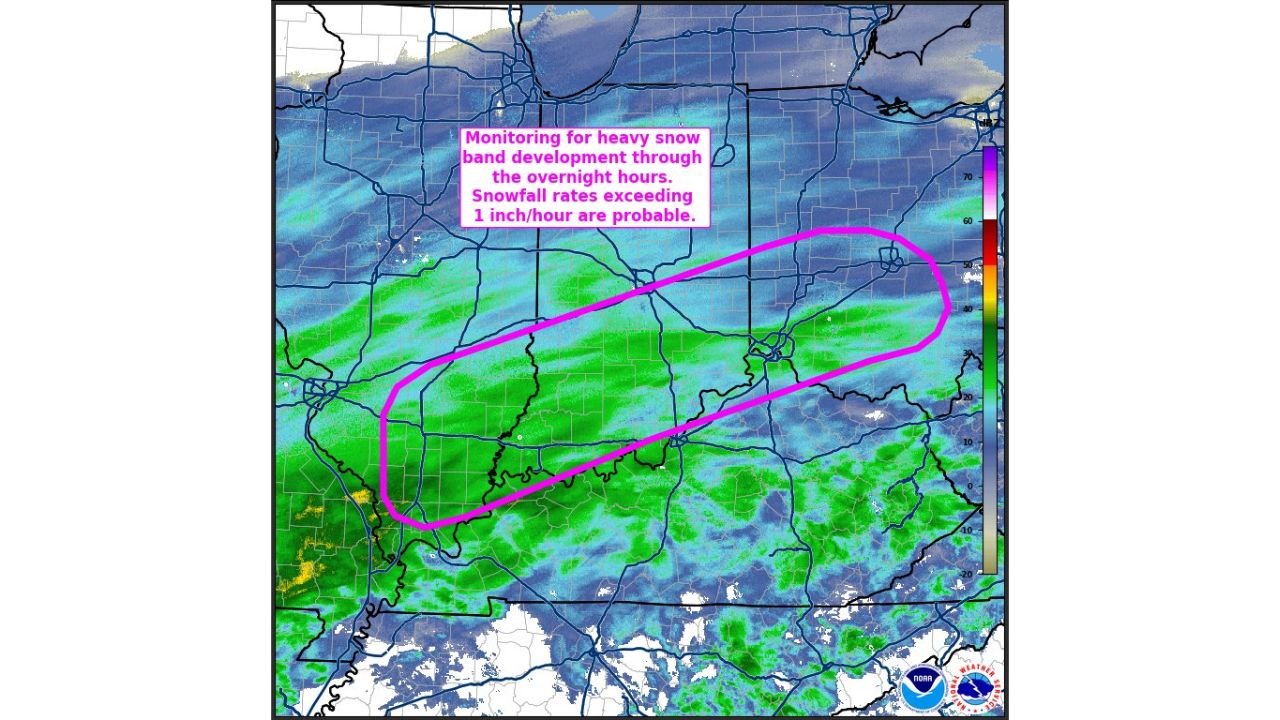
Louisville — The Storm Prediction Center (SPC) has issued Mesoscale Discussion #51 highlighting a growing concern for heavy snow band development overnight, and data places Louisville squarely within the corridor where snowfall rates exceeding 1 inch per hour are probable through the pre-dawn hours.
Radar and MRMS analyses show a strengthening, elongated precipitation band arcing across the Ohio Valley. Within this band, forcing is expected to intensify as the night progresses, favoring rapid accumulation over a relatively short window.
Why Louisville Is at Risk
Forecasters are monitoring a classic heavy-snow setup:
- Focused lift along the band axis crossing central Kentucky
- Cold, snow-supportive profiles north of the mix line
- Banding potential capable of producing sustained high rates rather than intermittent light snow
SPC specifically notes the likelihood of rates over 1″/hour, a threshold that can quickly overwhelm road treatments and snow removal.
Timing and Intensity
- Greatest concern: Late night through early morning
- Snow rates: Frequently 1″/hr or higher in the heaviest bursts
- Accumulation character: Fast, efficient piling during peak banding
If the band slows or briefly stalls over the metro, totals can jump rapidly despite a shorter duration.
Impacts for Louisville
Residents should anticipate:
- Rapidly deteriorating travel on interstates and surface streets
- Reduced visibility during heavier bursts
- Morning commute disruptions if banding persists into daybreak
Because the heaviest snow may fall while many are asleep, conditions can change quickly with little visual warning.
Bottom Line
Louisville is positioned within the core of a developing heavy snow band flagged by the SPC, where intense snowfall rates are likely overnight. Even a few hours of 1″/hour snow can create high-impact conditions across the city.
Stay with WaldronNews for Louisville-specific updates as band placement and snowfall rates evolve through the night.