
Map Reveals Most Dangerous Animals Across Every U.S. State as Unexpected Threats Like Deer and Hogs Dominate Large Regions
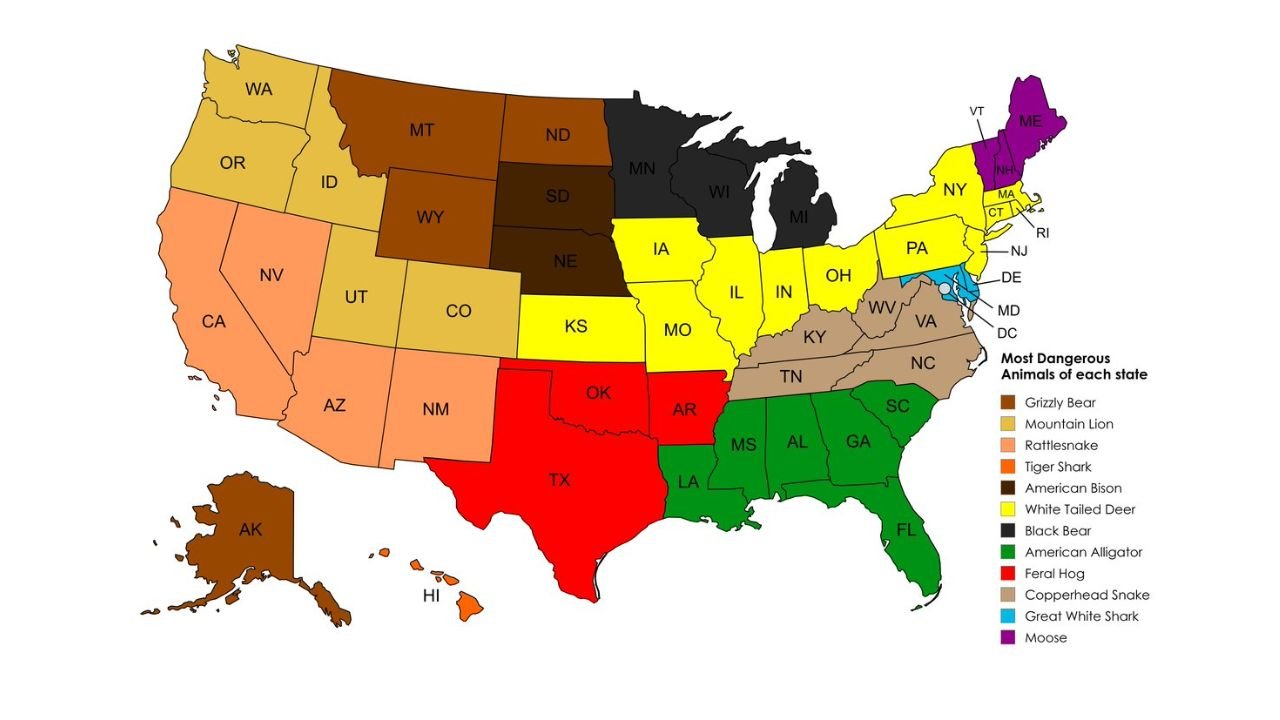
UNITED STATES — A newly circulating map highlighting the most dangerous animals in each U.S. state is drawing widespread attention, revealing that the biggest threats aren’t always the ones people expect.
While predators like bears and sharks make appearances, the data shows that common animals such as white-tailed deer and feral hogs dominate large portions of the country, often posing greater real-world danger than traditionally feared wildlife.
Surprising Threats Across the Midwest and Northeast
One of the most unexpected findings is the dominance of the white-tailed deer across much of the Midwest and parts of the Northeast, including states like:
- Illinois
- Indiana
- Ohio
- Pennsylvania
- Missouri
- Iowa
- Kansas
Rather than direct attacks, deer are considered dangerous due to their involvement in vehicle collisions, which cause thousands of injuries and fatalities each year.
In northern states like Maine and parts of New England, the map identifies the moose as the most dangerous animal — again largely due to roadway incidents involving these large, heavy animals.
Southern States Dominated by Reptiles and Wild Hogs
Across the Southeast, the map highlights a different set of threats:
- American alligators dominate states like Florida, Louisiana, Georgia, Alabama, and Mississippi
- Copperhead snakes are listed as the primary danger across parts of the Appalachian region, including Tennessee, Kentucky, Virginia, and the Carolinas
Meanwhile, feral hogs stand out across Texas, Oklahoma, and Arkansas. These animals are known for:
- Aggressive behavior
- Rapid population growth
- Damage to farmland and property
Their increasing presence has made them one of the most concerning wildlife threats in the southern U.S.
Western U.S. Shows Mix of Predators and Desert Dangers
In the western states, the map reflects a mix of well-known predators and environmental hazards:
- Mountain lions dominate parts of the Pacific Northwest and interior West
- Rattlesnakes are identified in several southwestern states, including Arizona and New Mexico
- Grizzly bears appear in states like Montana and Wyoming
- American bison are highlighted in parts of the northern Plains
These animals pose risks through direct encounters, especially in wilderness areas and national parks.
Coastal Regions Highlight Shark Risks
Along portions of the East Coast, particularly near the Mid-Atlantic, the map identifies the great white shark as the most dangerous animal.
Although attacks are rare, the presence of sharks and increased coastal activity contribute to their classification in these regions.
Similarly, tiger sharks are noted in Hawaii, reflecting ocean-based risks rather than land-based wildlife threats.
Alaska Stands Out With Classic Wildlife Danger
In Alaska, the map points to the grizzly bear as the most dangerous animal — a widely expected but still serious threat given the state’s vast wilderness and frequent human-wildlife interactions.
What This Map Really Shows
Rather than focusing purely on aggression, the data highlights animals that pose the greatest overall risk to humans, including:
- Vehicle collisions (deer, moose)
- Habitat overlap (alligators, bears)
- Population growth (feral hogs)
- Environmental exposure (snakes, sharks)
This broader definition helps explain why some of the most dangerous animals are also the most common.
A Shift in How Risk Is Defined
The map challenges traditional assumptions about danger, showing that risk is often tied to frequency of interaction rather than raw power or aggression.
For many Americans, the greatest wildlife threats may not come from rare predators, but from animals encountered in everyday life.
Waldron News will continue to track unique data-driven insights and trends across the United States, bringing attention to stories that reshape how we understand risk and safe