
Michigan Lake Ice Remains Unsafe for Walking and Vehicles as Early Winter Ice Coverage Stays Extremely Limited
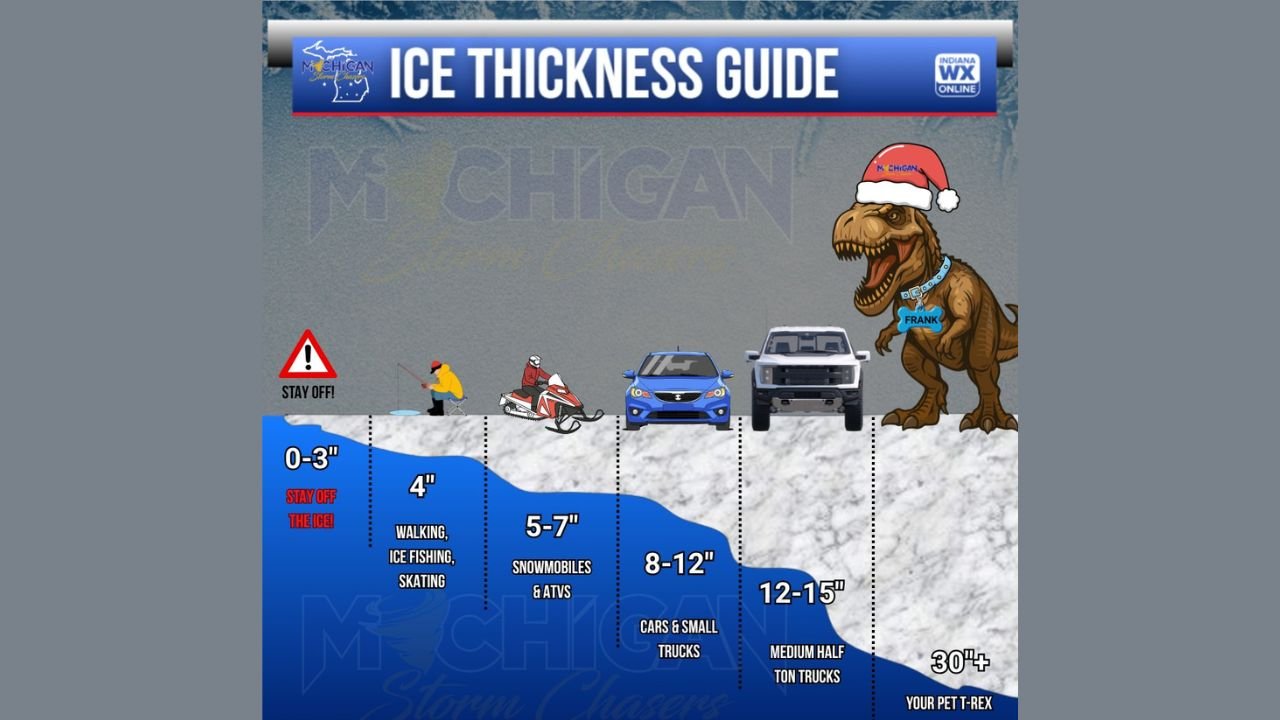
Michigan — Lakes across Michigan remain dangerously unsafe for foot traffic, ice fishing, and recreational vehicles, despite colder weather settling in across the region. Current observations and safety guidance show that ice thickness across most lakes is well below safe standards, with many areas still forming thin “fast ice” under four inches thick.
At the same time, overall Great Lakes ice coverage remains very low, reinforcing that winter ice formation is still in its early stages.
Ice Thickness Across Michigan Falls Short of Safety Standards
Based on current conditions, nearly all inland lakes across Michigan lack sufficient ice thickness for safe use.
Safety benchmarks clearly indicate:
- At least 4 inches of solid ice is needed for walking, ice fishing, or skating
- 5–7 inches is required for snowmobiles and ATVs
- 8–12 inches is needed for cars and small trucks
- 12–15 inches is required for larger vehicles
Most lakes remain well below the minimum 4-inch threshold, making them unsafe even for brief foot traffic.
As the safety reminder stresses:
“Ice thickness across almost all of Michigan remains too thin to be walking on.”
Fast Ice Creating a False Sense of Security
A major concern is the presence of fast ice — thin surface ice that forms quickly during cold nights but lacks strength and consistency.
This type of ice:
- Can appear solid from shore
- Breaks easily under weight
- Varies dramatically in thickness across short distances
Officials warn that visual appearance alone is extremely misleading, especially after brief cold snaps.
As noted in the advisory:
“Many areas have fast ice, or ice that is well below four inches thick.”
Great Lakes Ice Coverage Remains Very Low
Beyond inland lakes, Great Lakes ice coverage remains minimal, highlighting how early the season still is.
Current data shows:
- Total Great Lakes ice coverage is only 4.8%
- Open water dominates most lake surfaces
- Ice formation remains unstable and fragmented
This low percentage underscores that sustained cold has not yet been strong or long enough to safely support recreational activity on ice.
Ice Fishing and Snowmobiling Still Not Advisable
While winter recreation is tempting, conditions across Michigan are not yet ready for widespread ice use.
The warning is clear:
“It’s tempting to get out and fish or enjoy snowmobiling on frozen lakes, but it’s just not ready yet for most areas.”
Entering unsafe ice significantly increases the risk of:
- Sudden ice failure
- Cold-water immersion
- Life-threatening emergencies far from help
Safety Officials Urge Extreme Caution and Measurement
Authorities strongly advise anyone considering venturing onto ice to physically measure thickness every time, even on familiar lakes.
Key safety reminders include:
- Never assume ice is safe based on past winters
- Thickness can vary dramatically within the same lake
- Avoid ice near inlets, outlets, docks, and vegetation
- Carry ice picks and flotation gear if near frozen water
As emphasized plainly:
“When in doubt, take a measurement.”
What to Watch Moving Forward
Ice conditions will depend on:
- Sustained subfreezing temperatures
- Lack of warm-ups or rain events
- Continued ice growth over multiple weeks
Until consistent cold firmly locks lakes over, Michigan residents are urged to stay off lake ice and wait for verified safe conditions.
WaldronNews.com will continue tracking ice development and winter safety conditions across Michigan.
If you’re seeing ice conditions change on local lakes, share your observations with WaldronNews.com to help keep others informed and safe.