
Nebraska, South Dakota, North Dakota, Minnesota, Iowa and Kansas Brace for 40+ Degree Temperature Anomalies as Omaha Soars Toward 90° — Northern Plains See Summer-Like Heat 42°F Above Normal
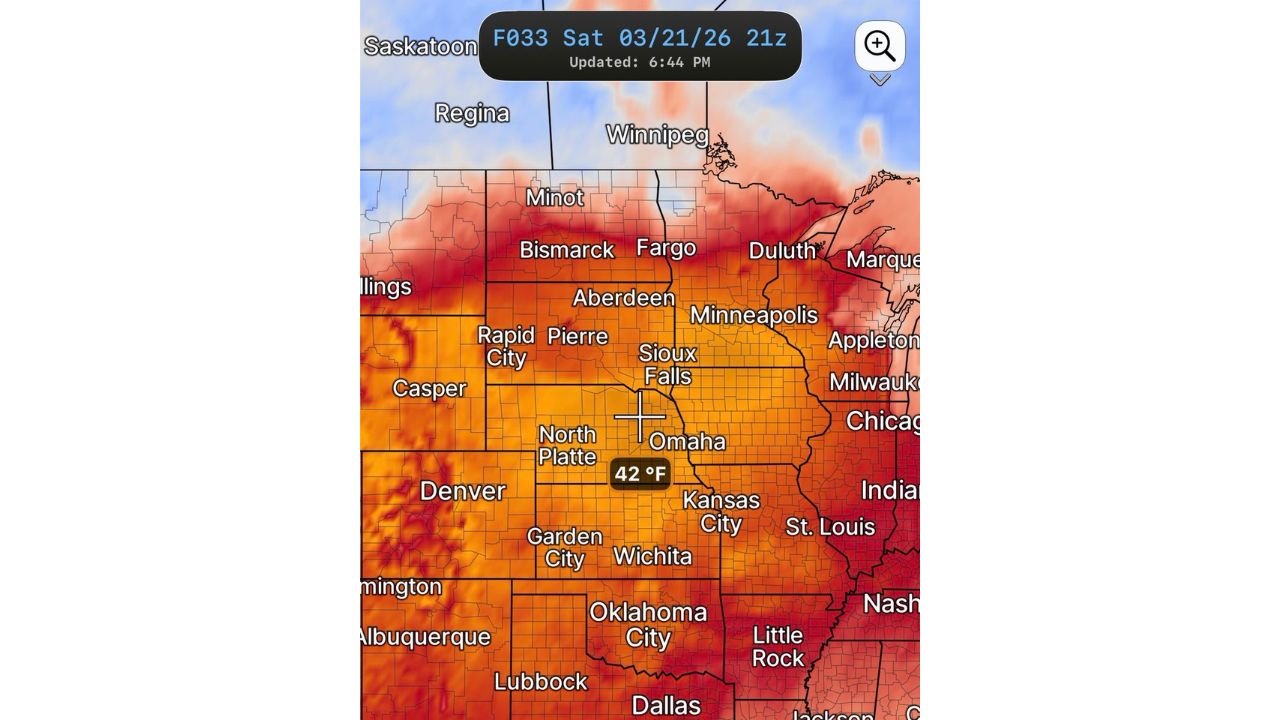
UNITED STATES — A staggering surge of early-season heat is set to explode across the Northern Plains and Upper Midwest, with parts of Nebraska, South Dakota, North Dakota, Minnesota, Iowa, and Kansas preparing for temperatures more than 40 degrees above normal — an anomaly rarely seen this early in the year.
Forecast guidance for Saturday, March 21, 2026, shows Omaha, Nebraska approaching 90 degrees, an extraordinary mark for late March. Temperature departures in the region are projected to reach +42°F above seasonal averages, placing this event firmly in historic territory.
Omaha Near 90° — 42 Degrees Above Normal
The forecast anomaly map highlights the epicenter of this heat blast centered near Omaha and eastern Nebraska, where temperatures are expected to run more than 40 degrees above climatological norms.
- Omaha: High near or above 90°F
- Eastern Nebraska: Widespread 80s to near 90
- Departure from normal: +40°F to +42°F
For perspective, typical highs in late March for Omaha are generally in the upper 40s to lower 50s. A 90-degree reading represents conditions more consistent with late June.
South Dakota and North Dakota See Rare March Heat
The heat dome is not confined to Nebraska. It extends northward into:
- South Dakota, including areas near Sioux Falls and Pierre
- North Dakota, including Bismarck and Fargo
These regions are forecast to experience widespread temperatures in the 70s and 80s, with some areas nearing record territory. Such warmth so far north in March is highly unusual and underscores the strength of the upper-level ridge driving this event.
Minnesota and Iowa Join the Surge
The anomalous warmth spreads east into Minnesota and Iowa, where cities including Minneapolis and Sioux Falls (near the border region) are also projected to experience significant departures from normal.
Temperatures across parts of southern Minnesota and northern Iowa are expected to climb well above seasonal averages, with many locations running 30 to 40 degrees warmer than typical late-March values.
Kansas and the Central Plains Heat Core
Farther south, Kansas — including Wichita and Kansas City — remains firmly inside the core of the heat dome. Highs are forecast in the upper 80s to low 90s across portions of the state.
The consistency of deep orange and red shading on the anomaly map shows the magnitude of this event. This is not a narrow corridor — it is a broad, multi-state warm sector dominating the central United States.
Why This Event Is So Extreme
Several factors make this heat surge especially notable:
- Magnitude of anomaly: 40+ degrees above normal is exceptional for any time of year.
- Geographic reach: Extends from Kansas through Nebraska and into the Dakotas and Minnesota.
- Seasonal timing: Late March rarely supports 90-degree temperatures this far north.
- Record potential: Numerous daily and monthly records are at risk.
Such extreme departures typically occur only when a powerful ridge of high pressure locks into place, allowing warm air from the southern U.S. to surge unchecked into the Northern Plains.
A Historic March Heat Episode
This event follows a pattern of record-setting warmth already observed across the western and central United States. The push toward 90 degrees in Nebraska, combined with +40°F anomalies stretching northward, marks one of the most dramatic early-season warm spells in recent memory for the Plains.
Residents across Nebraska, South Dakota, North Dakota, Minnesota, Iowa, and Kansas should prepare for rapid snowmelt in colder zones, elevated fire danger in drier areas, and the possibility of additional records falling as the heat peaks.
Stay with WaldronNews.com for continuing coverage as this remarkable March heat surge unfolds across the central United States.