
New Study Revisits Oklahoma Tornado Outbreak as Researchers Highlight Forecast Model Errors From May 20, 2019 Event
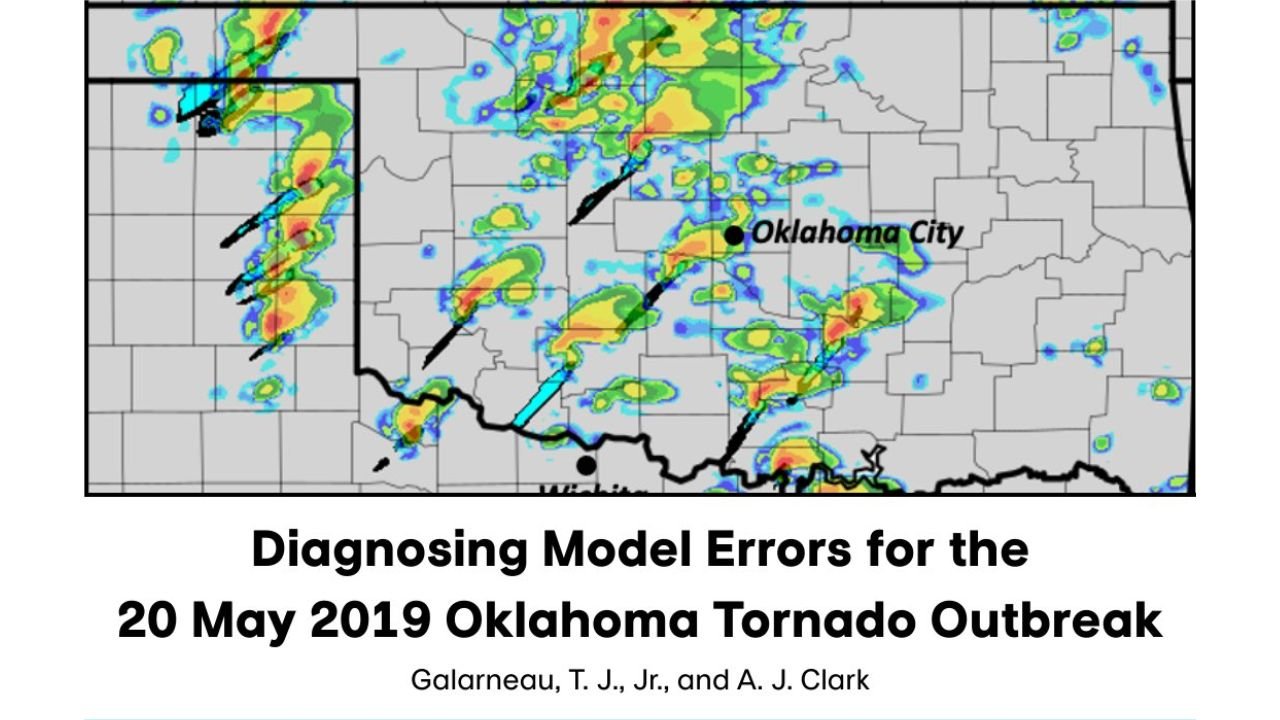
OKLAHOMA CITY, OKLAHOMA — A newly released study in the Journal of Operational Meteorology is shedding fresh light on one of the most closely analyzed severe weather events in recent years — the May 20, 2019 Oklahoma tornado outbreak — with researchers focusing on how forecast models struggled to accurately predict key aspects of the event.
The paper, titled “Diagnosing Model Errors for the 20 May 2019 Oklahoma Tornado Outbreak,” examines where and why forecasting tools fell short during a high-impact severe weather day that had drawn widespread attention from meteorologists and storm chasers alike.
Study Focuses on Forecast Model Performance
Authored by T. J. Galarneau Jr. and A. J. Clark, the research dives into the performance of numerical weather prediction models leading up to the outbreak.
The study aims to identify:
- Where models correctly anticipated storm development
- Where forecasts diverged from actual storm behavior
- Key atmospheric factors that contributed to forecast inaccuracies
By analyzing these elements, researchers hope to improve future severe weather forecasting, especially for high-risk tornado environments.
Oklahoma City Region at Center of Analysis
The outbreak centered around Oklahoma City and surrounding areas, making it a critical case study for understanding how storms evolve in a highly volatile environment.
Visual data included in the study highlights scattered storm development across central and western Oklahoma, illustrating the complexity of storm initiation and organization during the event.
These patterns help explain why forecasting exact storm timing, location, and intensity remains one of the most challenging aspects of meteorology.
Why This Event Still Matters
The May 20, 2019 outbreak remains significant because it occurred during a period of heightened awareness and expectations for severe weather.
Despite strong signals for severe storms, the event demonstrated that even advanced models can struggle with:
- Storm initiation timing
- Exact placement of supercells
- Evolution of severe weather threats
Understanding these gaps is essential for improving warning systems and public safety outcomes.
Improving Future Severe Weather Forecasts
Studies like this play a crucial role in advancing meteorological science.
By identifying model weaknesses, researchers can refine forecasting techniques, leading to:
- Better short-term severe weather predictions
- Improved communication of risk to the public
- Enhanced preparedness for high-impact events
The findings may also help meteorologists better interpret model data in complex setups, reducing uncertainty during future outbreaks.
Continued Efforts in Weather Research
The release of this study highlights ongoing efforts within the meteorological community to learn from past events and improve forecasting accuracy.
As severe weather patterns continue to evolve, research like this ensures that forecasting tools and techniques keep pace with increasingly complex atmospheric conditions.
Waldron News will continue to follow developments in weather science and provide updates on research that impacts forecasting and public safety across the United States.