
New York, Pennsylvania, Washington, Oregon, and California Face Dual Weather Threats as Lake-Effect Snow and Flooding Rains Intensify
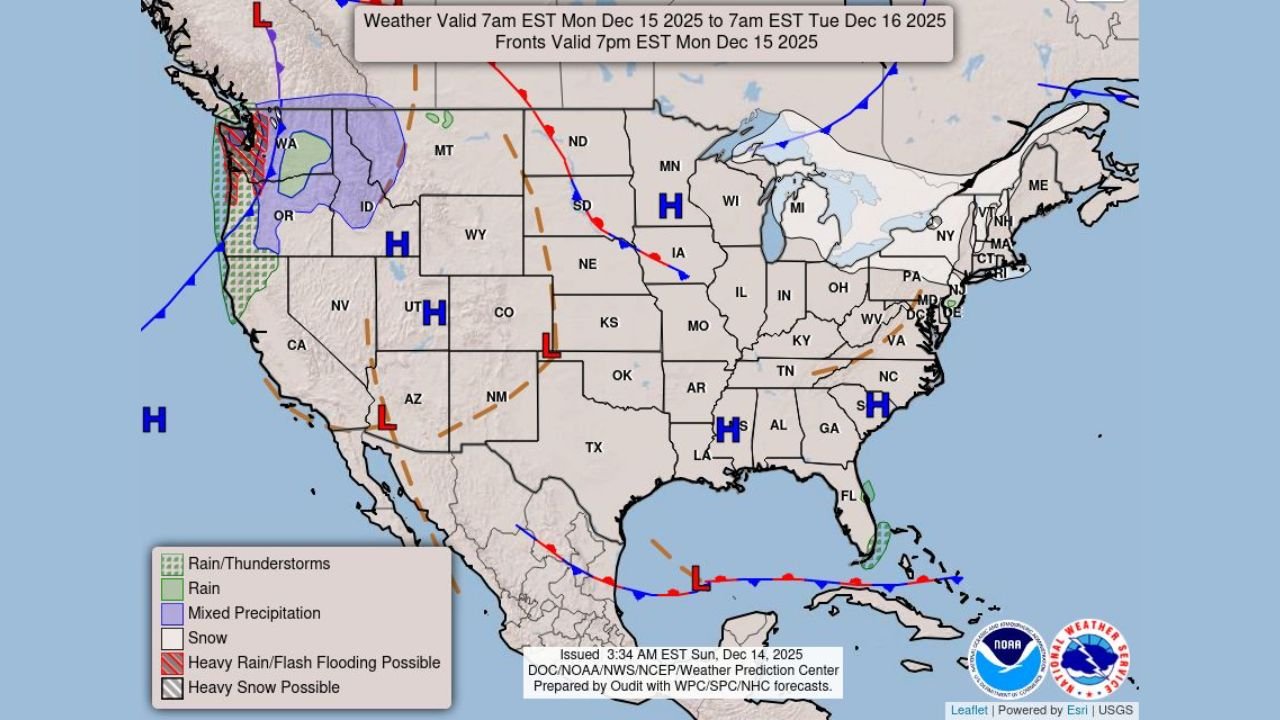
UNITED STATES — A complex and high-impact weather pattern is unfolding across multiple regions of the country, with heavy lake-effect snow continuing east of Lakes Erie and Ontario in New York and Pennsylvania, while the Pacific Northwest braces for back-to-back cold fronts and an atmospheric river that could trigger renewed flooding in Washington, Oregon, and northern California later this week.
Federal forecast guidance shows these systems overlapping in time but affecting very different parts of the country, creating dangerous winter travel in the Northeast and serious flood risks in the West.
Heavy Lake-Effect Snow Continues East of Lakes Erie and Ontario
Snow bands driven by cold air moving over the relatively warm waters of Lakes Erie and Ontario are expected to continue into Monday, impacting parts of upstate New York and northwestern Pennsylvania.
These lake-effect bands can produce intense snowfall rates, leading to rapidly deteriorating travel conditions, especially in areas that remain under persistent snow showers for several hours.
“Heavy lake-effect snow continues into Monday east of Lakes Erie and Ontario,” the national outlook noted.
Motorists in affected areas should be prepared for sudden whiteout conditions, snow-covered roads, and rapidly changing visibility, particularly in rural and downwind communities.
First Pacific Cold Front Crosses Washington and Oregon Monday
While snow continues in the Northeast, attention is also turning west. The first of two Pacific cold fronts is forecast to move into Washington and Oregon on Monday, bringing gusty winds and periods of rain, especially along the coast and in the mountains.
This front will be followed quickly by another system, keeping soils wet and rivers elevated ahead of the next, more dangerous phase of the pattern.
“The first of two Pacific cold fronts will cross the region Monday,” forecasters said, “followed closely by another front and an atmospheric river later this week.”
Atmospheric River Raises Flood Risk in the Pacific Northwest and Northern California
Later in the week, a strong atmospheric river is expected to push onshore, focusing prolonged moisture into Washington, Oregon, and northern California. This setup raises concerns for heavy to excessive rainfall, particularly in western-facing terrain and already-saturated watersheds.
Forecasts warn that this rainfall could lead to:
- Urban flooding
- Rapid river rises
- Renewed riverine flooding
- Landslides in steep or burn-scarred areas
“Each of these features will bring periods of gusty winds and heavy to excessive rainfall,” the outlook stated, “with potential for renewed urban and riverine flooding.”
Long-Duration Event Increases Impact Potential
Meteorologists stress that the biggest concern is duration, not just intensity. Multiple systems arriving in succession mean little recovery time between rounds of rain, increasing the likelihood of flooding as rivers and streams respond.
This risk is especially high in:
- Low-lying urban areas
- River valleys
- Mountain terrain prone to runoff
- Locations impacted by recent wildfires
Travel and Safety Concerns Across Multiple Regions
With heavy snow in the Northeast and flooding rain in the West, travel disruptions are likely in very different forms across the country. Officials urge residents to monitor local alerts and prepare for rapidly changing conditions.
“This is a multi-hazard setup impacting different regions at the same time,” forecasters warned.
Drivers in snow-prone areas should be prepared for winter driving conditions, while those in the Pacific Northwest and northern California should avoid flooded roadways and remain alert for evacuation notices if flood warnings are issued.
WaldronNews.com will continue to track these evolving weather threats across New York, Pennsylvania, Washington, Oregon, and California, providing updates as conditions change through the week.