
Northern California, Oregon and Nevada Face Growing Drought Risk Through June as NOAA Flags Severe Snow Deficits Ahead of Fire Season
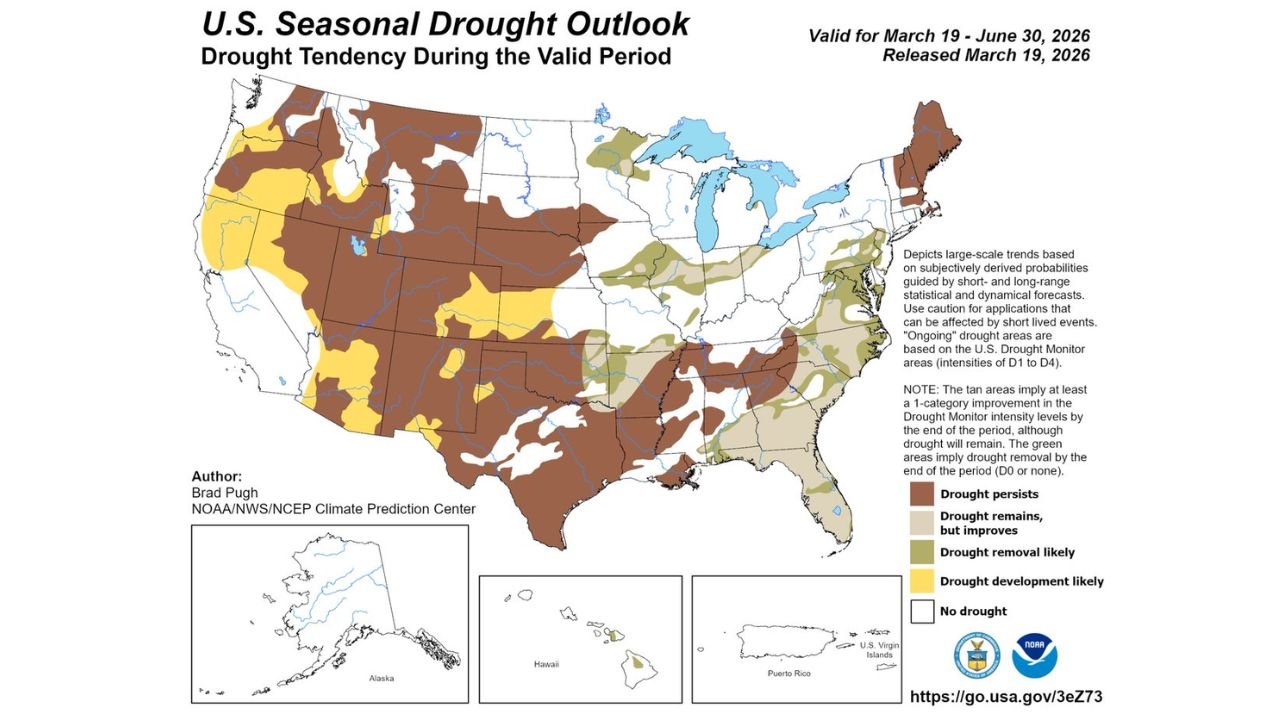
SACRAMENTO, CA — A new U.S. Seasonal Drought Outlook valid from March 19 through June 30, 2026, signals increasing drought concerns across Northern California, with impacts expected to expand into portions of Oregon and Nevada as the West heads into peak fire season.
The latest federal outlook highlights widespread drought persistence and new drought development across the western United States, with Northern California standing out due to a significant snowpack deficit.
Severe Snow Drought in Northern California
Forecasters note that the highlighted region in Northern California is already experiencing a severe snow drought — meaning mountain snowpack levels are well below normal for this time of year.
Snowpack in the Sierra Nevada serves as a critical water source for:
- Reservoir replenishment
- Agricultural irrigation
- Municipal water supply
- Summer wildfire mitigation
With reduced snow accumulation this winter, runoff into late spring and summer is expected to be limited.
Drought Development Likely
The seasonal outlook categorizes much of:
- Northern California
- Western Nevada
- Parts of southern and eastern Oregon
under “drought development likely” or “drought persists” designations.
This means areas currently not in drought could enter drought conditions by early summer, while existing drought zones are expected to continue or intensify.
Wider Western U.S. Concerns
Beyond California, large sections of the West are projected to see ongoing drought conditions through June, including:
- The Great Basin
- The Southwest
- Portions of the central Rockies
The outlook suggests limited large-scale precipitation relief during the upcoming months.
Fire Season Implications
As temperatures rise heading into late spring and early summer, dry fuels combined with reduced snowmelt increase wildfire vulnerability.
Key risk factors include:
- Earlier-than-normal drying of grasses and brush
- Lower soil moisture
- Stressed vegetation
- Reduced streamflow
Northern California has historically seen heightened wildfire activity during years marked by poor snowpack and prolonged spring dryness.
What the Outlook Means
The seasonal drought outlook does not predict specific wildfire events but provides a large-scale assessment of moisture trends.
For Northern California, the signal is clear:
- Snowpack deficits are significant.
- Drought conditions are likely to expand or persist.
- Fire season could begin under drier-than-normal conditions.
Looking Ahead
Water managers, agricultural interests and fire agencies will be closely monitoring precipitation trends in April and May for any signs of improvement.
Absent substantial late-season storms, Northern California and surrounding western states may enter summer with elevated drought stress.
Stay with WaldronNews.com for continued coverage of drought trends, fire season outlooks and climate impacts across the United States.