
Pennsylvania Winter Turns Severe to Extreme as Pittsburgh’s AWSSI Index Pushes Into Dangerous Territory
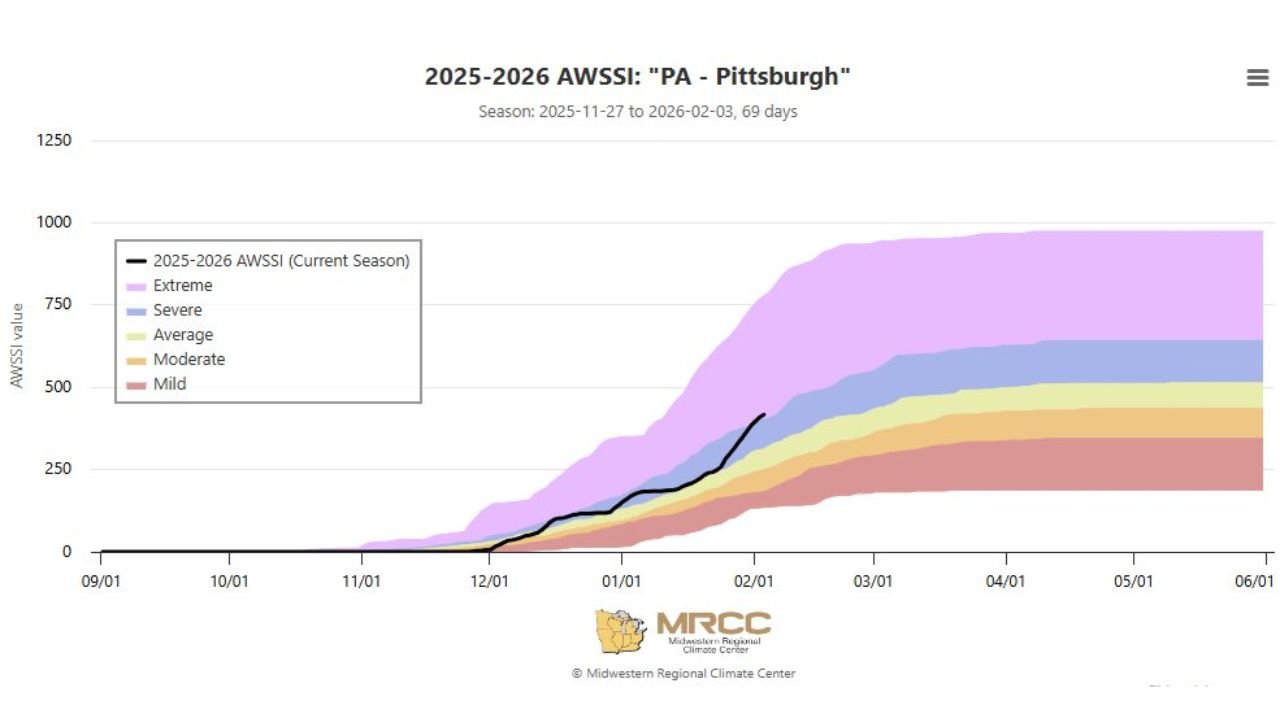
PENNSYLVANIA — The 2025–2026 winter season is now officially tracking in the SEVERE to EXTREME category across western Pennsylvania, according to the Accumulated Winter Season Severity Index (AWSSI) data for Pittsburgh.
The latest AWSSI chart shows the current winter trajectory climbing sharply into the upper severity ranges, signaling that cold, snow, and winter persistence have combined to make this one of the harshest seasons in recent years for the region.
What the AWSSI Index Measures
The Accumulated Winter Season Severity Index (AWSSI) is designed to evaluate overall winter impact, not just one storm or one cold snap.
The index factors in:
- Intensity of cold temperatures
- Frequency and accumulation of snowfall
- Persistence of snow cover on the ground
- Duration of winter conditions
Instead of looking at a single event, AWSSI tracks how winter builds and compounds over time.
Pittsburgh Now Touching the “Extreme” Winter Range
According to the AWSSI chart for Pittsburgh, Pennsylvania, the black line representing the 2025–2026 season has surged well above the average and moderate winter categories.
Recent cold outbreaks and winter storms have pushed Pittsburgh’s winter severity into the extreme range, meaning conditions are now comparable to some of the harshest winters historically observed in the region.
The color bands on the chart show winter categories progressing from:
- Mild
- Moderate
- Average
- Severe
- Extreme
Pittsburgh’s current position places it on the upper edge of the severe category and brushing the extreme threshold.
Why This Winter Stands Out in Pennsylvania
This classification confirms what many residents are already feeling:
- Repeated Arctic air intrusions
- Sustained below-normal temperatures
- Multiple snow events
- Little recovery time between cold waves
Rather than one isolated storm, the persistence of winter conditions is what has driven the AWSSI value upward so quickly.
What This Means Going Forward
With winter still ongoing, any additional snow or cold episodes will continue adding to the index. Even short-lived systems can push the season deeper into the extreme category, especially if snow remains on the ground or cold air lingers.
For western Pennsylvania, this means:
- Increased strain on infrastructure
- Higher heating demand
- Elevated risk during cold snaps
- A winter that will likely be remembered historically
Data Source
This AWSSI analysis is based on data from the Midwestern Regional Climate Center (MRCC) at Purdue University, accessed on February 4, 2026.
Are you feeling this winter more than usual in Pennsylvania? Let us know how conditions have affected your area and stay updated with continued winter coverage at WaldronNews.com.