
Strong G3 Geomagnetic Storm Reaches Earth After March 18 Solar Eruption, Aurora Could Be Visible Across Northern U.S. Through Early March 21
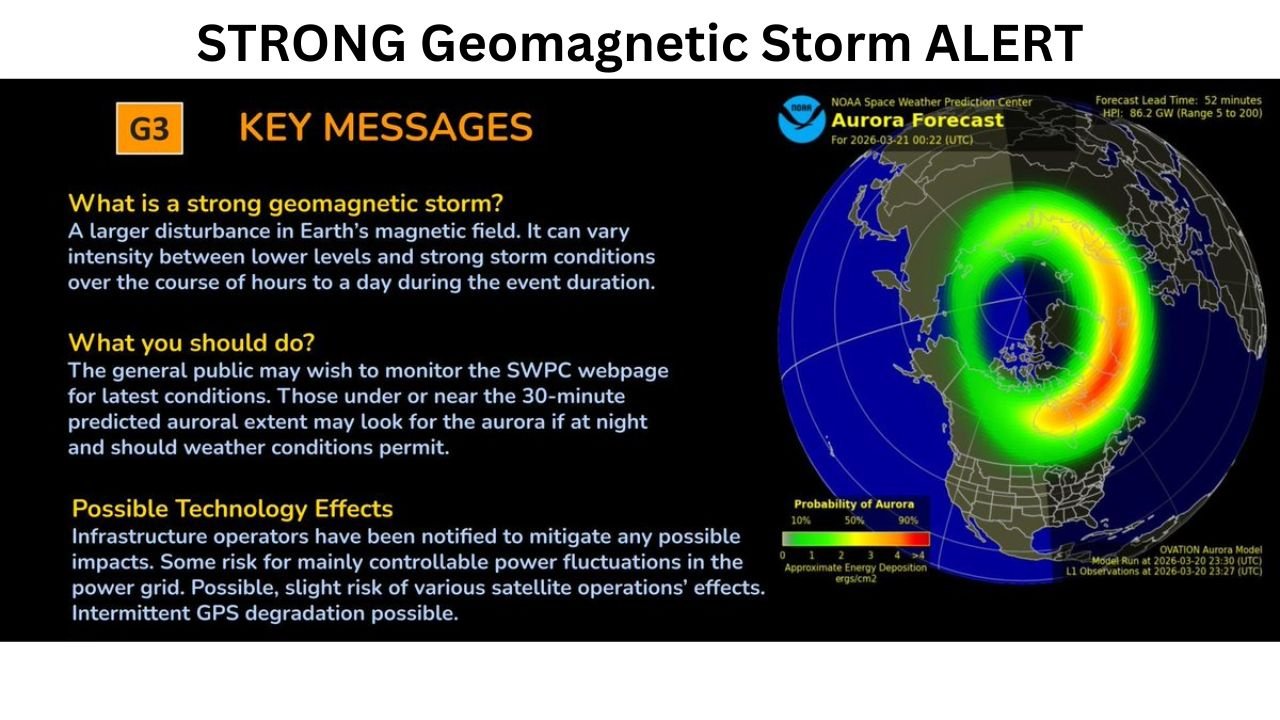
BOULDER, CO — A powerful burst of solar energy has triggered G3 (Strong) geomagnetic storm conditions, with elevated activity observed at 20/2328 UTC and warnings for continued G3 or greater storming valid through 0600 UTC on March 21.
According to space weather monitoring data, the disturbance is linked to the arrival of a coronal mass ejection (CME) that left the Sun on March 18 and has now interacted with Earth’s magnetic field.
What a G3 Geomagnetic Storm Means
A G3 classification indicates a strong geomagnetic storm, capable of producing:
- Intensified auroral activity
- Fluctuations in power grid systems
- Minor satellite operational impacts
- Possible intermittent GPS signal degradation
Geomagnetic storms occur when charged solar particles disturb Earth’s magnetosphere. Activity can vary in intensity over several hours and may fluctuate during the event duration.
Aurora Visibility Expanded Southward
During G3-level events, the auroral oval often expands farther south than usual. This increases the chance of seeing the Northern Lights beyond their typical high-latitude regions.
Forecast models show heightened aurora probability across:
- The northern tier of the United States
- Portions of the Upper Midwest
- Northern Great Lakes region
- Interior New England
If storm intensity remains elevated, auroral displays could extend even farther south in some areas under clear nighttime skies.
Observers are encouraged to monitor real-time aurora forecasts and seek dark, cloud-free locations away from city lights.
Potential Technology Impacts
While infrastructure operators have been notified to mitigate risks, strong geomagnetic storms can cause:
- Mostly controllable power grid voltage irregularities
- Minor satellite orientation or communication disruptions
- Temporary GPS accuracy issues
Large-scale outages are not expected under current projections, but agencies remain vigilant while storm conditions persist.
Why This Event Is Happening
The storm is attributed to a CME that erupted from the Sun on March 18. When such eruptions are Earth-directed, the resulting shockwave compresses and disturbs Earth’s magnetic field upon arrival.
The strength of the impact depends on several factors, including:
- Speed of the CME
- Magnetic alignment upon impact
- Duration of sustained solar wind enhancement
Current conditions have reached the G3 threshold, placing this event among the stronger geomagnetic disturbances typically seen during active solar cycles.
Storm Conditions Valid Through Early March 21
Warnings for G3 or greater storming remain in effect until 0600 UTC on March 21. Activity levels may fluctuate overnight, and additional surges are possible depending on ongoing solar wind conditions.
Skywatchers across the northern United States should watch for potential auroral activity if cloud cover permits.
Stay with WaldronNews.com for continuing updates on space weather alerts, aurora visibility forecasts, and any impacts tied to this geomagnetic storm event.