
Tennessee, Kentucky, Alabama and Georgia Communities Told to Watch Dry Corridor as New Rainfall Tracker Shows Major Weekly Gap
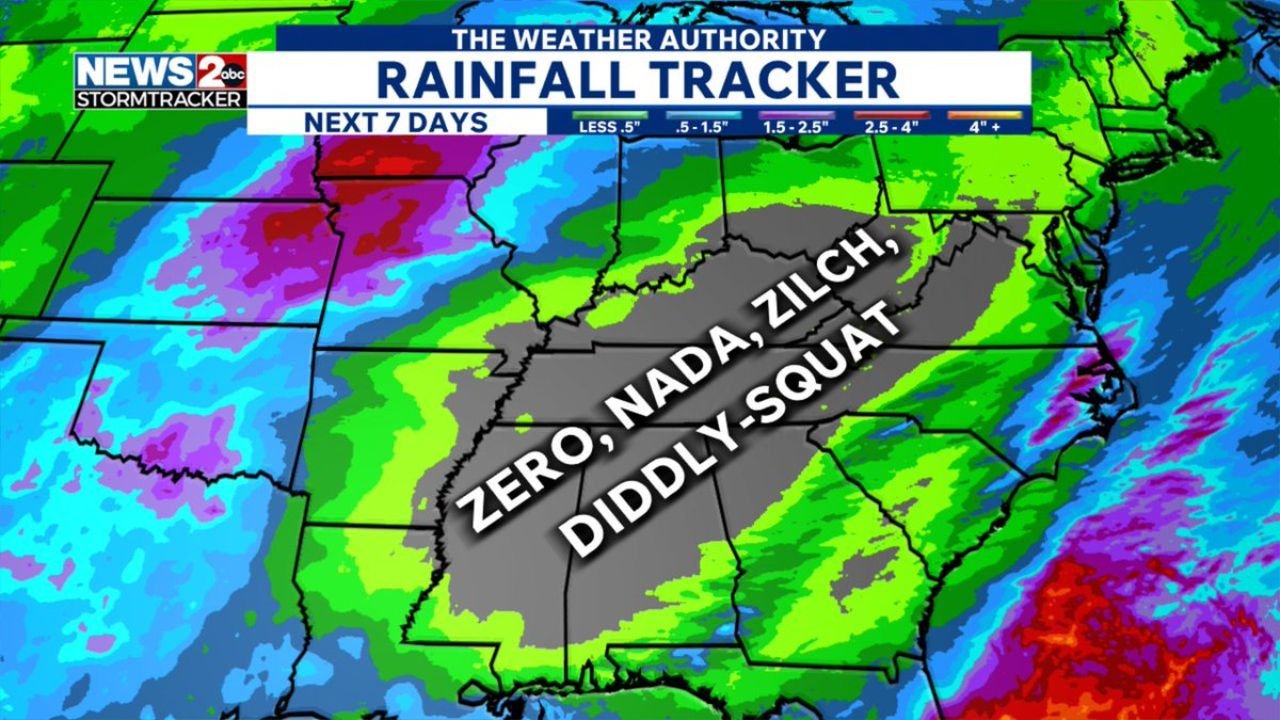
UNITED STATES — A new rainfall outlook is raising serious concern across the Tennessee Valley and Deep South, as updated forecast data reveals a large dry corridor forming over multiple states for the next 7 days, despite recent rainfall offering only temporary relief.
While many communities across the region picked up around 1 inch of rain over the weekend, the latest projections show that much of that benefit could quickly fade as rainfall shuts down across a wide central zone.
Large “Zero Rain” Zone Emerging Across Tennessee Valley and Deep South
The most striking feature in the latest rainfall tracker is a clearly defined dry corridor stretching across:
- Tennessee
- Kentucky
- Northern Alabama
- Northern Georgia
- Parts of the central Appalachian region
This area is being highlighted as receiving little to no rainfall over the next 7 days, with some locations expected to see near-zero precipitation totals.
This is particularly concerning because many of these regions are already classified as:
- Abnormally dry
- Experiencing moderate to severe drought conditions
Surrounding Regions See Rain While Core Area Misses Out
While the central corridor remains dry, surrounding areas are expected to receive moderate to heavy rainfall, including:
- Parts of the Midwest and Plains
- Sections of the Gulf Coast
- Portions of the Atlantic coastal regions
Rainfall amounts outside the dry zone could range from:
- 0.5 to 1.5 inches in nearby regions
- 2+ inches in localized pockets, especially toward coastal areas
This creates a sharp contrast, where storm systems track around the region but fail to deliver meaningful rain within the core drought zone.
Why This Pattern Is Concerning Right Now
The timing of this dry pattern is critical because it follows a period where:
- The region has already been struggling with below-normal rainfall
- Soil moisture levels are already depleted in some areas
- Vegetation and crops are entering a sensitive growth phase
Even though recent rain provided short-term relief, the lack of follow-up systems means:
- Moisture deficits will quickly return
- Surface conditions could dry out rapidly under warming temperatures
Drought Risk Could Intensify Quickly
If this projected pattern holds, the next 7 days could lead to:
- Expansion of drought coverage across Tennessee and Kentucky
- Intensification of existing drought conditions in Alabama and Georgia
- Increased stress on agriculture and water resources
With no consistent rain expected, the region faces a high risk of slipping back into deeper drought conditions, especially if this dry trend extends beyond the current forecast window.
What This Means for Local Communities
Residents across the impacted states should be aware that:
- Recent rainfall will not be enough to sustain long-term moisture needs
- Lawns, crops, and soil conditions may begin to dry out again quickly
- Water demand could increase if dry conditions persist into late April
This is especially important in areas where drought conditions were already present before the recent rain event.
Key Areas to Watch Most Closely
The most vulnerable regions include:
- Central and western Tennessee
- Central and eastern Kentucky
- Northern Alabama
- Northern Georgia
These areas sit directly within the projected dry corridor, where rainfall totals are expected to remain extremely limited.
Why This Forecast Matters Moving Forward
This pattern highlights a growing concern that the region could enter a repeating cycle of brief rain followed by extended dry periods, which is one of the most damaging setups for long-term drought development.
Without consistent follow-up rainfall, even decent rain events become less effective at improving overall conditions.
What Residents Should Do Now
Residents and agricultural communities should:
- Monitor local drought updates and rainfall forecasts
- Conserve water where possible if conditions worsen
- Prepare for extended dry conditions despite recent rain
The next 7 days will be critical in determining whether the region stabilizes or continues trending toward worsening drought conditions.
Stay with WaldronNews.com for ongoing coverage as this developing dry pattern across Tennessee, Kentucky, Alabama, and Georgia continues to evolve.