
Texas, Oklahoma, Nebraska Mark Anniversary Of Rare March 28 2007 Tornado Outbreak That Defied Seasonal Norms
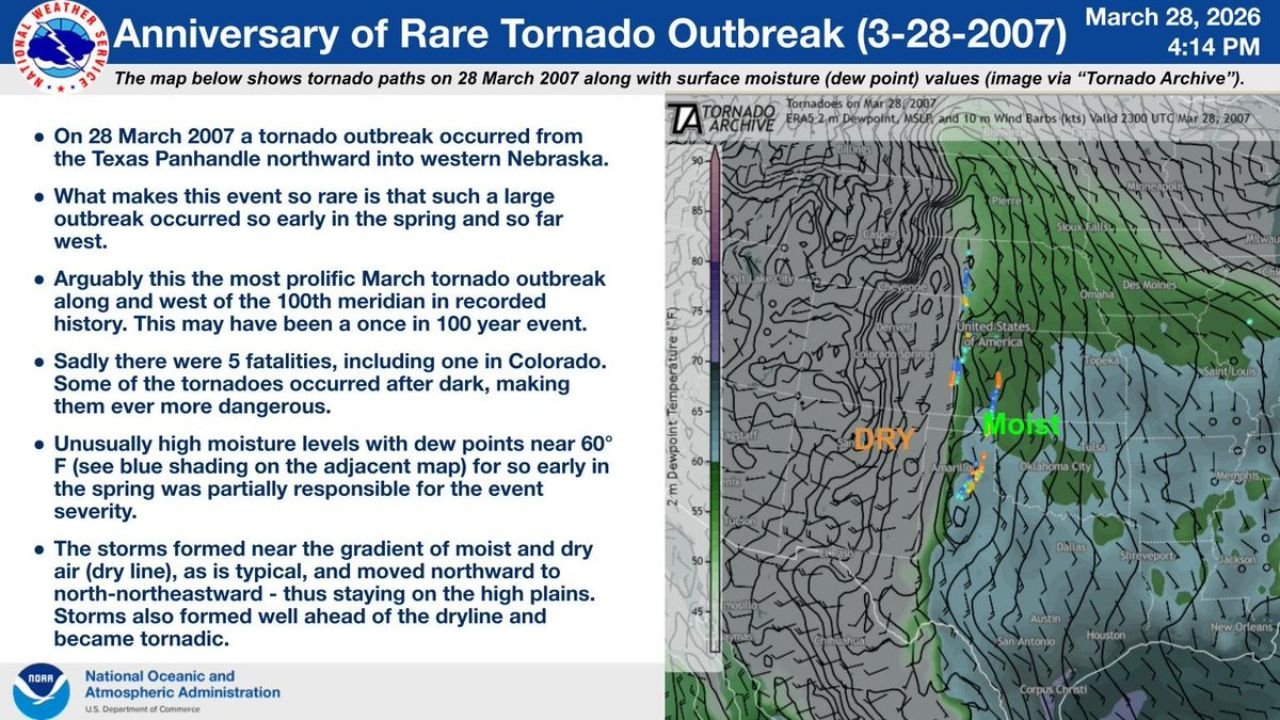
TEXAS, OKLAHOMA, NEBRASKA — Nineteen years after one of the most unusual early-season severe weather events in U.S. history, meteorologists and weather observers are reflecting on the March 28, 2007 tornado outbreak — a rare event that pushed far west and occurred unusually early in the spring.
The outbreak stretched from the Texas Panhandle through Oklahoma and into western Nebraska, producing multiple tornadoes in a region and time of year where such activity is far less common.
Why This Tornado Outbreak Was So Rare
What made this event stand out was not just the number of tornadoes — but where and when they occurred.
- Happened early in the spring season
- Extended far west of typical tornado corridors
- Occurred along and west of the 100th meridian
Some experts consider it one of the most unusual March outbreaks on record, with characteristics more typical of peak-season severe weather.
Key Facts From The March 28 2007 Event
Once-in-Decades Event
Possibly a 1-in-100 year March outbreak west of the 100th meridian
5 Fatalities
Including one reported in Colorado
Night Tornadoes
Several tornadoes occurred after dark, increasing danger
Moisture Surge
Dew points near 60°F fueled storm intensity
How The Event Unfolded
The Role Of Moisture And The Dryline
One of the key drivers behind this outbreak was an unusually strong contrast between dry air to the west and moist air to the east — commonly referred to as the dryline.
- Moist air surged northward with dew points near 60°F
- Dry air remained entrenched across the High Plains
- Storms formed along this boundary and moved northward
In some cases, storms even developed ahead of the dryline, enhancing tornado potential.
Why This Event Still Matters Today
Events like the March 28, 2007 outbreak highlight how severe weather patterns can break expectations — especially during transition seasons.
It serves as a reminder that:
- Tornado risk is not limited to peak season
- Unusual setups can occur far outside typical regions
- Preparedness is critical even in early spring
Final Reflection
Nearly two decades later, the March 28, 2007 tornado outbreak remains a standout example of how quickly atmospheric conditions can align to produce rare and dangerous events.
Its legacy continues to shape how forecasters evaluate early-season severe weather risks across the central United States.
Explore Historic And Emerging Weather Events
Stay informed with deep analysis of past outbreaks and real-time severe weather updates only on WaldronNews.com. Follow along to understand how past events shape today’s forecasts.