
Utah and Southwest Wyoming Shatter Winter Records as Salt Lake City Logs Warmest Winter Since 1874 at 40.7 Degrees
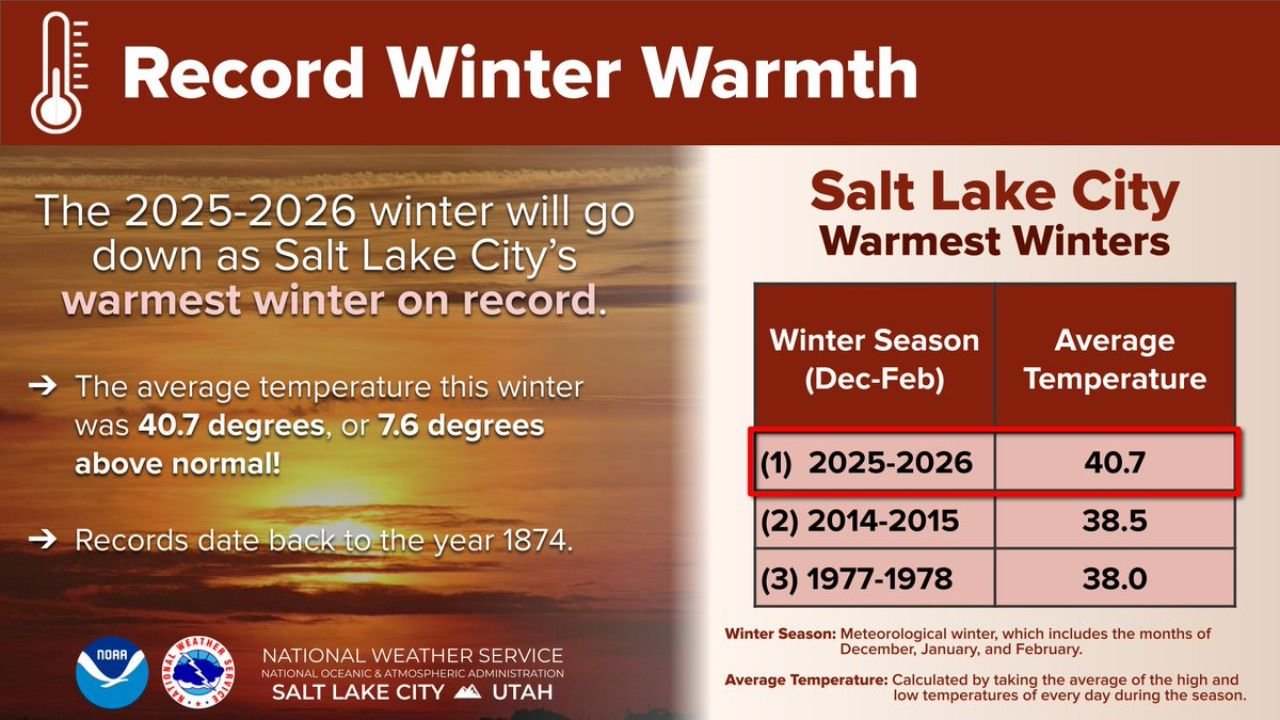
SALT LAKE CITY, UTAH — The 2025–2026 meteorological winter will go down in the history books as the warmest winter ever recorded in Salt Lake City, marking an extraordinary season of above-normal temperatures across much of Utah and southwest Wyoming.
According to official data, the December–February winter season averaged 40.7 degrees, which is 7.6 degrees above normal. Records for the city date back to 1874, making this not just a notable year — but a historic one.
Warmest Winter on Record in Salt Lake City
The newly released rankings place the 2025–2026 winter at the very top of Salt Lake City’s warmest winter list:
- 2025–2026: 40.7°F
- 2014–2015: 38.5°F
- 1977–1978: 38.0°F
The gap between this year’s average and the previous record is significant, underscoring just how unusually warm this winter was.
An average of 40.7 degrees across three winter months reflects persistent mild conditions rather than just isolated warm days.
Utah and Southwest Wyoming Also Exceptionally Warm
The warmth was not limited to Salt Lake City alone. Much of:
- Northern Utah
- Central Utah
- Southwest Wyoming
experienced exceptionally warm winter conditions.
This widespread pattern suggests a dominant ridge or persistent mild air masses influenced the region through much of December, January, and February.
What “Meteorological Winter” Means
Meteorological winter includes:
- December
- January
- February
The seasonal average temperature is calculated using the average of daily high and low temperatures across those three months.
To surpass records that have stood since the late 1800s highlights the magnitude of this event.
Long-Term Climate Context
With records dating back to 1874, Salt Lake City has experienced nearly 150 winters of documented data.
Breaking a record in such a long dataset indicates that this season was not just slightly warmer — it was historically significant.
The fact that the previous warmest winters occurred in:
- 2014–2015
- 1977–1978
shows that warm winters are not unprecedented, but this year exceeded them by a notable margin.
Why This Matters Beyond Utah
While this record warmth occurred in Utah and southwest Wyoming, large-scale winter patterns often influence broader U.S. weather trends.
Persistent western warmth can:
- Alter storm tracks
- Reduce snowpack levels
- Shift temperature contrasts across the country
These shifts can ripple into spring weather behavior across other regions, including the central United States.
Bottom Line
- Warmest winter on record for Salt Lake City
- 40.7°F seasonal average
- 7.6°F above normal
- Records dating back to 1874
- Exceptional warmth across much of Utah and southwest Wyoming
The 2025–2026 winter will be remembered as one of the most anomalously warm cold seasons in Utah’s recorded history.
For continued coverage of major national weather milestones and how large-scale patterns may influence Arkansas conditions, stay with WaldronNews.com for in-depth updates and regional weather analysis.