
Winter Storm Severity Index Highlights Elevated Impacts for Wisconsin as New Weather Analysis Shows Growing Risk Zones
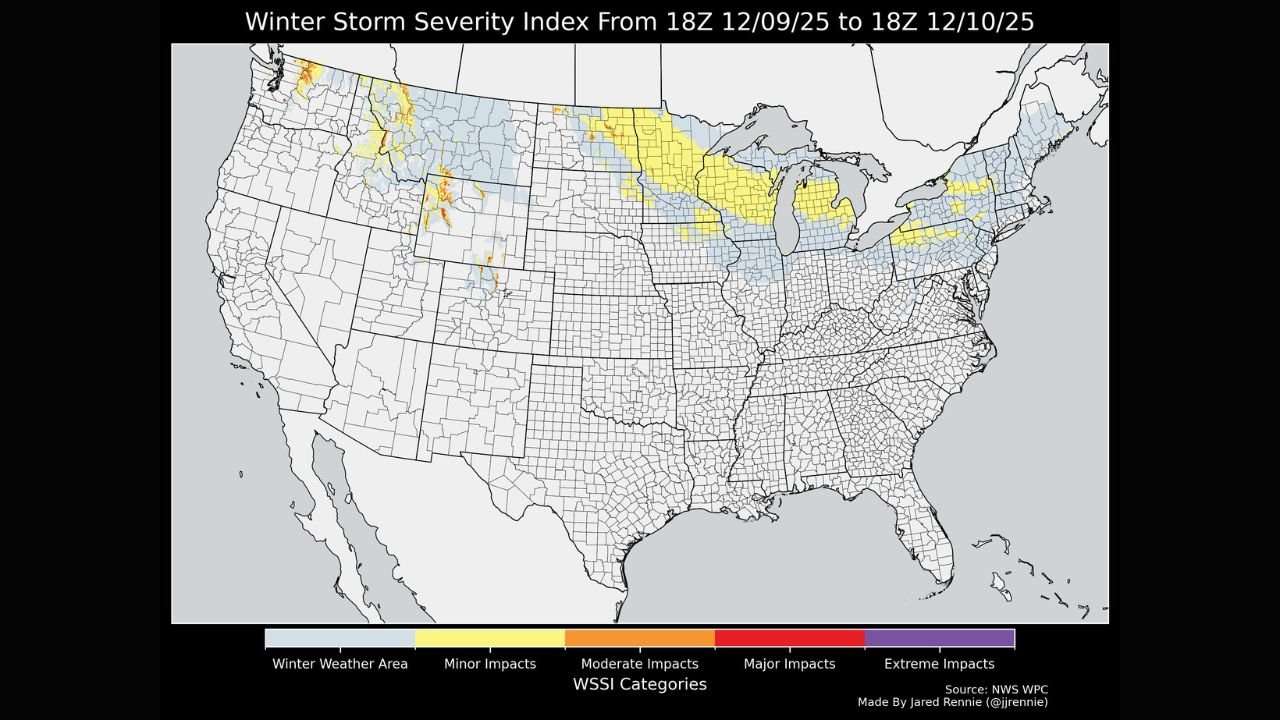
WISCONSIN — New Winter Storm Severity Index Map Reveals Growing Impact Zones Across Northern Counties, A newly updated Winter Storm Severity Index (WSSI) from the National Weather Service is drawing attention across Wisconsin, where fresh mapping reveals pockets of minor to moderate winter weather impacts expected through Wednesday. The dataset, released Tuesday and covering the period from December 9 to December 10, provides a clearer picture of where travel difficulties, reduced visibility, and weather-related disruptions may develop.
The WSSI, designed to communicate the potential severity of winter storms, highlights areas in northern Wisconsin where impacts may increase due to snow, wind, and deteriorating road conditions. The index is widely used by emergency managers, transportation departments, and local communities to anticipate storm severity and plan ahead.
What the Latest WSSI Maps Show
The maps show a corridor of minor impact zones (yellow) stretching across portions of northern Wisconsin, with several smaller pockets reaching into the moderate impacts category (orange). While much of the state remains in the “winter weather area” shading — indicating low-impact conditions — the elevated zones signal that certain communities may encounter more significant disruptions.
Key takeaways from the WSSI display include:
- Minor to moderate impacts across parts of northern Wisconsin
- Widespread light winter weather areas indicating slippery roads and light snow accumulation
- Impact clusters extending from Montana through the Upper Midwest and into Wisconsin and Michigan
- Concentrated hazard potential near lake-adjacent counties, where localized snow bands may form
The WSSI does not guarantee severe outcomes, but it helps highlight where confidence is increasing for impactful weather.
How the WSSI Helps Identify Storm Risks
Unlike traditional snowfall forecasts, the WSSI evaluates multiple factors that influence real-world conditions, including:
- Snow amounts
- Snow load
- Blowing snow
- Ground impacts
- Flash freeze potential
The index provides a community-level view of how a storm may affect daily life rather than focusing solely on accumulation totals. This helps interpret situations where even modest snowfall, when combined with wind or cold surfaces, can lead to hazardous travel.
For Wisconsin, the emerging moderate-impact zones reflect a combination of wintry precipitation and environmental conditions, including lingering snow cover and seasonally cold temperatures that can worsen road impacts.
Impacts Remain Manageable but Worth Monitoring
While Wisconsin is not facing a major winter storm at this time, the WSSI suggests that northern regions may see travel slowdowns, slippery roadways, and brief periods of reduced visibility. The broader Upper Midwest may experience stronger impacts, particularly across Montana, Idaho, and the Dakotas, where more pronounced snowfall and higher elevation terrain contribute to increased risk.
For Wisconsin residents, the most likely concerns through Wednesday include:
- Light to moderate snow creating slick roadways
- Isolated visibility reductions in heavier bursts
- Slower travel in impact zones
- Localized disruptions in elevated areas
Travelers planning early or midweek trips through the northern counties should remain aware of changing road conditions.
Officials Encourage Awareness and Regular Updates
Because weather impacts can evolve quickly during winter months, officials recommend checking:
- Local NWS office updates
- County highway advisories
- Real-time road condition maps
The WSSI will continue updating as new data arrives, offering insight into how the winter weather pattern develops through the week.
Stay connected with WaldronNews.com for ongoing winter weather coverage, travel advisories, and updates on evolving conditions across Wisconsin.