
Arctic Blast Locks in Deep Freeze Across Florida, Georgia, the Carolinas, Tennessee, and the Midwest, Bringing Sub-Zero Wind Chills and Rare February Record Lows
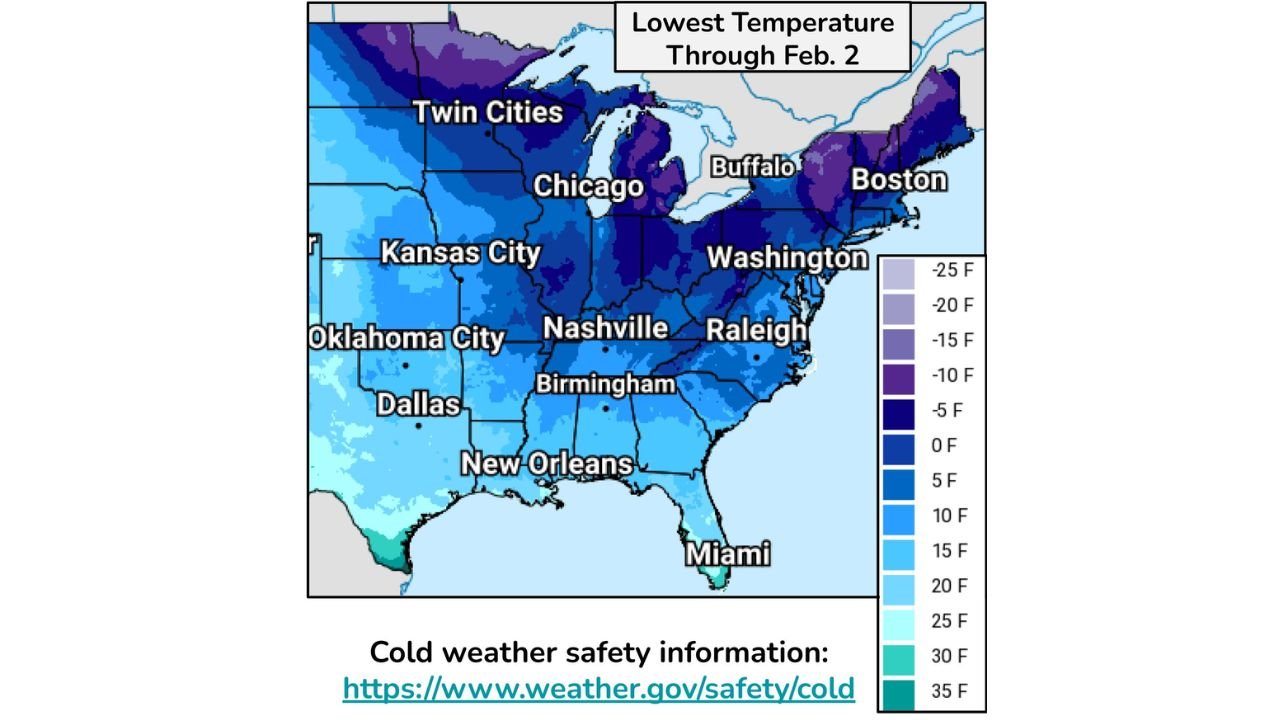
UNITED STATES — A dangerous and unusually persistent Arctic air mass remains entrenched across the eastern half of the country, keeping brutally cold temperatures locked in through at least Monday night and pushing the region into what forecasters describe as one of the longest extreme cold stretches in decades for parts of the East and Southeast.
New guidance and official messaging from the National Weather Service and the Weather Prediction Center confirm that the Arctic blast will not break quickly, with life-threatening cold, widespread sub-zero wind chills, and hard freezes extending far south into areas unaccustomed to this level of cold.
Arctic Air Expected to Persist Into Next Week
Forecasters say the core of Arctic air will remain entrenched into early next week, allowing cold temperatures to pile up night after night rather than moderating between systems.
Large portions of the Midwest, Ohio Valley, Appalachians, and Southeast are expected to experience multiple consecutive mornings with temperatures well below normal, while daytime highs struggle to recover.
Across the Gulf Coast and Deep South, daily record low temperatures are possible, especially overnight through Sunday and Sunday night. The persistence of the cold — not just the intensity — is what elevates the risk.
Dangerous Wind Chills Spread Far South
As a coastal storm strengthens off the Carolinas, increasing winds will combine with the Arctic air to produce dangerously low wind chills, extending well beyond the traditional cold-weather regions.
Key impacts include:
- Widespread sub-zero wind chills across the Midwest and interior Northeast
- Below-zero wind chills reaching into the southern Appalachians
- Single-digit and teens “feels-like” temperatures across much of the Southeast
These conditions significantly raise the risk of frostbite and hypothermia, particularly for anyone exposed for even short periods of time.
Rare and Potentially Historic Cold for Florida
One of the most concerning aspects of this Arctic outbreak is how far south it extends.
Forecasters warn that rare long-duration hard freezes are likely along the Gulf Coast and down the Florida Peninsula, particularly Sunday night into early Monday. In some locations, all-time February low temperature records are possible.
This level of cold poses serious threats to:
- Agricultural interests, including citrus and sensitive crops
- Unprotected pipes and irrigation systems
- Vulnerable populations unfamiliar with extended freezing conditions
Cold Impacts Extend Beyond Temperatures
Officials emphasize that this event is not just about cold numbers on a thermometer. The prolonged nature of the freeze increases cumulative impacts, including:
- Frozen and burst pipes
- Increased power demand and strain on utilities
- Heightened danger for pets, livestock, and wildlife
- Dangerous conditions for those without adequate heating
Areas dealing with ongoing or recent power outages face an especially elevated risk as wind chills remain dangerously low.
Safety Officials Urge Preparation and Caution
Weather officials stress that this could be the longest stretch of extreme cold in several decades for parts of the eastern U.S. Residents are urged to take precautions seriously:
- Limit time outdoors and cover exposed skin
- Ensure pets and animals have proper shelter
- Protect pipes by insulating and allowing faucets to drip
- Check on elderly neighbors and vulnerable individuals
- Avoid traveling on ice of unknown thickness
Cold-related emergencies often increase during prolonged events like this, especially when fatigue and complacency set in after several days of extreme conditions.
What Happens Next?
The deep freeze is expected to hold firm through early February, with only gradual moderation possible later next week. Even then, forecasters caution that cold air may linger longer than typical, delaying a full return to seasonal temperatures.
For now, the message is clear: this Arctic blast is not a quick hit — it’s a sustained and dangerous cold event that demands continued vigilance.
How cold has it gotten where you live, and how are you preparing for this prolonged freeze? Share your experience and stay with WaldronNews for continued updates on this developing winter threat.