
Wisconsin EF3 Just Joined the List as These States Have Seen the Most Violent Tornadoes Since 2020 With Winds Reaching 210 mph
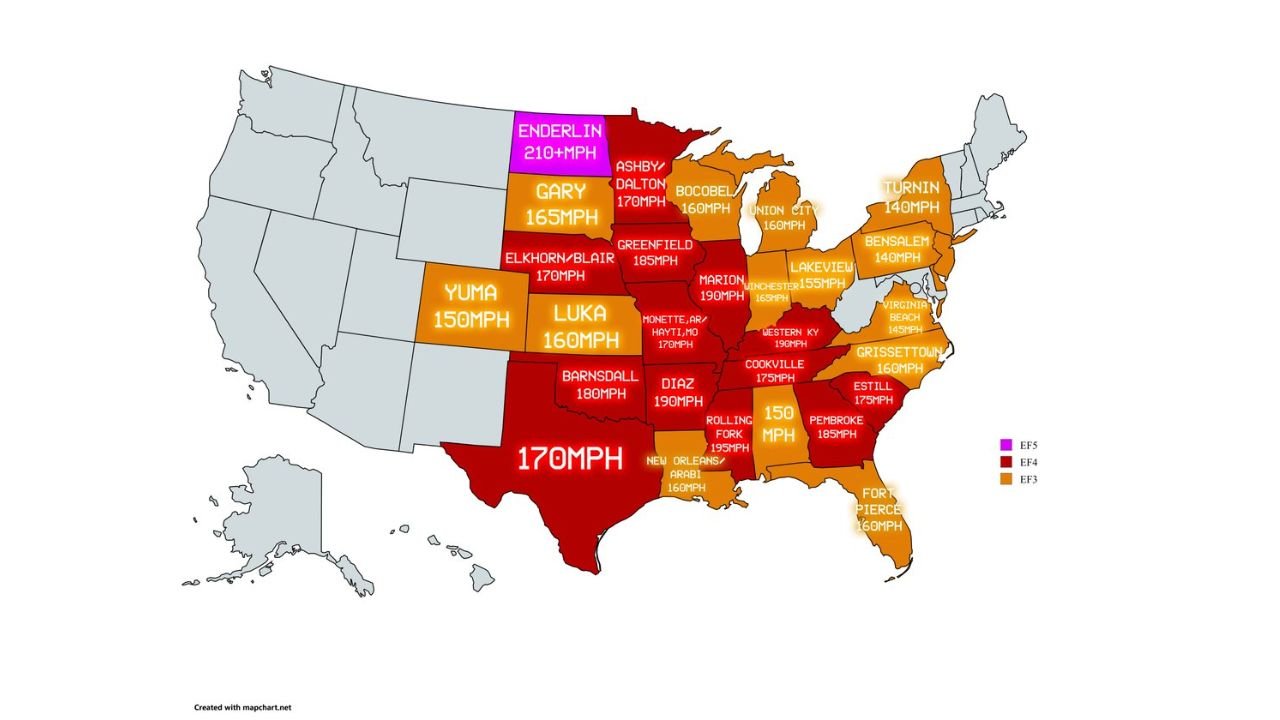
MADISON, Wisconsin — Wisconsin just wrote itself into a map that no state wants to be on. The two EF3 tornadoes confirmed from the April 17, 2026 outbreak place Wisconsin among the states that have experienced the most violent tornado strikes in recent years — joining a grim list of communities across the United States that have been hit by intense-plus tornadoes since 2020, with wind speeds ranging from 140 mph all the way up to 210+ mph.
With the April 17 outbreak now confirmed as one of the most significant Upper Midwest tornado events in modern history, it is worth looking at exactly which states have been hit hardest by violent tornadoes since 2020 — and just how powerful those storms were when they arrived.
The Most Violent Tornado in Every Region Since 2020
The Great Plains and Midwest — Where the Fastest Tornadoes Live
- North Dakota: Enderlin — 210+ mph EF5 — the most violent tornado recorded anywhere in the United States since 2020, the only EF5 on the entire map
- Nebraska: Elkhorn/Blair — 185 mph EF4 — one of the most powerful tornadoes in Nebraska history during this period
- Iowa: Greenfield — 185 mph EF4 — the deadly Greenfield tornado that devastated the community and remains one of the most significant Iowa tornado events in recent memory
- Kansas: Diaz — 190 mph EF4 — among the strongest tornadoes recorded in the Southern Plains since 2020
- Oklahoma: Barnsdall — 180 mph EF4 — a violent and destructive strike across northeastern Oklahoma
- Missouri: Monette/Ar, Hayti/Mo — 170 mph EF4 — the Monette tornado that caused widespread destruction across the Bootheel region
- Minnesota: Gary — 165 mph EF3 — the strongest Minnesota tornado since 2020 in the northwestern part of the state
- Wisconsin: Ashby/Dalton — 170 mph EF3 — and now April 17 2026 adds fresh EF3 confirmed tracks to Wisconsin’s recent violent tornado history
- Illinois: Marion — 190 mph EF4 — one of the strongest Illinois tornadoes in the recent period
- Michigan: Lakeview/Winchester — 155 to 165 mph EF3 — significant violent tornado strikes across central Michigan
The South and Southeast — Dixie Alley’s Violent History
- Texas: 170 mph EF3 — multiple locations across the state earning this rating since 2020, confirming Texas as consistently one of the most tornado-active states in the nation
- Mississippi: Rolling Fork — 195 mph EF4 — the devastating Rolling Fork tornado of March 2023 that killed dozens and leveled the small Mississippi Delta community in one of the deadliest tornado events of the decade
- Alabama: 150 mph — multiple EF3 rated tornadoes across the state since 2020 reflecting Alabama’s position deep inside Dixie Alley
- Tennessee: Cookeville — 175 mph EF3 — the deadly Cookeville tornado that struck during the early morning hours and caused significant loss of life
- Kentucky: Western Kentucky — 190 mph EF4 — the catastrophic December 2021 tornado outbreak that produced one of the longest tornado tracks in United States history through Mayfield and surrounding communities
- Arkansas: Luka — 160 mph EF3 — significant violent tornado strike across the state since 2020
- Louisiana: New Orleans/Arabi — 160 mph EF3 — the rare and destructive New Orleans area tornado that struck dense urban neighborhoods
- Georgia: 150 mph — multiple EF3 rated strikes confirmed across the state since 2020
The East Coast — More Vulnerable Than Most Realize
- Ohio: 150 mph — multiple EF3 tornadoes confirmed since 2020 across a state many residents do not associate with violent tornado risk
- Indiana: 150 mph — consistent EF3 tornado history across the state during this period
- North Carolina: Crissettownin — 160 mph EF3
- Virginia: Virginia Beach — 145 mph EF3 — a striking reminder that violent tornadoes reach all the way to the Atlantic Coast
- West Virginia: Estill — 175 mph EF3 — one of the most powerful tornadoes recorded in West Virginia history
- Pennsylvania: Bensalem — 140 mph EF3 — confirming violent tornado risk extends into the Philadelphia suburbs
- New Jersey/Connecticut: Turnin — 140 mph EF3 — the Northeast is not immune from intense tornado strikes
- Florida: Fort Pierce — 160 mph EF3 — violent tornadoes striking South Florida communities
What These Numbers Mean for Where You Live
The map covering the entire United States since 2020 delivers one clear and uncomfortable message — there is no truly safe state when it comes to violent tornadoes.
The 210+ mph EF5 in North Dakota proves the northern Plains can produce the most violent tornadoes on earth. The 190 mph EF4 in Illinois confirms the Midwest is not just a severe weather concern but a violent tornado concern. The 140 mph EF3 in Pennsylvania and New Jersey proves the East Coast is not protected by geography or distance from Tornado Alley.
And Wisconsin — which many residents historically viewed as on the fringe of serious tornado country — now has fresh EF3 confirmation from April 17, 2026 sitting alongside its previous 170 mph EF3 from the Ashby/Dalton strike. Two violent tornado events in the same state within a few years is a pattern that demands attention and preparation from every Wisconsin community.
Why April 17 Makes This Map More Relevant Right Now
The April 17, 2026 Wisconsin EF3 tornadoes are not just a statistic to add to this historical map. They are a direct reminder that the atmospheric setups capable of producing violent tornadoes across the Upper Midwest are not once-in-a-generation events.
The same CAPE values above 5,000 J/kg, the same 80+ knot wind shear, the same classic hodograph profiles that forecasters warned about all week — those ingredients came together on April 17 and delivered EF3 wind speeds across Wisconsin communities. They will come together again. The question is never whether violent tornadoes will strike — it is whether residents are prepared when they do.
The next significant severe weather setup for the Central United States is already taking shape for Thursday April 24 across Kansas and Oklahoma, with a potentially major Dixie Alley outbreak possible April 25 across Alabama, Mississippi, and Tennessee. Every state on this map has faced violent tornadoes since 2020. Every state needs to be ready for the next one.
The Bottom Line for Every State on This Map
- If you live in any state shown in red or orange — your state has experienced EF3, EF4, or EF5 tornado winds since 2020 — violent tornado risk is real and local for your community
- Know your county’s tornado history — the specific cities named on this map are ground zero examples, but the tracks that produced them passed through many surrounding communities as well
- Have a shelter plan before every severe weather season — not after the first watch of the year, but now, before the next outbreak arrives
- Wisconsin residents specifically — April 17 confirmed what the atmosphere has always been capable of delivering to your state — preparation and awareness are the only defenses against winds that can reach 170+ mph
- April 24 and 25 are the next dates to watch — Kansas, Oklahoma, Alabama, Mississippi, and Tennessee are all in the crosshairs of the next developing severe weather setup
Violent tornadoes have hit every corner of the United States since 2020. April 17, 2026 just added another chapter. The next chapter is already being written.
WaldronNews.com will continue tracking violent tornado history, current outbreak impacts, and upcoming severe weather threats across all affected states through the 2026 spring storm season.