
Severe Storm Threat Tuesday From Texas Louisiana Arkansas Missouri Illinois and Indiana With Squall Line Risk and Possible Tornadoes
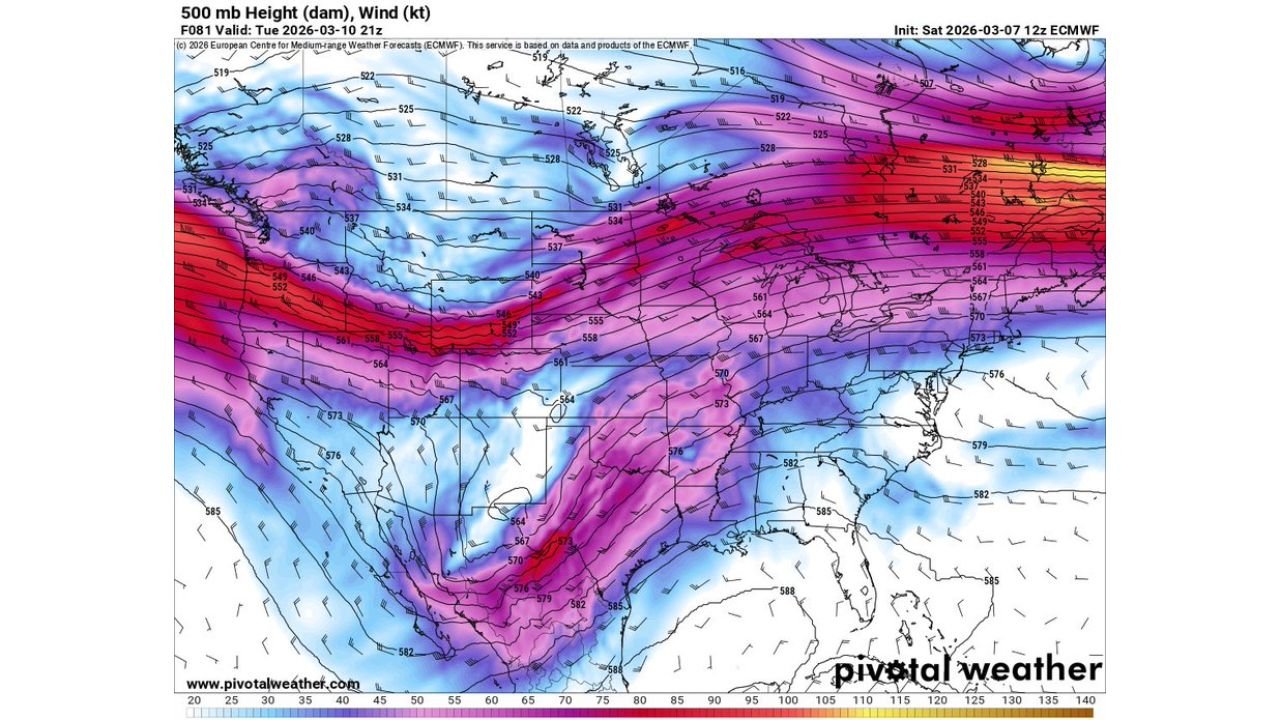
ARKANSAS — Meteorologists are increasingly confident that a significant severe weather setup could unfold Tuesday across parts of Texas, Louisiana, Arkansas, Missouri, Illinois, Indiana and surrounding areas, as a powerful upper-level system moves across the central United States.
Forecast data indicates that storms may organize along a long corridor stretching from Del Rio, Texas northeast through Louisiana, Arkansas, Missouri and into Illinois and Indiana, creating conditions favorable for damaging winds, large hail and isolated tornadoes.
Current outlook guidance highlights a Day 4 severe weather risk across much of the Mississippi River Valley, signaling that the atmosphere may support organized thunderstorm development as the system approaches.
Powerful Jet Stream Pattern Supporting Severe Storm Development
Upper-level weather maps show a strong jet stream sweeping from the Southwest across Texas and into the Midwest, which is one of the key ingredients needed for severe thunderstorms.
These high-altitude winds help storms organize and strengthen, especially when they combine with warm and humid air moving north from the Gulf of Mexico.
According to meteorological analysis, the developing setup could create multiple storm development zones from southern Texas to the Midwest, with storms potentially intensifying as they track northeast along the Mississippi River Valley.
Severe Weather Corridor Extends Across the Mississippi River Valley
The current severe weather outlook highlights a 15% probability zone covering a large portion of the central United States, including:
- Texas
- Louisiana
- Arkansas
- Missouri
- Illinois
- Indiana
This area represents the region where severe thunderstorms are most likely to develop Tuesday.
Forecasters suggest that storms may begin developing in parts of Texas during the afternoon, then expand northeast into Louisiana and Arkansas, before reaching Missouri, Illinois and Indiana later in the day or during the evening hours.
Arkansas Could See Strong Storms as System Moves Northeast
For Arkansas, the state sits near the center of the highlighted severe weather corridor, meaning storms moving through the region could strengthen as atmospheric instability increases.
Communities across Arkansas, including areas near Waldron and western Arkansas, could experience strong thunderstorms capable of producing:
- Damaging straight-line winds
- Large hail
- Isolated tornadoes if storms rotate
Meteorologists note that storms could organize into a squall line as they move through the Mississippi River Valley, which would increase the threat of widespread damaging wind gusts.
Storms Could Travel Hundreds of Miles Across Multiple States
One of the key concerns with this setup is the long southwest-to-northeast storm track, which allows thunderstorms to travel across several states while maintaining strength.
Storms forming near southwest Texas or the Rio Grande region could track northeast across Arkansas and Missouri, eventually reaching the Midwest including Illinois and Indiana.
This type of setup is common during early spring when strong weather systems emerging from the western United States interact with warm Gulf moisture.
Early Season Severe Weather Pattern Taking Shape
Meteorologists say the developing Tuesday storm system is another indication that severe weather season is beginning to ramp up across the central United States.
As temperatures warm and atmospheric energy increases, conditions become more favorable for organized thunderstorms and tornado-producing systems, particularly across the Plains and Mississippi Valley.
While the exact timing and intensity of storms will become clearer closer to Tuesday, residents across the highlighted region should remain weather aware as the system approaches.
Stay with WaldronNews.com for continuing updates as meteorologists track the evolving severe weather threat expected to develop across Texas, Louisiana, Arkansas, Missouri, Illinois and Indiana.