
Colorado Snowpack Collapses to Just 34 Percent of Normal After March Heatwave Raising Drought Concerns Into Summer
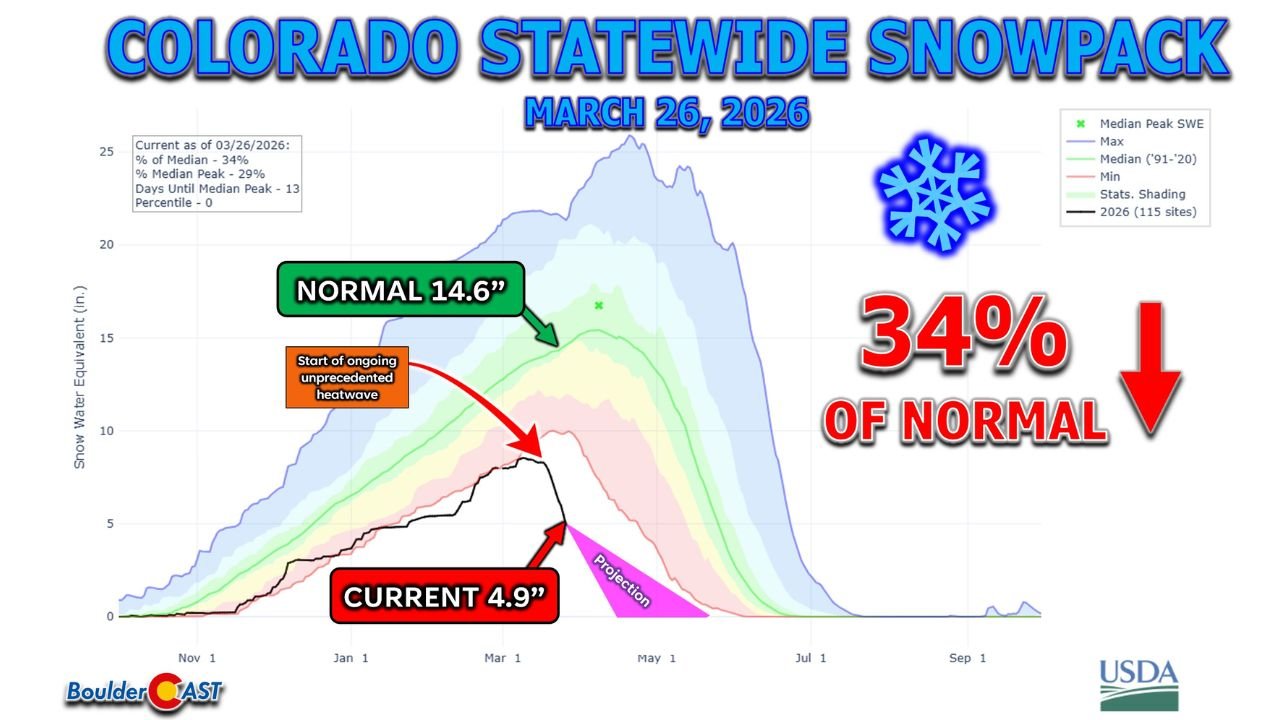
COLORADO — After an extended period of unusual March warmth, Colorado’s statewide snowpack has dropped sharply to just 34 percent of normal, signaling growing concerns about water supply and drought conditions heading into summer.
Unprecedented March Warmth Rapidly Melted Snowpack
A stretch of unseasonably warm temperatures lasting around 10 days has significantly reduced snow levels across the state. Snowpack, which is critical for water storage in Colorado, has been heavily diminished during what is typically a peak accumulation period.
Current measurements show snow water equivalent values far below normal, with levels dropping to roughly one-third of what is typically expected statewide.
This rapid decline highlights how sensitive snowpack is to extended periods of above-normal temperatures, especially late in the winter season.
Mountains Continue to Run Warm Through Late March
The warming trend is expected to continue across Colorado’s mountainous regions through the rest of March, with temperatures remaining above seasonal averages.
These conditions will likely limit additional snow accumulation and continue to accelerate melting, preventing meaningful recovery in the short term.
As a result, the snowpack deficit could persist or even worsen before any pattern change occurs.
Early April May Bring Snow, But Impact Limited
Looking ahead, early April could bring more seasonal temperatures along with several rounds of snowfall across the mountains.
However, projections suggest that these snow events may not be enough to significantly rebuild the snowpack. The current deficit is substantial, and it would require sustained and heavier snowfall to reverse the trend.
The overall outlook continues to favor a warmer and drier spring pattern, which could further reduce snowpack levels.
Drought Concerns Increasing Across the State
With snowpack levels already well below normal, concerns are growing about water availability as Colorado moves toward the warmer months.
Snowpack plays a critical role in feeding rivers and reservoirs, and reduced levels can lead to lower streamflows and increased drought risk.
Water restrictions may become more likely in the coming weeks and months, especially if dry conditions continue into early summer.
Long-Term Outlook Points to Warm and Dry Conditions
The broader pattern suggests that Colorado could remain under the influence of a warm and relatively dry regime through spring, limiting opportunities for recovery.
This raises the possibility of expanded drought conditions and heightened stress on water resources, particularly in areas already experiencing dryness.
The combination of reduced snowpack and ongoing warmth creates a challenging outlook for water supply heading into the summer season.
Residents across Colorado are encouraged to monitor water conditions and stay updated on the latest forecasts. Share what conditions you’re seeing in your area and follow ongoing coverage on Waldronnews.com.