
Colorado Snowpack Drops To Just 30 Percent Of Normal After Rapid Two Week Collapse Raising Early Melt Concerns
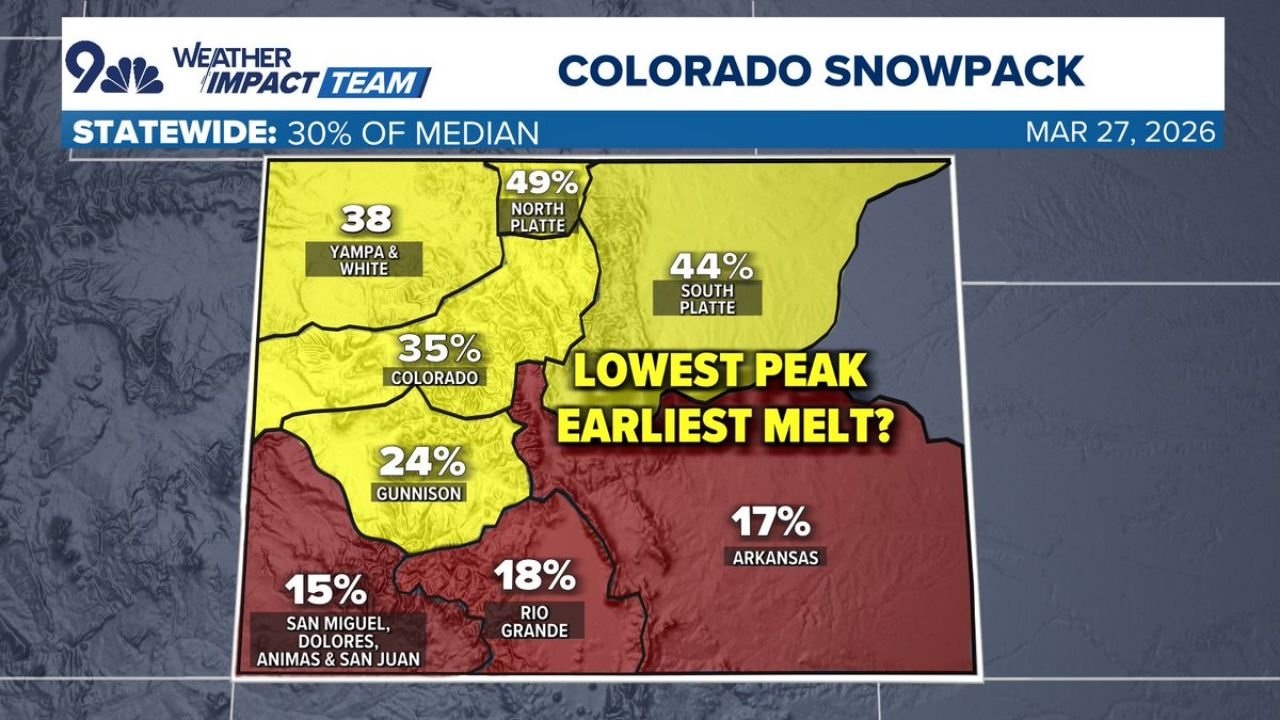
COLORADO — Snowpack levels across Colorado have plunged to just 30% of the statewide median, marking a dramatic and concerning decline over a short period of time. Just 10 to 14 days ago, snowpack levels were sitting near 64% of normal, highlighting how quickly conditions have deteriorated.
The rapid drop is raising concerns about early snowmelt, water supply impacts, and an unusually weak peak snow season.
A Sudden And Significant Decline
The shift from 64% down to 30% in less than two weeks represents one of the sharpest late-season snowpack declines in recent memory.
Several regions are already showing critically low levels:
- San Miguel / Dolores / Animas / San Juan: 15%
- Rio Grande Basin: 18%
- Arkansas Basin: 17%
- Gunnison Basin: 24%
Even stronger areas like the South Platte (44%) and North Platte (49%) remain below average.
Snowpack Comparison Trend
64%
Earlier This Month
30%
Current Snowpack
Why This Drop Matters
Snowpack acts as a natural reservoir, slowly releasing water during spring and summer. A rapid decline like this can lead to:
- Reduced water supply later in the season
- Earlier-than-normal snowmelt
- Increased drought risk in warmer months
The current trend suggests Colorado may be facing a weaker spring runoff period if recovery does not occur.
Short-Term Outlook Shows Limited Recovery
While two incoming mountain storms next week could help stabilize snowpack levels, the recovery may be limited.
Before that, another significant melt event is expected this weekend, which could further reduce remaining snowpack before any new accumulation arrives.
Is This The Earliest Peak Snowpack?
The current pattern is raising concerns that Colorado may have already seen:
- One of its lowest seasonal peaks
- An earlier-than-normal snowmelt cycle
If conditions continue along this path, the state could enter spring with significantly below-average snow reserves.
Final Outlook
Colorado’s snowpack collapse highlights how quickly winter conditions can shift late in the season. With levels now at just 30% of normal and additional melting expected, the focus will turn to whether upcoming storms can slow the decline.
Without sustained recovery, the state could face early-season water stress and long-term impacts heading into summer.
Stay updated on snowpack trends, water supply risks, and changing weather patterns across the United States on WaldronNews.com. Follow ongoing updates and share conditions in your area to help others stay informed.