
Illinois Tornado Survey Confirms 3 Tornadoes Hit Bloomington and Normal on April 17 as Longest Track Stretches 33 Miles Through McLean County
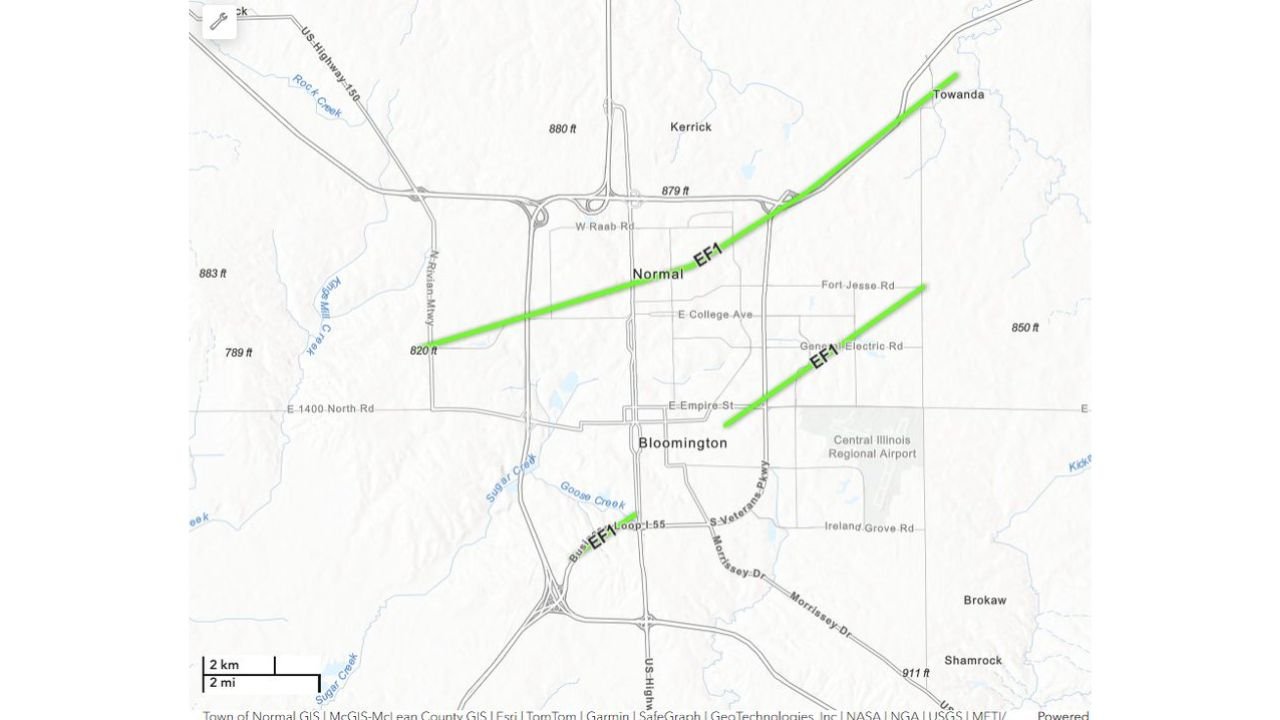
BLOOMINGTON, Illinois — Day 1 of official damage surveys in McLean County, Illinois is complete — and the results confirm what radar and storm reports suggested during Friday’s outbreak. Three tornadoes have been officially identified from the April 17, 2026 event in McLean County alone — two tornadoes confirmed in Bloomington and one in Normal that tracked all the way northeast to Towanda — with the longest single tornado track stretching 33 miles from northeast of McLean to southeast of Anchor.
The damage track maps now showing the confirmed tornado paths tell the story with precision. Three distinct EF1 tornado tracks cut directly through the Bloomington-Normal metro area on Friday evening — one of the most densely populated corridors in central Illinois — with tracks crossing directly over residential neighborhoods, commercial areas, and near the Central Illinois Regional Airport.
The Three Confirmed Tornadoes in McLean County
The damage survey map shows three separate and distinct tornado tracks across McLean County — all rated EF1 on the Enhanced Fujita scale with wind speeds of 86 to 110 mph.
Tornado 1 — Bloomington South: The southernmost track cuts through the southern portion of Bloomington along the Business Loop 55 and South Veterans Parkway corridor — moving northeast through residential areas of the city before lifting. This track passed directly over populated neighborhoods in one of Bloomington’s most developed commercial and residential zones.
Tornado 2 — Bloomington to Normal EF1 — 33 Mile Track: The longest and most significant tornado of the three began northeast of McLean and tracked continuously for 33 miles to southeast of Anchor — crossing through the heart of Bloomington and continuing northeast through Normal, past General Electric Road and Fort Jesse Road, before finally lifting well east of the metro. A 33-mile continuous tornado track through an urban area is a significant and dangerous event — this tornado was on the ground and moving through populated areas for an extended period.
Tornado 3 — Normal to Towanda: The northernmost confirmed track begins in Normal near the E College Avenue and W Raab Road corridor and tracks northeast through the community toward Towanda — passing through residential and commercial areas of Normal before exiting northeast of the town.
What EF1 Tornadoes Do to Communities
EF1 tornadoes with winds of 86 to 110 mph are not the most violent on the scale — but they cause very real and significant damage to communities in their path.
- Roof damage — EF1 winds strip shingles, damage roof decking, and can partially lift roof structures on homes and commercial buildings
- Tree damage — large trees snapped or uprooted across the entire track width — trees falling on homes, vehicles, and power lines throughout Bloomington and Normal
- Window damage — flying debris at 100 mph shatters windows across structures in the direct path
- Mobile home destruction — EF1 winds are sufficient to overturn and destroy mobile homes and manufactured housing
- Power outages — widespread and prolonged power outages across McLean County as the three tracks downed power lines across the metro area simultaneously
- Vehicle damage — cars overturned or damaged by debris along all three tracks
The fact that three separate EF1 tornadoes crossed through Bloomington and Normal essentially simultaneously means the damage footprint across the metro area is far wider than a single tornado track would suggest — creating overlapping zones of tree damage, roof damage, and power outages across a large portion of the city.
The 33-Mile Track in Context
A 33-mile continuous tornado track is a significant and relatively rare occurrence even in the most active tornado climates. Most tornadoes touch down, cause localized damage, and lift within a few miles. A tornado staying on the ground continuously for 33 miles through a populated urban corridor means it was crossing residential streets, neighborhoods, parks, and commercial areas for an extended and dangerous period.
The track running from northeast of McLean through Bloomington, continuing through Normal, and finally lifting southeast of Anchor crossed some of the most populated areas of McLean County — including areas near Illinois State University in Normal and the Central Illinois Regional Airport just east of Bloomington.
Survey teams completing Day 1 of their assessment focused on McLean County — but the broader April 17 outbreak across Illinois included tornado activity across multiple other counties that have not yet been fully surveyed. The McLean County numbers alone — 3 confirmed tornadoes — represent just one piece of a statewide damage picture that is still being assembled.
What Comes Next for Bloomington and Normal
With Day 1 of surveying complete, Day 2 and beyond will expand the assessment to additional Illinois counties affected by Friday’s outbreak. The full statewide tornado count from April 17 across Illinois is expected to grow significantly as survey teams work through the damage corridors from Rockford south through Pontiac, Decatur, and beyond.
For Bloomington and Normal residents specifically, the immediate priorities are damage assessment, insurance documentation, and debris removal — while being mindful that the April 25 severe weather setup targeting the Midwest and Southeast is only one week away.
- Document all property damage immediately with photographs before any cleanup or repair work begins
- Contact your insurance provider this week — three tornado tracks across the metro means a large volume of simultaneous claims across McLean County
- Check roofs carefully — EF1 wind damage to roofing materials is not always visible from ground level and professional inspection is recommended for any structure in the three track corridors
- Report any damage not yet documented to McLean County Emergency Management — survey teams need community reports to ensure all tornado tracks are fully mapped
- Monitor the April 25 setup — central Illinois sits inside the extended probability zone for next weekend’s developing severe weather threat
Bloomington and Normal endured three simultaneous tornadoes crossing their communities on Friday evening. The recovery is underway — and the weather season is not finished with Illinois yet.
WaldronNews.com will continue tracking tornado survey results from the April 17 Illinois outbreak and provide updates as additional counties complete their damage assessments.