
Austin, San Antonio, Houston and Shreveport Face Flash Flood Risk Thursday Into Friday as Heavy Rain Tracks From Texas East Through Alabama
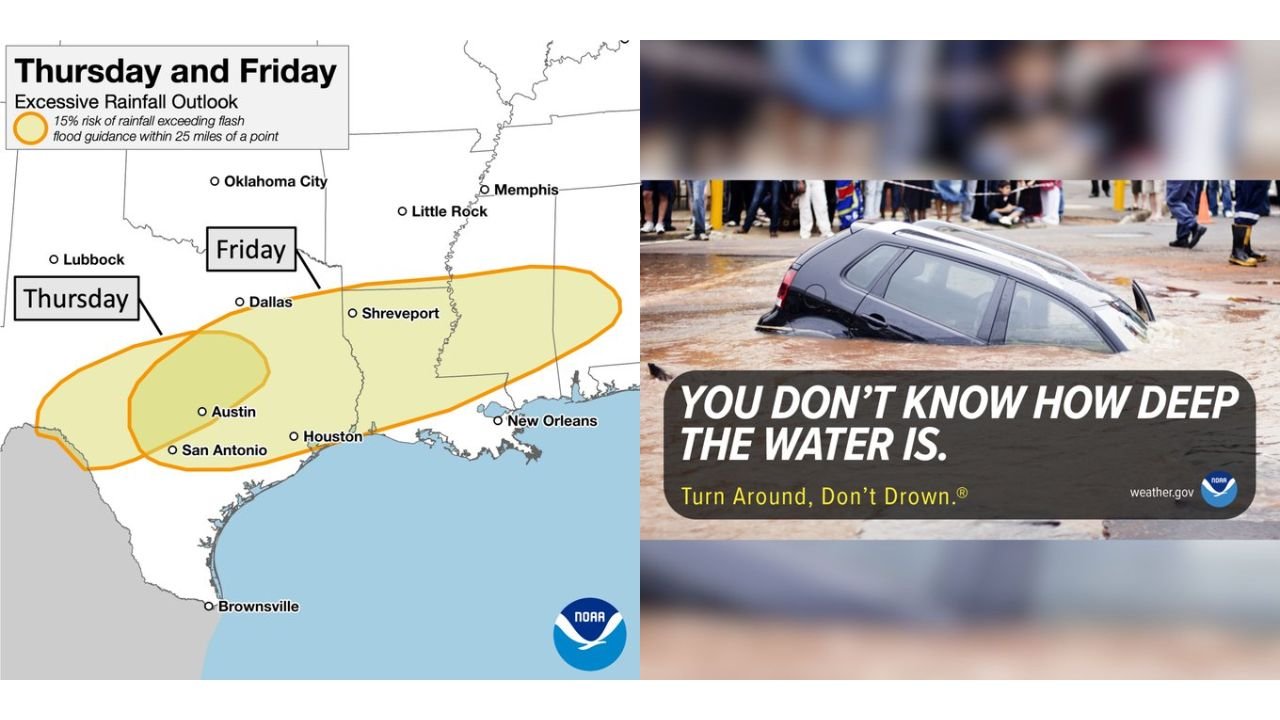
AUSTIN, Texas — Heavy rainfall will bring a serious flash flooding threat across a broad corridor from Texas eastward into Alabama through Thursday and Friday, and the danger it carries is not limited to the rain itself. More than 50 percent of all flood fatalities are vehicle-related, and the message from forecasters heading into this event is direct: you never know how deep the water is or whether the road beneath the surface has been washed away or compromised. Turn Around, Don’t Drown.
The Excessive Rainfall Outlook — Thursday and Friday
The NOAA Excessive Rainfall Outlook for Thursday and Friday shows two overlapping risk zones that track the flash flood threat from west to east across the southern tier:
Thursday — Central Texas Flash Flood Risk: The Thursday risk zone is centered over central Texas, covering the Austin and San Antonio corridor and extending westward toward the Hill Country and eastward toward Houston. This zone carries a 15% risk of rainfall exceeding flash flood guidance within 25 miles of any point — a meaningful probability for a region where the terrain, soil type and urban drainage infrastructure create flash flooding conditions rapidly when heavy rainfall rates exceed one inch per hour.
The Texas Hill Country west of Austin and San Antonio deserves specific attention. This region is one of the most flash-flood-prone landscapes in the United States, where shallow soils over limestone bedrock cannot absorb heavy rainfall and runoff channels into creeks and rivers with extreme speed. Flash flooding in the Hill Country can go from dry creek to raging torrent in minutes, with flood waters traveling far downstream into populated areas before any warning can be issued upstream.
Friday — Eastern Shift Into Louisiana, Mississippi and Alabama: By Friday the risk zone shifts and expands eastward, with the excessive rainfall threat now centered over Shreveport and the Arklatex region extending through northern Louisiana, southern Mississippi and into Alabama. The Friday zone is larger in geographic extent than Thursday’s, reflecting the continued eastward progression of the rain-producing system and its interaction with Gulf moisture as it tracks toward the Gulf Coast.
The Friday zone reaches from Dallas and Shreveport eastward toward New Orleans, covering a corridor that includes communities along the Red River, the Ouachita River and the lower Mississippi tributaries where rapid river rises can compound flash flooding from direct rainfall.
The Two-Day Flood Threat Corridor
Taken together, the Thursday and Friday outlook covers an elongated swath from west Texas through central Texas, the Arklatex, northern Louisiana, southern Mississippi and into Alabama. Cities sitting inside or adjacent to the combined threat area include:
Thursday primary risk:
- Austin, Texas
- San Antonio, Texas
- Houston, Texas
- Waco, Texas
- San Angelo, Texas
Friday primary risk:
- Dallas, Texas
- Shreveport, Louisiana
- Texarkana, Texas and Arkansas
- Monroe, Louisiana
- Jackson, Mississippi
- New Orleans, Louisiana
- Mobile, Alabama
Why Vehicle Flooding Is the Deadliest Risk
The single most important safety message for this event is the vehicle flooding fatality statistic. More than half of all flood deaths occur in vehicles, and the reason is a consistent pattern of driver misjudgment about water depth and road integrity.
Flowing water at 6 inches deep can knock a person off their feet. At 12 inches, most vehicles lose traction and become uncontrollable. At 18 to 24 inches, vehicles are swept off roadways entirely, including large trucks and SUVs.
The fatal combination in flash flooding is that the surface of floodwater looks calm and navigable even when it is moving fast enough to carry a vehicle downstream, and the road surface beneath the water may have been completely eroded away without any visible sign from the driver’s perspective.
Standard road markings, guardrails and lane lines beneath floodwater give drivers a false sense of where the road is. In reality, the road may no longer exist beneath the water at all.
Turn Around, Don’t Drown is not a suggestion. It is the single most life-saving action available to anyone who encounters a flooded roadway during this event. No destination is worth a flooded crossing. No shortcut or familiar road justifies the risk. If water is covering the road, treat it as impassable regardless of its apparent depth.
What to Do Thursday and Friday
- Monitor flash flood warnings in real time Thursday across central Texas and Friday across the Arklatex, Louisiana and Alabama corridors
- Avoid low-water crossings entirely during and after heavy rain, including crossings that appear passable. The road beneath may be gone
- Do not drive into moving water under any circumstances. Six inches of moving water is enough to sweep a person off their feet and two feet of moving water will carry away most vehicles
- If your vehicle stalls in water, exit immediately through a window or door and move to higher ground. Do not wait for water to recede inside the vehicle
- Flash flooding can occur with no rain falling at your location as upstream runoff travels downstream into dry areas rapidly
- Sign up for local emergency alerts in Austin, San Antonio, Houston, Shreveport and any affected community before Thursday morning
WaldronNews.com will continue tracking flash flood warnings, river levels and rainfall totals across Texas, Louisiana and Alabama through Friday and provide updates as the heavy rain event develops.