
Florida, Georgia and the Carolinas Face Worsening Drought This Summer as Seasonal Rainfall Outlook Turns Drier Than Normal With Fire Risk Rising Through the Coming Months
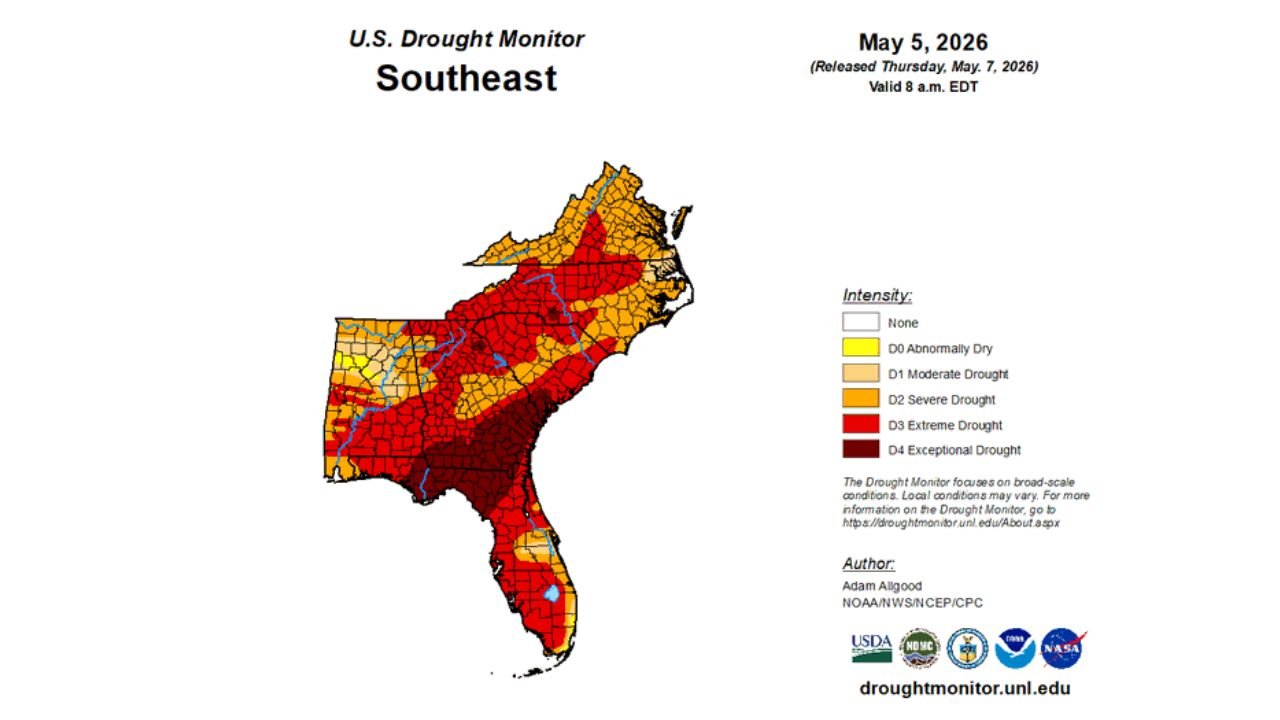
ORLANDO, Florida — Florida and the broader Southeast are heading into a summer rainfall outlook that is raising serious concerns about drought expansion and wildfire danger across a region already gripped by extreme to exceptional drought. The summer precipitation forecast points toward drier than normal conditions across Florida through July 2026, driven by large-scale atmospheric subsidence and reduced tropical storm activity. The drought gripping the Southeast as of May 5, 2026 is already severe enough that even a normal rainy season would struggle to erase the deficit — and forecasts suggest the rainy season may disappoint.
Where the Drought Stands Right Now
The U.S. Drought Monitor valid May 5, 2026 shows the following conditions across the Southeast:
- D4 Exceptional Drought — the worst category possible: Covering large portions of North Carolina, Virginia and the northern Appalachian corridor
- D3 Extreme Drought: Dominating Georgia, South Carolina, central North Carolina and northern Florida
- D2 Severe Drought: Spreading across central and southern Florida, Alabama and Tennessee
- D1 Moderate Drought: Fringe areas of Mississippi, Kentucky and the Virginia border zone
- D0 Abnormally Dry: Outer edges of the drought footprint across portions of Mississippi and the Mid-Atlantic
The drought is essentially wall-to-wall across the entire Southeast with no meaningful drought-free zones remaining across the core of the region.
What the Summer Rainfall Forecast Shows
The precipitation rate anomaly forecast valid July 2026 shows:
- Florida running below normal — brown shading across the entire peninsula indicating drier than normal conditions through the heart of summer
- Georgia and the Carolinas also below normal — the drought footprint receiving less rainfall than needed to recover during the peak moisture season
- Large-scale subsidence — a sinking motion in the atmosphere that suppresses storm development — is forecast to dominate Florida and the Gulf Coast through summer
- Reduced tropical cyclone activity near Florida means fewer tropical moisture surges that typically rescue drought-stricken areas during summer
What the Winter Outlook Offers
The precipitation anomaly forecast valid December 2026 is significantly more promising:
- Florida turns strongly above normal — deep green and blue shading covering the entire state indicating well above normal rainfall
- Georgia and the Carolinas also shift wetter — the winter pattern reversal brings enhanced rainfall across the full Southeast drought footprint
- The Gulf Coast and Deep South show positive anomalies extending from Texas through Florida and up the Atlantic coast
The winter recovery looks classic and encouraging. The problem is that summer comes first — and months of drier than normal conditions on top of an already exceptional drought will push conditions significantly worse before winter relief arrives.
Why Fire Risk Is the Immediate Concern
A disappointing rainy season across Florida, Georgia and the Carolinas means:
- Fuels that should green up and become fire-resistant through summer will remain dry into the fall
- Wildfire season will extend deeper into 2026 than a normal rainfall pattern would allow
- Lake and reservoir levels across the Southeast will continue falling rather than recovering through summer
- Water restrictions in affected municipalities are likely to tighten as the summer drought deepens
- Agricultural losses will compound across Georgia, the Carolinas and northern Florida where crops depend on summer rainfall
What Residents of Florida, Georgia and the Carolinas Should Know
- This summer’s rainy season is not expected to rescue the drought — plan accordingly for water conservation through the summer months
- Wildfire awareness must remain elevated through the entire summer — even brief dry and windy periods can ignite dangerous fires in drought-hardened vegetation
- Winter 2026 offers genuine recovery potential but that is six to seven months away — the drought will likely worsen significantly before it improves
- Water conservation measures now will matter more than usual heading into a summer forecast to deliver below-normal rainfall
WaldronNews.com will continue tracking drought conditions and seasonal rainfall outlooks across Florida, Georgia and the Carolinas and will provide updates as the summer pattern evolves through the coming months.