
Alaska Faces Dangerous Cold as Special Weather Statement Warns of −50°F Wind Chills in Southwest Regions Through Friday Night
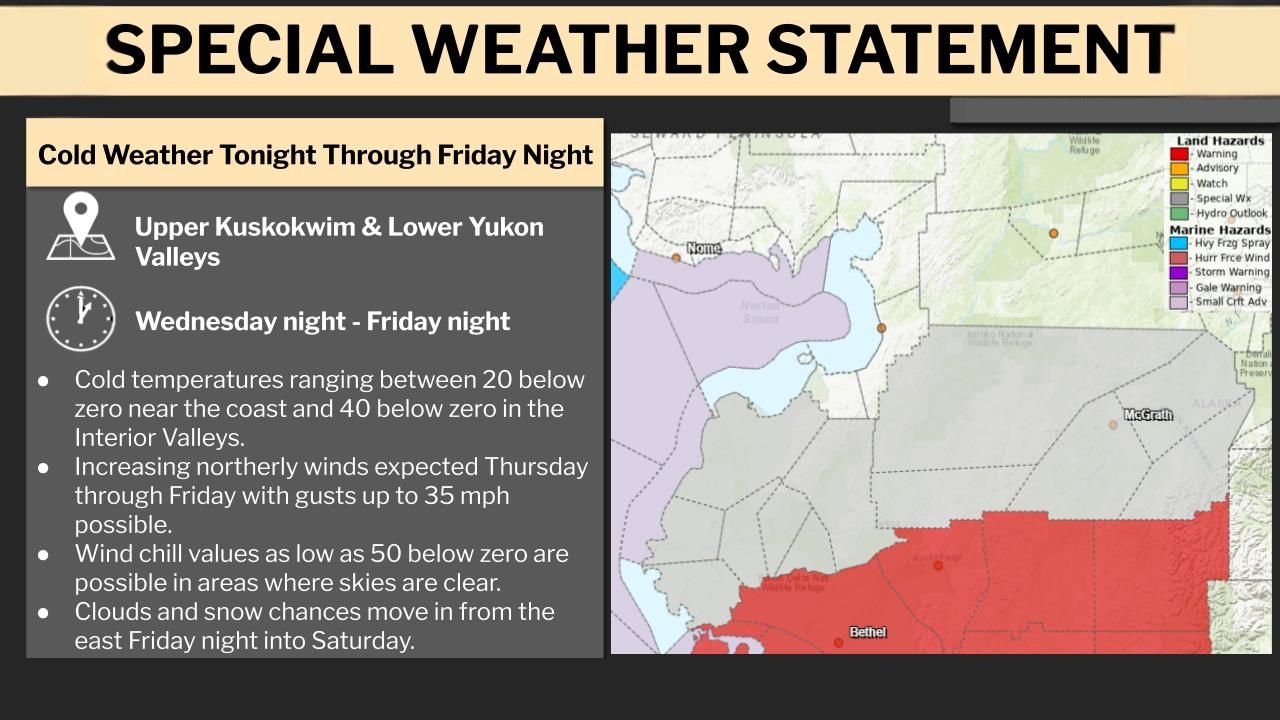
ALASKA — Residents across Southwest Alaska, particularly the Upper Kuskokwim and Lower Yukon Valleys, are facing a prolonged period of dangerous cold after the National Weather Service issued a Special Weather Statement valid tonight through Friday night, warning of extreme temperatures and life-threatening wind chills.
Meteorologists say this cold outbreak will bring air temperatures ranging from around −20°F near coastal areas to near −40°F in interior valleys, with wind chills dropping as low as −50°F in some locations as northerly winds strengthen later this week.
What the Special Weather Statement Covers
According to the National Weather Service office in Fairbanks, the advisory area includes large portions of Southwest Alaska, where Arctic air has settled in and will remain locked in place through the end of the workweek.
Key points from the advisory include:
- Bitterly cold temperatures developing tonight and persisting through Friday night
- Increasing northerly winds beginning Thursday, with gusts up to 35 mph possible
- Wind chill values as low as −50°F, especially where skies remain clear
- Clouds and snow chances increasing Friday night into Saturday, signaling a pattern shift
These conditions significantly increase the risk of frostbite and hypothermia, even with short exposure outdoors.

Why Wind Chill Is the Biggest Threat
While the air temperatures alone are extreme, forecasters stress that wind chill will be the most dangerous factor. Using National Weather Service wind chill guidance, exposed skin can develop frostbite in as little as 5 to 10 minutes when wind chills fall below −40°F.
Travelers, subsistence hunters, and anyone working outdoors are strongly urged to limit exposure, wear multiple insulated layers, and ensure all skin is fully covered.
Travel, Safety, and Infrastructure Concerns
Prolonged cold of this magnitude can strain heating systems, cause fuel gelling, and lead to vehicle failures, particularly overnight. Emergency officials recommend:
- Keeping vehicles winterized and fueled
- Carrying cold-weather survival gear
- Checking on vulnerable neighbors and elders
- Avoiding unnecessary travel during peak cold and wind periods
As winds increase Thursday into Friday, whiteout conditions are not expected, but blowing snow and rapidly worsening wind chills remain a concern.
What Happens Next
Forecast guidance indicates the cold pattern will gradually ease over the weekend, but not before another round of clouds and snow chances move in from the east late Friday into Saturday. Even as temperatures slowly moderate, below-normal readings are expected to persist across much of the region.
Residents are encouraged to monitor local National Weather Service updates in case additional advisories or warnings are issued.
Stay weather-aware and prepared as this dangerous cold grips Southwest Alaska. For continued updates, local forecasts, and safety coverage, follow WaldronNews.com and share how conditions are affecting your area.