
Arizona, New Mexico, Utah, California, and Colorado Brace for Record-Breaking March Heat as Multiple Cities Surge Into 90s and 100s
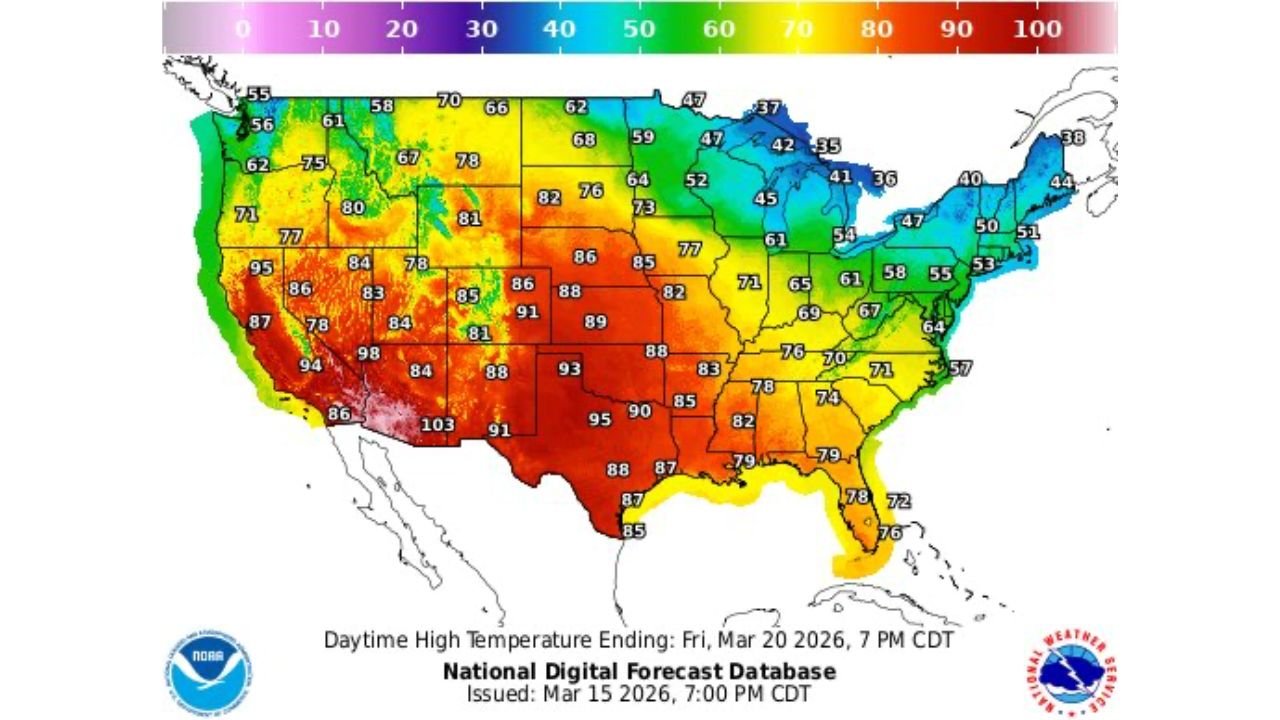
UNITED STATES — A rapidly intensifying heatwave is set to shatter March temperature records across the western and central United States, with multiple states preparing for unseasonable and potentially historic warmth more typical of peak summer than early spring.
Forecast data shows an expansive zone of extreme heat stretching from the Desert Southwest into parts of the Rockies, with some cities expected to experience multiple consecutive days of record-challenging temperatures.
Phoenix Set for Rare Triple-Digit Streak in March
One of the most significant signals comes from Arizona, where:
- Phoenix is forecast to see five straight days above 100°F starting Wednesday
Such a streak is extremely rare for March and could challenge long-standing records for both daily highs and duration of extreme heat this early in the year.
Southwest Cities Pushing Deep Into Summer-Like Heat
The heat is not limited to Arizona — it is expanding across several states:
- Albuquerque, New Mexico: Multiple days approaching or exceeding 90°F
- St. George, Utah: Several days above 90°F
- Las Vegas region and surrounding desert areas: Widespread 90s
These temperatures are far above seasonal norms and represent a significant early-season heat surge.
California Seeing Widespread 90s, Including Coastal Influence
Even areas typically moderated by the Pacific Ocean are heating up:
- Los Angeles and surrounding regions: Temperatures climbing into the 90s
- Inland Southern California deserts: Already pushing well into triple digits
This indicates a strong and persistent high-pressure system dominating the region.
Colorado Joins the Heat Surge
Perhaps most unusual is the reach of this heat into higher elevations:
- Denver, Colorado: Expected to push into the upper 80s and possibly 90°F
For a city that typically sees mild spring conditions in March, this level of heat is highly unusual and could approach record territory.
Nationwide Temperature Map Shows Extreme Gradient
The broader U.S. temperature outlook highlights a dramatic contrast:
- Southwest and southern Plains: 90s to over 100°F
- Central U.S.: 80s and 90s spreading northward
- Southeast: Warm but less extreme, generally 70s to 80s
- Northern U.S.: Cooler conditions lingering in the 30s and 40s
This sharp gradient underscores the strength of the heat dome dominating the western half of the country.
Why This Heatwave Is So Significant
Several factors make this event stand out:
- The duration, with multiple consecutive days of extreme heat
- The geographic spread, covering multiple states simultaneously
- The timing, occurring in March rather than summer
Meteorologists note that while these temperatures would be typical in July or August, they are highly unusual and potentially record-breaking for this time of year.
Impacts and Concerns
This early-season heat brings several potential impacts:
- Increased health risks due to lack of heat acclimation
- Early-season strain on energy demand
- Elevated wildfire risk in dry regions
- Stress on agriculture and early plant growth
The sudden jump into summer-like conditions can catch communities off guard.
What Happens Next
The heatwave is expected to:
- Build through midweek
- Peak late in the week
- Potentially persist into the weekend before gradual cooling
However, even after peak temperatures pass, above-average warmth is likely to linger.
Bottom Line
A widespread and potentially historic March heatwave is set to impact Arizona, New Mexico, Utah, California, and Colorado:
- Phoenix facing multiple days above 100°F
- Several cities pushing into the 90s
- Record temperatures possible across multiple states
This is a rare early-season event that highlights just how extreme and unpredictable spring weather can become.
Stay with WaldronNews.com for continued coverage as this record-threatening heatwave unfolds across the United States.