
California, Texas, the Midwest, and the Eastern U.S. Face a Potential El Niño Summer With Cooler Temperatures and Mostly Near-Normal Rainfall
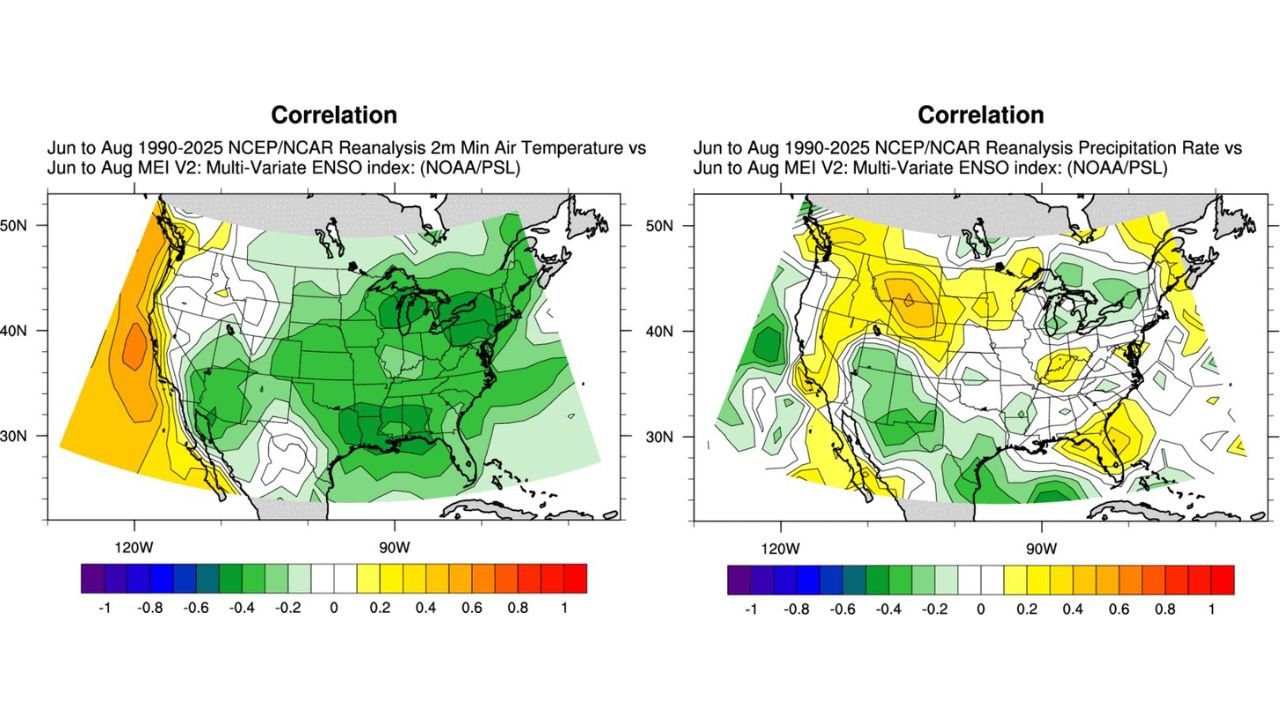
UNITED STATES — Nearly all major global climate datasets are now converging on the same signal: the United States is heading toward an El Niño pattern for the upcoming summer months, a shift that historically reshapes temperature and rainfall trends across large portions of the country. While this does not guarantee a mild summer everywhere, long-range correlations suggest cooler-than-average temperatures in many regions and generally near-normal precipitation rather than widespread extremes.
Why Forecasters Are Confident an El Niño Is Emerging
Multiple international climate models — including European, British, French, German, Canadian, and U.S. guidance — show a steady warming trend in the Niño 3.4 region of the Pacific Ocean from late winter into spring and early summer. This warming is the defining signal of El Niño and is expected to reach moderate strength by early summer.
When so many independent models align, confidence increases that the Pacific-driven atmospheric pattern will influence North American weather during the core summer months.
What El Niño Typically Means for U.S. Temperatures
Historical correlations between El Niño conditions and U.S. summer temperatures show a strong tendency toward cooler-than-normal conditions across much of the central and eastern United States.
Key takeaways from the temperature correlation data:
- The Midwest, Great Lakes, Ohio Valley, and Northeast often trend cooler than average
- The South and Southeast may avoid prolonged extreme heat compared to neutral or La Niña summers
- Parts of the West Coast can see warmer-than-average conditions, especially inland
This does not eliminate heat waves, but it can reduce their duration and intensity in many regions.
Rainfall Outlook: Near Normal for Most Areas
Unlike winter El Niño patterns, summer precipitation signals are often more subtle. Current correlations suggest:
- Near-normal rainfall for large portions of the Midwest, Plains, and East
- Some locally wetter pockets in the Southeast and parts of the interior West
- Drier tendencies in limited areas of the Southwest and far West Coast
Overall, the data does not support a widespread drought or excessively wet summer at this stage.
Why This Pattern Matters
El Niño summers tend to be less volatile than La Niña summers, which are often associated with extreme heat, prolonged drought, and higher wildfire risk in many regions. A developing El Niño can:
- Reduce sustained heat stress on crops and livestock
- Lower peak electricity demand from extreme heat
- Improve soil moisture retention in agricultural regions
However, localized extremes are still possible, especially during short-term weather events.
Long-Range Outlook Still Has Limits
While confidence is high in the overall El Niño setup, forecasters stress that long-range outlooks describe trends, not daily weather. Thunderstorms, heat bursts, and dry spells can still occur — even in a generally favorable pattern.
Additionally, the strength and exact timing of El Niño maturation will play a major role in how impactful the pattern becomes by mid-to-late summer.
Bottom Line
The overwhelming signal from global climate data points to El Niño conditions developing for the U.S. summer, favoring cooler-than-normal temperatures across much of the country and largely near-normal rainfall patterns. While not a guarantee of a mild summer everywhere, this setup reduces the odds of prolonged, widespread extreme heat.
As spring transitions into summer, confidence in regional impacts will continue to improve.
For continued long-range outlooks, regional breakdowns, and seasonal weather impacts, stay connected with Waldron News and share how this potential El Niño summer could affect your area.