
Colorado Faces Record-Breaking March Heat as Fort Collins Hits 82°F, Shattering 105-Year-Old High at CSU and Airport
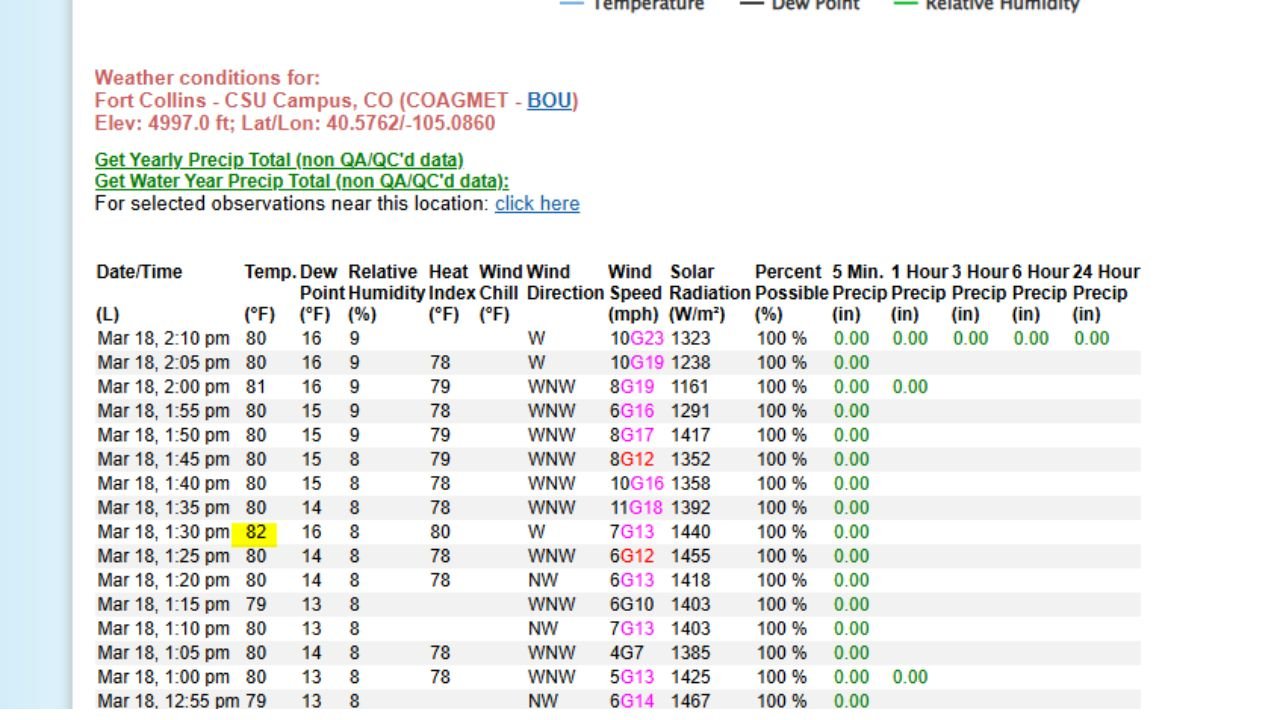
FORT COLLINS, COLORADO — A stunning burst of early-season warmth swept across northern Colorado as Fort Collins officially recorded its hottest March temperature in history.
The city reached 82°F at both the Colorado State University (CSU) campus weather station and the Fort Collins–Loveland Airport, setting a new all-time March record.
The previous record stood at 81°F, set in 1921 and tied again in 2012. That mark had held for more than a century — until now.
A Record That Survived 105 Years
Climate data shows that Fort Collins had never exceeded 81°F in March in more than 100 years of record-keeping.
On this latest warm surge:
- Temperatures climbed steadily through the afternoon.
- The CSU campus station reached 82°F.
- The airport observation site also peaked at 82°F.
That one-degree increase was enough to officially break the longstanding monthly record.
How Unusual Is 82°F in March?
March in Fort Collins is typically transitional, often featuring:
- Highs in the 50s or low 60s
- Occasional late-season snowfall
- Variable spring weather patterns
An 82°F reading is far more typical of late May than mid-March.
Reaching the 80s this early underscores just how anomalous this heat event has been across parts of the western and central United States.
Part of a Broader Western Warm Spell
The Fort Collins record comes amid a larger pattern of unusual warmth impacting:
- Colorado
- Wyoming
- Utah
- Arizona
- Nevada
- Parts of the Great Plains
High pressure, dry air and strong solar heating combined to push temperatures well above seasonal averages.
Northern Colorado, positioned along the Front Range, often sees enhanced warming during downslope wind events — which can rapidly elevate temperatures beyond model expectations.
Why These Early Records Matter
Breaking daily records is common during strong warm spells.
Breaking monthly all-time records, especially ones that have stood for over a century, is much more significant.
Early-season heat can also:
- Accelerate snowmelt in the foothills and mountains
- Increase early fire weather concerns
- Lead to larger temperature swings if cold air returns
What Comes Next
Spring in Colorado is notoriously volatile. While record warmth has dominated headlines, March can still deliver snowstorms and rapid cold snaps.
For now, however, Fort Collins has secured its place in the record books with the hottest March temperature ever observed.
Stay with WaldronNews.com for continued updates as unusual early-season warmth reshapes climate records across the West.