
Great Lakes Ice Cover Climbs Above Average Early in January 2026, With Lake Erie Leading Rapid Freeze-Up
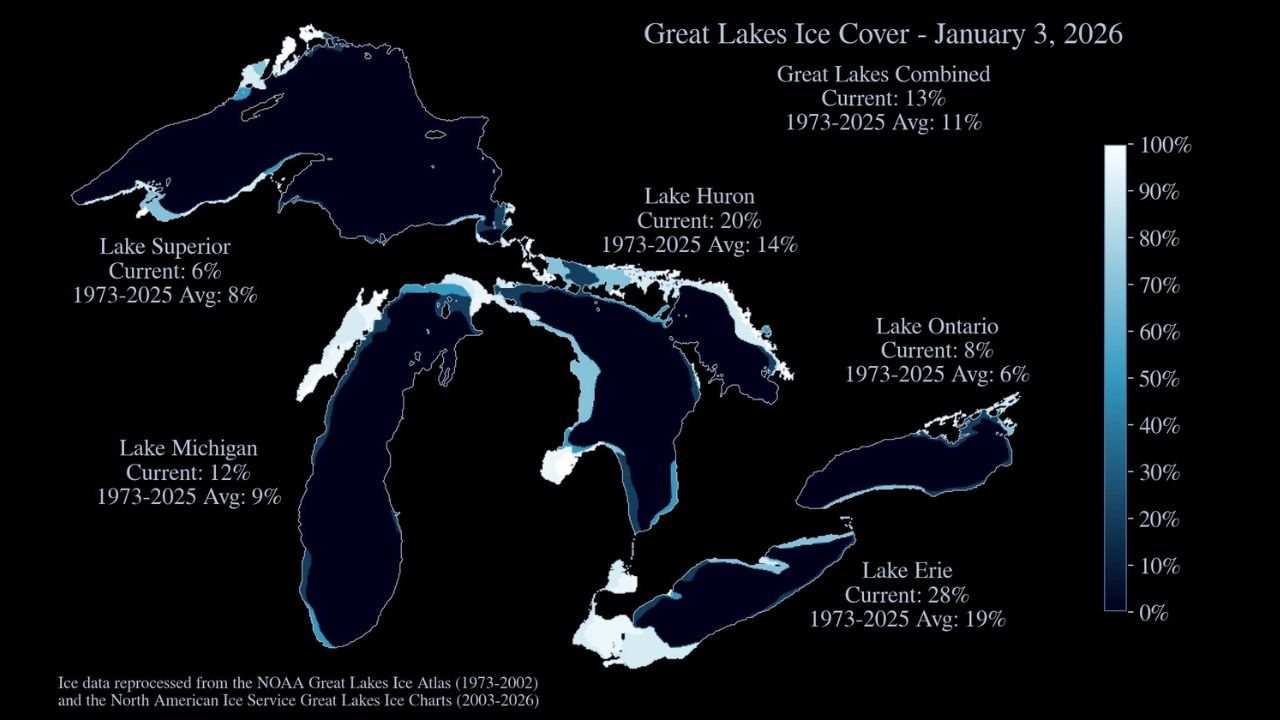
GREAT LAKES REGION — Ice coverage across the Great Lakes is running above historical averages as January 2026 begins, pointing to an early and strengthening winter pattern across the region. Updated ice data from January 3 shows that combined ice coverage has already exceeded normal levels for this time of year, with some lakes freezing significantly faster than others.
The total ice cover across all five Great Lakes currently stands at 13 percent, slightly above the long-term average of 11 percent for early January. While not all lakes are freezing at the same pace, several are showing clear signs of accelerated ice growth.
Lake Erie Leads the Region With Well Above-Average Ice Coverage
Lake Erie is currently the most ice-covered of all the Great Lakes, with 28 percent of its surface frozen. This is well above its historical early-January average of 19 percent, making Erie the standout lake in terms of rapid ice development.
Because Lake Erie is the shallowest of the Great Lakes, it typically freezes earlier than the others. However, this year’s ice coverage is expanding faster and more extensively than normal, indicating sustained cold air episodes across the region in late December and early January.
This early freeze can impact commercial shipping routes, shoreline ice formation, and lake-effect snow patterns, particularly along the southern and eastern shores of the lake.
Lake Huron Also Freezing Faster Than Normal
Lake Huron currently shows 20 percent ice coverage, compared to a long-term average of 14 percent. Ice has expanded across nearshore areas and northern sections, where colder temperatures and calmer conditions have allowed ice to form more efficiently.
The above-average ice on Lake Huron reinforces the broader pattern of an early-season winter signal across the central and eastern Great Lakes.
Lake Michigan and Lake Ontario Slightly Above Seasonal Norms
Ice coverage on Lake Michigan has reached 12 percent, which is above its historical average of 9 percent for early January. Most of this ice remains concentrated in bays, harbors, and nearshore waters, particularly in the northern portions of the lake.
Lake Ontario is also running slightly above normal, with 8 percent ice coverage, compared to its long-term average of 6 percent. Ice remains mostly confined to protected shoreline areas but could expand if colder conditions persist.
Lake Superior Lags Behind Other Lakes for Now
In contrast, Lake Superior currently has 6 percent ice coverage, which is below its historical average of 8 percent. Given Superior’s depth and size, slower early-season ice development is not unusual, and more rapid freezing often occurs later in winter.
At this stage, the lower ice coverage on Lake Superior does not indicate a weak winter but rather reflects typical seasonal behavior.
What the Early Ice Growth Signals for the Rest of Winter
The above-average ice coverage across much of the Great Lakes suggests that cold air has been persistent enough to establish a strong early freeze, particularly on shallower lakes like Erie and Huron.
If colder-than-normal temperatures continue into mid-January, ice coverage could expand quickly, potentially affecting lake-effect snow production, shipping activity, and shoreline conditions across the region.
For now, the data clearly shows that winter 2026 has started stronger than average across key parts of the Great Lakes, with ice conditions already ahead of schedule in several major waterways.