
Michigan, Ohio, Pennsylvania, New York, Kansas, Oklahoma, Texas, Colorado, and the Mid-Atlantic Rank Among the Hardest Places in the U.S. to Forecast Weather, Meteorologists Say
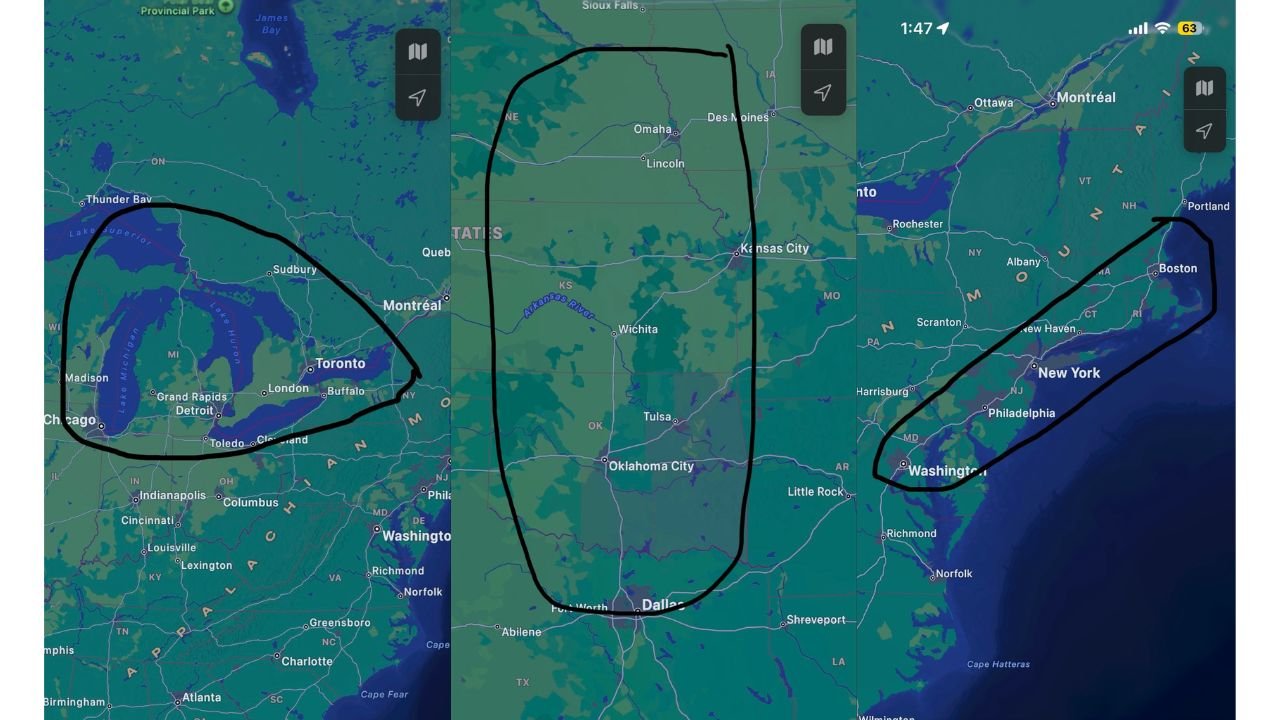
UNITED STATES — Ask almost any experienced meteorologist where forecasts are most likely to go sideways, and the answers are surprisingly consistent. From the Great Lakes and Central Plains to the Front Range of Colorado and the Mid-Atlantic coast, these regions combine geography, terrain, and competing air masses in ways that make accurate forecasting exceptionally difficult — even with modern models.
Recent analysis and map comparisons highlight four major U.S. regions that routinely challenge forecasters due to rapidly changing conditions and small-scale features that models struggle to resolve.
The Great Lakes: Michigan, Ohio, Pennsylvania, New York
The Great Lakes region is one of the most notoriously difficult forecast zones in North America.
Why?
- Massive freshwater lakes create their own weather
- Small wind shifts dramatically change lake-effect snow placement
- Temperature differences of just 1–2 degrees can flip rain to snow
Cities like Chicago, Detroit, Cleveland, Buffalo, and Toronto can experience vastly different conditions within short distances. A minor wind direction change can mean heavy snow in one county and nothing in the next, making precise snowfall forecasts extremely challenging.
The Central Plains: Kansas, Oklahoma, North Texas
The Plains region, especially from Kansas through Oklahoma into North Texas, is another forecasting headache.
Key challenges include:
- Flat terrain that allows air masses to collide without warning
- Rapid storm development with little lead time
- Sharp north–south temperature gradients in winter
- Explosive thunderstorm growth in warmer months
This region frequently sits on the boundary between cold continental air and warm Gulf moisture, where timing errors of just an hour can dramatically change impacts.
The Front Range of Colorado
Few places are more difficult to forecast than eastern Colorado along the Front Range, including Denver, Boulder, and Colorado Springs.
Here, weather is shaped by:
- Complex mountain terrain
- Downslope warming and cooling effects
- Rapid pressure changes
- Sudden snow-to-rain transitions
A storm can produce heavy snow west of Denver, rain downtown, and blizzard conditions just a few miles east — sometimes all at the same time.
The Mid-Atlantic and I-95 Corridor
The Washington, DC to Philadelphia to New York City corridor is infamous for winter forecast busts.
This region struggles because:
- Coastal storms can shift 50 miles offshore or inland
- Cold air is often shallow and fragile
- Ocean influence fights inland cold air
- Urban heat islands skew surface temperatures
A single misplaced low-pressure center can mean historic snow or cold rain, with very little margin for error.
Honorable Mentions
Meteorologists also point to:
- Pacific Northwest lowlands (Puget Sound, Willamette Valley) due to marine air and terrain trapping
- Appalachia, where elevation changes cause dramatic local differences in precipitation and temperature
Why Forecast “Busts” Happen Here
In all these regions, small-scale features matter more than large-scale patterns. Forecast models are excellent at identifying broad trends, but these locations depend heavily on:
- Microclimates
- Local wind shifts
- Terrain-driven effects
- Boundary-layer temperature nuances
That’s why forecasts in these areas often carry more uncertainty — not because forecasters are careless, but because the atmosphere is working at its most complex.
Bottom Line
If you live in the Great Lakes, Central Plains, Front Range, or Mid-Atlantic, forecast changes aren’t a sign of poor science — they’re a reflection of some of the most meteorologically complex environments in the country. These regions demand constant updates, careful interpretation, and a healthy respect for uncertainty.
Stay with Waldron for weather coverage that explains not just what might happen — but why forecasting it is so challenging.