
New England Faces Sharp Overnight Freeze as Temperatures Drop Into the 20s Across Maine, New Hampshire, Vermont, and Massachusetts
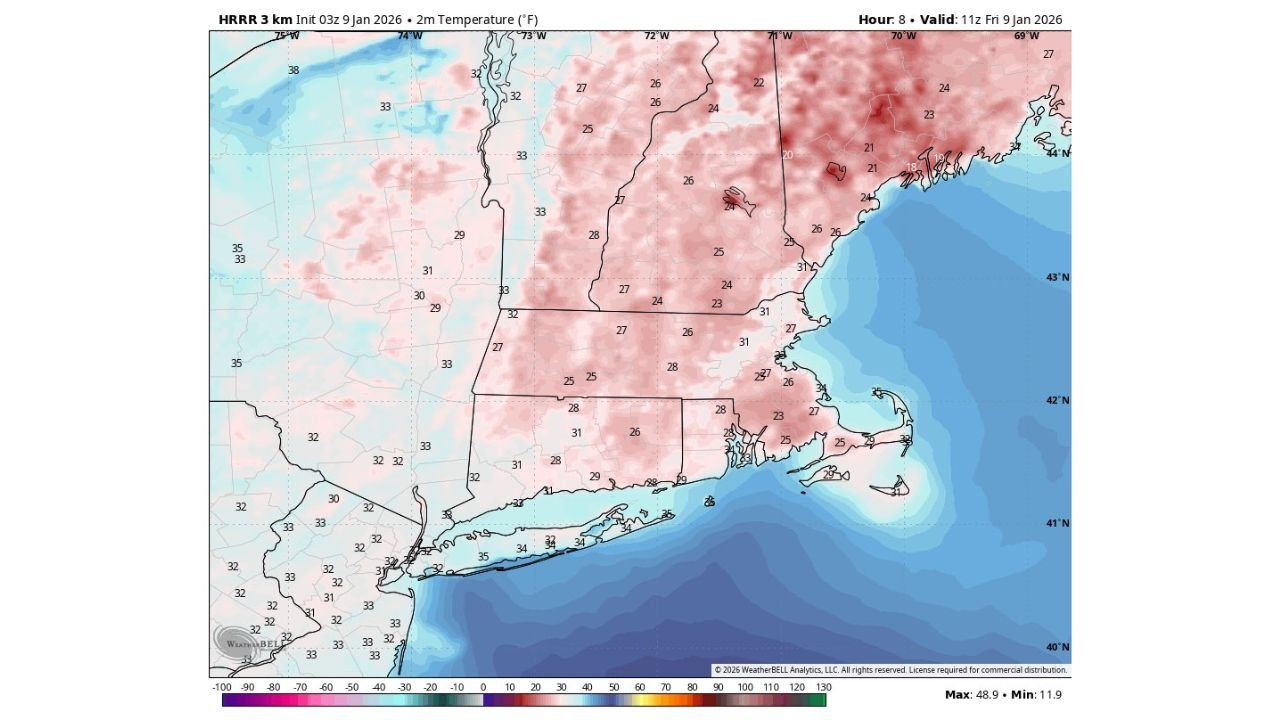
NEW ENGLAND — A widespread surge of cold air is settling across the region overnight, with temperatures falling into the low to mid-20s across much of Maine, New Hampshire, Vermont, Massachusetts, and parts of Connecticut, according to high-resolution HRRR temperature guidance valid early Friday morning.
The latest 2-meter temperature data shows one of the coldest mornings so far this winter season for interior New England, with the chilliest conditions concentrated away from the immediate coastline.
Coldest Air Focused Over Northern and Interior New England
Model data indicates that northern and interior sections of Maine are seeing the lowest readings, with temperatures dipping into the upper teens to low 20s, especially across elevated terrain and rural areas. Central and northern New Hampshire and Vermont are also firmly entrenched in the low-to-mid-20s, with pockets briefly dropping colder in sheltered valleys.
This cold pool is driven by clear skies, light winds, and strong radiational cooling overnight, allowing heat to escape rapidly after sunset.
Massachusetts and Connecticut Dip Below Freezing Inland
Across Massachusetts and Connecticut, temperatures are widely falling into the mid-20s inland, while areas closer to the coast — including Cape Cod and Long Island Sound — remain slightly milder due to the moderating influence of the ocean, holding closer to the upper-20s to near 30 degrees.
Despite coastal moderation, most inland communities across southern New England are waking up below freezing, increasing the risk of icy patches on untreated roads, sidewalks, and bridges.
Coastal Areas Remain Milder but Still Cold
Coastal Maine, eastern Massachusetts, and Rhode Island are seeing temperatures hover closer to the upper-20s and low-30s, but even these areas are experiencing a noticeable cold snap compared to recent days.
Ocean temperatures are preventing extreme drops near the shoreline, but cold air remains firmly in place across the entire region.
What This Means for Residents
Residents across New England should be prepared for:
- Freezing morning temperatures across most inland locations
- Icy spots on roads, especially bridges and shaded areas
- Increased home heating demand during the early morning hours
- Cold starts for commuters, particularly in northern and rural areas
Sensitive plants, exposed pipes, and outdoor pets may need additional protection during the coldest overnight hours.
Cold Start, Gradual Daytime Recovery
While the morning begins sharply cold, temperatures are expected to slowly recover through the afternoon, with highs climbing back into the 30s and low-40s in many areas. However, winter conditions remain firmly in control, and additional cold nights are possible as January continues.
WaldronNews.com will continue monitoring temperature trends and any additional cold-weather advisories affecting New England. Stay tuned for further updates as conditions evolve.