
Western United States Records Warmest December in History as California, Oregon, Washington, Nevada, Arizona, and Colorado See Unprecedented Temperature Anomalies
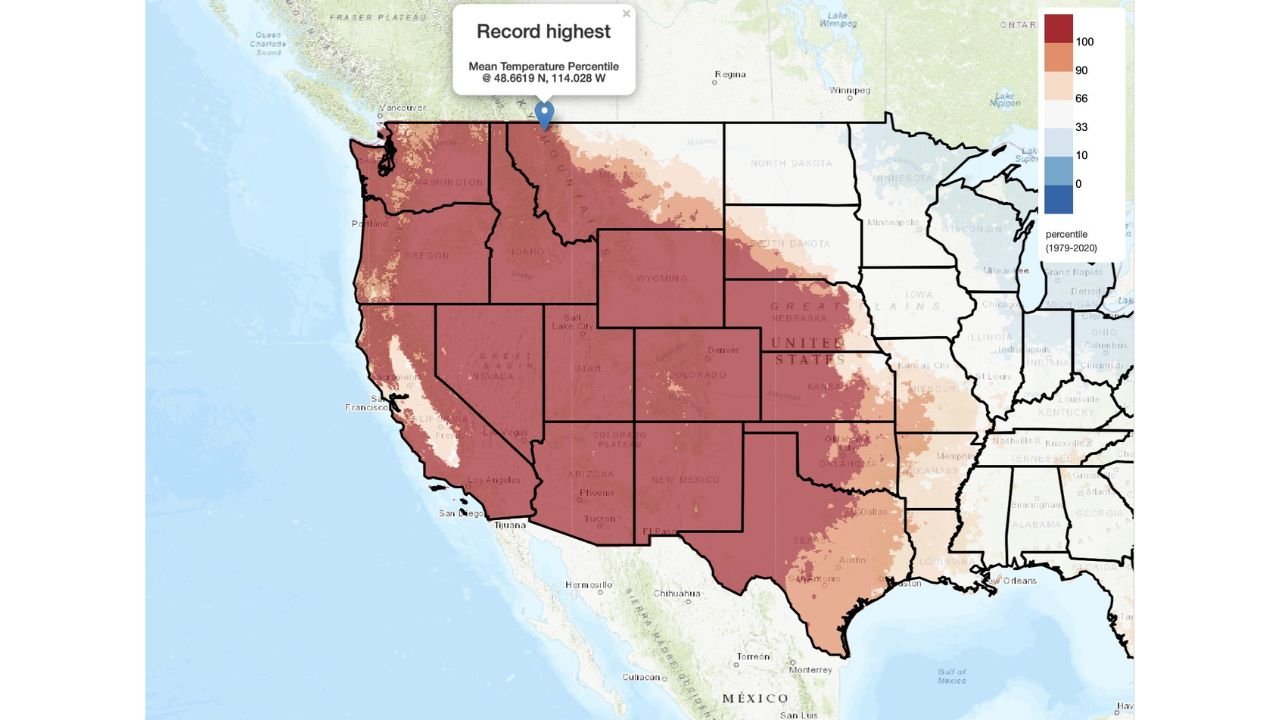
WESTERN UNITED STATES — The western half of the country just experienced its warmest December on record, with new data showing widespread record-high average temperatures across much of the West, including California, Oregon, Washington, Nevada, Arizona, Utah, Idaho, Colorado, New Mexico, and Wyoming. Climate analysts say the magnitude of this warmth suggests December 2025 may have been the warmest in many thousands of years when viewed through long-term climate context.
Temperature percentile maps reveal that nearly the entire Western U.S. fell into the 90th to 100th percentile range for December mean temperatures, meaning conditions were warmer than nearly every December observed between 1979 and 2020. In large portions of the region, average temperatures reached record-high levels, not just near records.
Record-Level Warmth Spreads Across the West
The data shows a broad and unusually uniform heat signal across the West. States from the Pacific Coast to the Rockies were dominated by deep red shading, indicating persistent and widespread warmth rather than isolated heat events.
- California, Oregon, and Washington experienced one of their warmest Decembers ever, with limited cold air intrusions and minimal sustained winter chill.
- Nevada, Arizona, and Utah recorded extreme temperature departures, particularly in desert and high-elevation regions where December is typically much colder.
- Colorado, Wyoming, Idaho, and Montana also saw December temperatures ranking among the warmest on record, despite normally reliable early-winter cold in the Rockies.
This was not driven by a short-lived warm spell — instead, temperatures remained consistently above normal throughout the entire month.
Why This December Was So Unusually Warm
Meteorologists point to a persistent large-scale atmospheric pattern that favored ridging over the western U.S., effectively blocking Arctic air from moving south. This pattern allowed mild Pacific air to dominate for weeks at a time, suppressing snowfall, limiting cold nights, and driving average temperatures higher.
Unlike typical warm Decembers that feature brief cold snaps, this pattern showed very few interruptions, allowing record warmth to accumulate steadily across the month.
Snowpack, Water, and Drought Implications
The warmth had immediate consequences for winter snowpack across much of the West. Many mountain regions saw delayed snow accumulation, higher snow levels, or precipitation falling as rain instead of snow.
This raises concerns for:
- Reduced spring and summer water supply
- Earlier snowmelt timing
- Increased drought vulnerability heading into 2026
- Higher wildfire risk later in the year
Several basins that rely on early-season snowpack entered January with below-average snow water equivalent, especially in lower and mid-elevation zones.
A December That Stands Out in Climate History
Climate scientists note that when modern observations are compared with paleoclimate data, the scale and persistence of this warmth suggest December 2025 may rank among the warmest early-winter periods in thousands of years across the western region.
While natural variability still plays a role, the intensity and geographic reach of the warmth align with long-term warming trends, making extreme seasonal records increasingly likely.
What Comes Next
As winter continues, forecasters are closely monitoring whether colder patterns can return later in the season. While a single month does not define an entire winter, the historic warmth of December has already reshaped early-season expectations across the West.
Any prolonged continuation of this pattern could further strain water resources and increase environmental risks heading into spring.
For ongoing climate analysis, regional weather impacts, and in-depth forecast coverage, continue following updates from WaldronNews.com.