
Northern United States Faces Prolonged Deep Freeze as Some Regions See 10 to 14+ Consecutive Days Below Freezing Into Early February
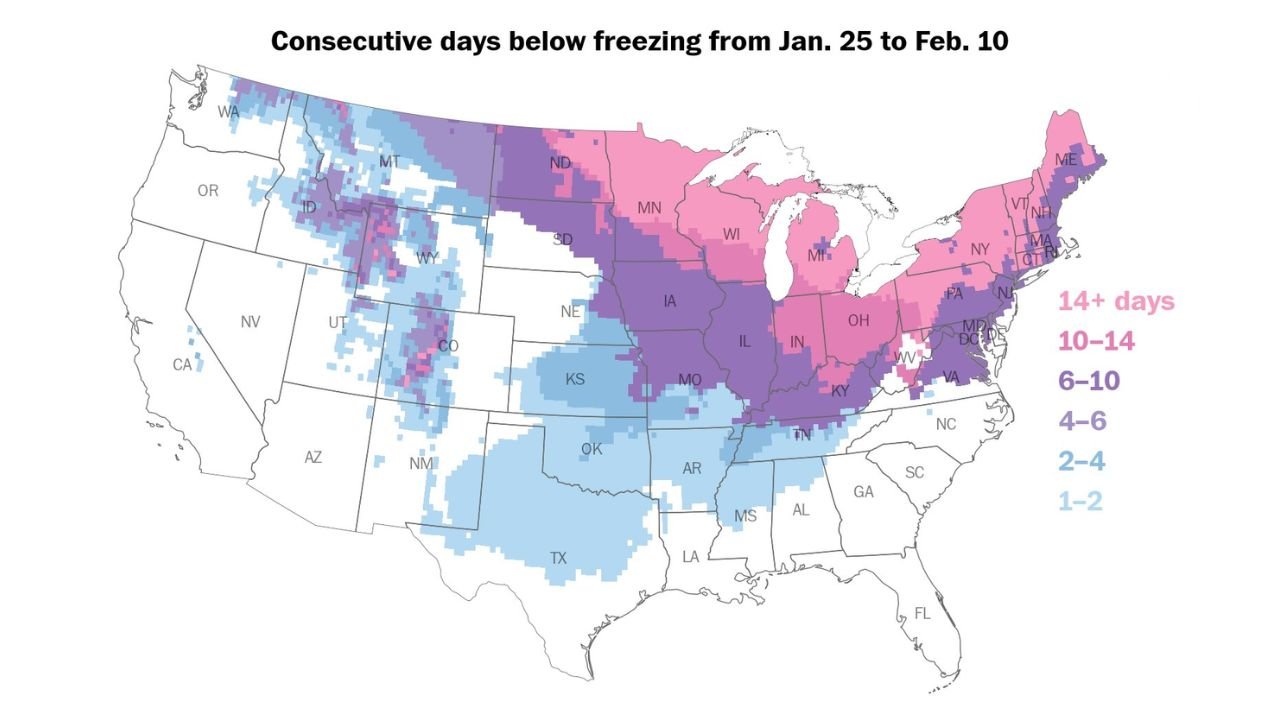
UNITED STATES — A prolonged stretch of freezing temperatures is expected to grip large portions of the northern and central United States from late January through at least February 10, with new forecast data indicating that some regions may experience one to two full weeks of uninterrupted sub-freezing conditions.
The data highlights an expansive cold dome affecting the Upper Midwest, Great Lakes, Ohio Valley, and Northeast, where freezing temperatures are projected to persist far longer than a typical late-January cold snap. In several areas, the duration of the freeze could approach or challenge historical streaks for consecutive days below 32°F.
Where the Longest Freezing Streaks Are Expected
According to the forecast map, the most extreme and longest-lasting cold is concentrated across:
- Minnesota, Wisconsin, Michigan, and northern Illinois, where 10 to 14+ consecutive days below freezing are projected
- Ohio, Indiana, Pennsylvania, and New York, also showing widespread 10–14 day freezing streaks
- Parts of New England, where extended cold appears locked in well into early February
These regions are shaded in the darkest pink and purple tones, signaling the highest confidence in prolonged freezing temperatures.
Cold Expands South Into the Central U.S.
Farther south, the freeze is expected to extend into areas not typically accustomed to long-duration cold:
- Missouri, Kentucky, West Virginia, and Virginia show 6–10 consecutive days below freezing
- Portions of Kansas, Oklahoma, Arkansas, Tennessee, and northern Texas are forecast to see 2–6 days of freezing temperatures
Even in areas where the freeze is shorter, the persistence of cold could still impact infrastructure, agriculture, and travel.
Why This Cold Pattern Is Concerning
Extended freezes are often more disruptive than short Arctic blasts. When temperatures remain below freezing for days or weeks, impacts can compound, including:
- Increased risk of frozen and burst pipes
- Higher energy demand and strain on heating systems
- Prolonged icy road conditions where snow or freezing precipitation occurs
- Stress on livestock and winter wheat in agricultural regions
The map’s timeline — spanning January 25 through February 10 — suggests that this cold pattern is slow-moving, meaning relief may not arrive quickly once the freeze sets in.
What Happens Next
While temperatures may fluctuate slightly day to day, the overall signal shows little sustained warming across the northern half of the country during this period. Any brief warm-ups are likely to be short-lived before colder air returns.
Forecast confidence in the duration of the freeze remains high, particularly across the Upper Midwest, Great Lakes, and Northeast, where winter typically peaks during late January and early February.
Stay with WaldronNews.com for continued coverage, including regional breakdowns, potential record-cold analysis, and updates on when — and where — meaningful warming may finally arrive.